Category: thus far…


he’s as creepy as ever…

jfreos's avatarthe interpretOr

eric2

“And I know that you will agree with me that standing up for Australia also means standing up for the God, who has so blessed our land. I believe this country hungers for a spiritual revival. I believe it longs to see traditional values reflected in public policy again.”

ERIC(K) ABETZ, Address to the Australian Christian Lobby Conference, Brisbane, May 2013.

View original post

poluutionchimn

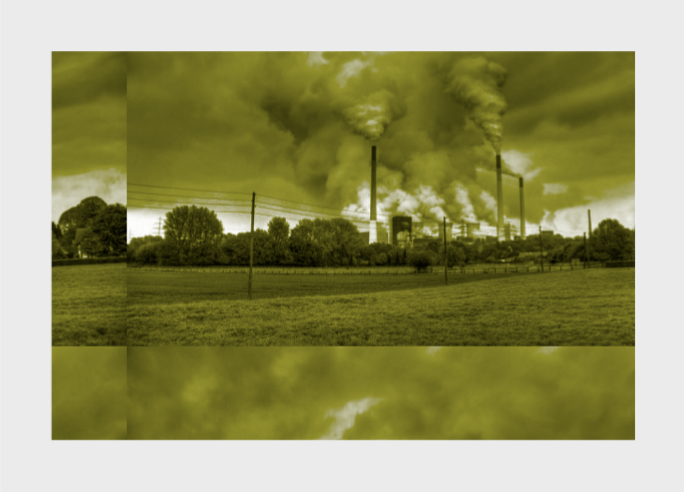
The world needs to take immediate action towards a complete phase out of fossil fuels and force global greenhouse gas emissions onto a downward trajectory. This is the clear message from the United Nations Environment Programme in its latest Emissions Gap Report. Launched today in Washington DC, the report confirms there is no time to waste if the world is to stay under the agreed red line of 2DegC average warming. The good news is that more and more countries are already waking up to this – forced to face facts by the recent government-endorsed IPCC report confirming that carbon emissions will have to be brought to zero.

The US, China and the EU have all recently showed climate action leadership: the EU with its 2030 climate and energy package; the US with its pledge to double the pace at which it will reduce carbon pollution; and China with plans to slow, peak and then reverse the course of its carbon emissions. But today’s report shows that all countries need to take action, and that deeper and faster emissions cuts will reduce climate risks and the costs of action.

Now is the moment – in the run up to the UN climate summit in Lima, Peru – for coalobsessed blockers like Australia to show that they too wish to be on the right side of history.

RD-Header-main-2014v2

Link feast

pick of the best psychology and neuroscience links from the past week or so:

Winter Is a Black Hole: How I Deal With Seasonal Depression
“Seasonal depression hits for me, like clockwork, the day after Halloween” – writes Dayner Evans at Gawker.com.

Learning How Little We Know About the Brain
By James Gorman in the New York Times.

How To Debunk Falsehoods
At BBC Future, Tom Stafford investigates the best way to correct false ideas.

The “Paper Effect” – Note Something Down And You’re More Likely To Forget It
At the Brain Watch blog I lampoon fears about the effect of computers and other digital devices on our memories.

How to Be Efficient: Dan Ariely’s 6 New Secrets to Managing Your Time
At Time magazine, Eric Barker summarises time-keeping advice from the author of Predictably Irrational.

I Hated Keeping a Gratitude Journal – Here’s What Worked Instead
Allison Jones at Fastcompany.com

Fooled By Your Own Brain
Don’t be so certain your senses are telling you the truth, says Virginia Hughes at Nautilus.

Human Body: The “Ultra-athletes” aged 60+
At BBC Future, David Robson reports on the senior ultra-athletes who are defying the limits of aging and the body.

Living With Schizophrenia
Access 60 free journal articles on this topic, courtesy of Psychology Press / Taylor and Francis.

How to Study The Brain
We’re about to obtain unprecedented amounts of new data on the brain, says Gary Marcus at The Chronicle, but the important missing ingredient is theory.

Illustrations of Madness: James Tilly Matthews and the Air Loom
At the Public Domain Review, Mike Jay recounts the tragic story of James Tilly Matthews, who was confined to Bedlam asylum in 1797 for believing that his mind was under the control of a terrifying machine.
_________________________________

Post compiled by Christian Jarrett (@psych_writer) for the BPS Research Digest.

As “Queensland premier tells Obama he is ‘solid’ on protecting Great Barrier Reef” (the Guardian), here’s a reality check…

The Abbot Point dredging project, recently approved by Australian environment minister, Greg Hunt, will allow India’s Adani Enterprises to build Australia’s biggest coal mine in the Galilee Basin in central Queensland, and dredge, to allow massive coal ships to access their proposed new shipping terminal at Abbot Point…to send coal overseas.

@ the interpretOr, we’re looking at the Indian Government’s recent report on Adani’s existing Mundra port operations that found incontrovertible evidence of:

destruction of mangroves,

blocking of creeks and…

…non-compliance of other clearance conditions.

The reporting committee, headed by Sunita Narain of Centre for Science and Environment, was set up by the Union Ministry of Environment and Forests (Government of india), to inspect ship-breaking facility of M/s Adani Port and SEZ Limited near Mundra West Port in Gujarat’s Kutch district. The committee submitted its report on April 18, 2013 and it can be downloaded in pdf by clicking here :::

Subsequently, on July 29, 2013 a public hearing for the project was held where people from four project-affected villages and nearby locations attended the public hearing at Tunda village in Mundra taluka and posed questions about the project and its impact on the environment. But the public hearing ended without the company being able to give comprehensive answers to the queries raised by the project-affected people, report Down To Earth (DTE)the Indian science and environment fortnightly:

Using remote sensing technology, the committee has found that that over the last decade, 75 hectares of mangroves have been destroyed in Bocha Island, a conservation zone. Satellite imagery indicates deterioration and loss of creeks near the proposed North Port due to construction activities. The company has also neglected to inventory its utilisation and disposal of fly ash, and has not ensured that storage tanks, seawater inlets, and discharge outlets are lined to prevent increase in salinity and contamination of water. The report also states that the Adani group has been less than serious about reporting on compliance with the conditions set at the time of clearance. In many cases, non-compliance with reporting conditions has been observed.

The committee also noted that there have been instances to circumvent statutory procedures by using different agencies, at the Centre and state, for obtaining clearances for the same project. The public hearing procedure, which is a critical part of project clearance and helps to understand and mitigate the concerns of local people, has also been bypassed on one pretext or another. The fisher community, which depends on the coasts for their livelihood, is the worst hit by the changes brought on by land acquisition and construction for the project. 

munda

(Adani project in Mundra has violated environmental norms: MoEF committee report)

murdabb

The Australian government took its strategy of fighting the future to a whole new level this week, with ministers lining up to attack the ANU’s decision to abandon many of its fossil fuel investments, and Prime Minister Tony Abbott taking the coal industry’s PR line to claim that coal is “good for humanity” and has a “bright future” despite overwhelming evidence to the contrary.

We know that we cannot burn the majority of our fossil fuel reserves, the international community is preparing for a low carbon future, and it costs more to mine and ship Australian coal than it can be sold for. Couple this with China imposing a new 6 per cent coal import tariff, its steel industry being close to peak production, and forecasters saying the decline in prices will continue as China moves away from imported coal; it’s clear to see why the Abbott government’s vocal protection and support for coal has been dubbed a “suicide strategy”.

mainwebsite

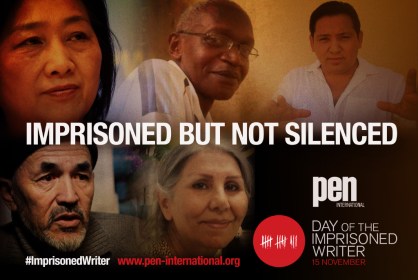
‘November 15 is a day of action and acknowledgement,’ said Marian Botsford Fraser, Chair of PEN International’s Writers in Prison Committee. ‘It is PEN’s way of saying to all of our 900 imprisoned, harassed, murdered and disappeared writers: you are not silenced. You are not forgotten. We stand with you and fight for you.’

In order to demonstrate how freedom of expression is being curtailed, each year PEN’s Writers in Prison Committee highlight five cases of writers currently in prison or being prosecuted from around the world that are emblematic of the type of threats and attacks faced by writers and journalists.

This year PEN is highlighting the cases of five writers from Cameroon, China, Iran, Kyrgyzstan, and Paraguay and calls for their immediate and unconditional release and for the charges against them to be dropped, along with all other writers similarly threatened. On 15 November, and the days surrounding, PEN Members will be sending appeal letters, raising publicity and staging events in support of their colleagues under attacks around the globe.

This year PEN International is advocating on behalf of the following writers:

enoh-meyomesse-1-890x395Cameroon – Dieudonné Enoh Meyomesse poet, currently serving a seven-year prison sentence. PEN believes that the charges against Meyomesse are politically motivated. He is in poor health.


HONG KONG-LITERATURE-FREEDOMChina – Gao Yu:  journalist and member of the Independent Chinese PEN Center, she was arrested on 23 April 2014. She remains detained pending trial, and faces a lengthy prison sentence if convicted.


Mahvash_SabetIran – Mahvash Sabet: teacher and poet, is currently serving a 20-year prison sentence.  She has been detained since 2008 for her faith and activities related to running the affairs of the Bahá’í religious minority in Iran.


16348Kyrgyzstan – Azimjon Askarov: journalist and member of Kyrgyzstan’s Uzbek minority who has spent his career exposing corruption. Sentenced to life imprisonment.


nelsonParaguay Nelson Aguilera: writer, teacher and member of PEN Paraguay, he was sentenced to 30 months in prison on 4 November 2014 for allegedly plagiarising a novel.  Although not currently in prison as his appeal is pending, PEN is highlighting his case in an attempt to keep him at liberty.


::: click on through to PEN :::

Everyone knows about the military-industrial complex, which, in his farewell address, President Eisenhower warned had the potential to “endanger our liberties or democratic process” but have you heard of the “Deep State?”

Mike Lofgren, a former GOP congressional staff member with the powerful House and Senate Budget Committees, joins Bill to talk about what he calls the Deep State, a hybrid of corporate America and the national security state, which is “out of control” and “unconstrained.” In it, Lofgren says, elected and unelected figures collude to protect and serve powerful vested interests. “It is … the red thread that runs through the history of the last three decades. It is how we had deregulation, financialization of the economy, the Wall Street bust, the erosion or our civil liberties and perpetual war,” Lofgren tells Bill Moyers.

2071-600x337

Climate change may not be the most obvious subject for a play, but theatregoers in London have been turning up in droves to see scientist Chris Rapley give an impressive account of the subject.

The 75-minute play, illustrated with swirling video images, manages to captivate audiences just with the power of the bare, stripped down facts of science, and without relying on the usual catastrophe imagery and doom and gloom language. “2071” discusses the consequences of mankind’s dependence on fossil fuels – how 90 per cent of the world’s glaciers and ice caps are retreating and raising sea levels. Soaring greenhouse gas levels are affecting the climatic equilibrium which is the basis of modern civilisation, says Rapley, highlighting a global temperature-rise of 2DegC as a crucial “guard rail”.

To avoid such levels of warming, “the greatest collective action in history” is required. But audiences are left with hope that with energy efficiency and a greater use of renewables such as wind farms and solar power, mankind can start to tip the balance in a better direction.


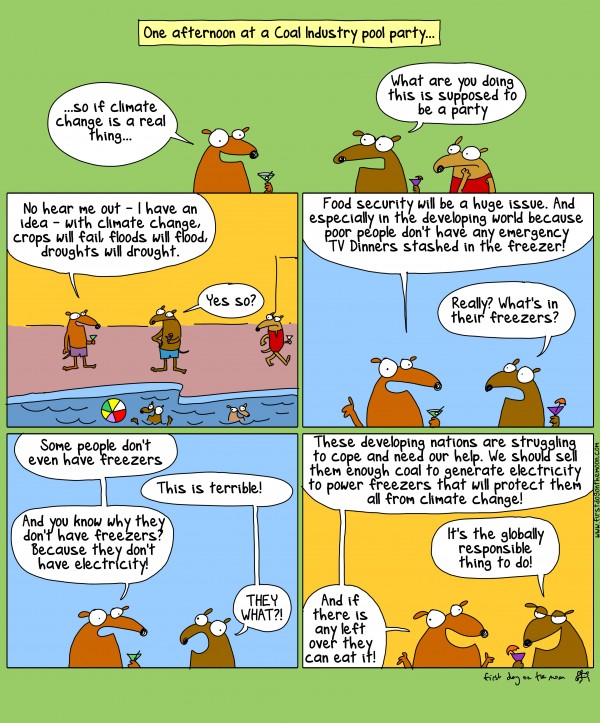
CoalIndustryPoolparty-600x723

CreativeCommons

julieb

“Stop whinging, get on with it and prove them all wrong.”

While the Intergovernmental Panel on Climate Change has warned that the world must phase out up to 70 per cent of fossil fuels by 2050, Australia and other G20 nations continue to pay lip service to a clean energy transition by spending billions subsidising new fossil fuel exploration activities.

The ‘age of entitlement’ isn’t over for those filthy fossil corporations, and what’s more, we the people are subsidising them…

…A new report from Oil Change International (US) and the Overseas Development Institute (UK) has highlighted the perverse incentives governments are giving to fossil fuel companies, with G20 governments spending $100 billion (USD$88 billion) a year searching for new oil, gas, and coal reserves. The US leads the way with $5.9 billion (USD$5.1bn), but Australia’s $4 billion (USD $3.5bn) puts it a close second, and ahead of the $2.7 billion (USD $2.4bn) Russia spends.

Globally, governments subsidise fossil fuels to the tune of AUD$887 billion a year, while spending, by comparison, a tiny AUD$117bn (USD$101 bn) on renewable energy…

Such skewed support for fossil fuels is a direct threat to the global carbon budget, which states that two thirds of known fossil fuel reserves have to stay in the ground if the world is to keep average warming to 2DegC. The report urges G20 leaders to phase out these dirty, inefficient exploration subsidies as a first step to meeting existing commitments to avoid harmful climate change.

…but don’t take our word for it; here are a selection of tools and resources :::

I’m urging the to keep the internet open and free.

Here’s my plan to protect for everyone:

Obama:

“More than any other invention of our time, the Internet has unlocked possibilities we could just barely imagine a generation ago. And here’s a big reason we’ve seen such incredible growth and innovation: Most Internet providers have treated Internet traffic equally. That’s a principle known as “net neutrality” — and it says that an entrepreneur’s fledgling company should have the same chance to succeed as established corporations, and that access to a high school student’s blog shouldn’t be unfairly slowed down to make way for advertisers with more money.”

OCCUPY.com – LATEST :::

tonhote

Australia is the worst polluter per capita in the Organisation for Economic Co-operation and Development (OECD), (and that is not counting the significant impact of its coal exports on air pollution and global warming, (click logo below for OECD’s spreadsheet):

logooecd_en

The industry and the government are ignoring climate science, and would rather pretend that coal is “good for humanity”, and sell as much of it as possible to the developing world under the guise of ending “energy poverty” when they are really only interested in keeping coal profits alive in a dying market. In fact, the World Bank has called climate change “a fundamental threat to development in our lifetime”, saying that “If we do not confront climate change, we will not end poverty.” Scientists warn that the world needs to phase out coal in the electricity sector altogether by 2050 to keep warming below 2DegC.

coal

With ‘leaders’ (sic), puppets and stooges meeting for the G20 meeting in Brisbane this week, the role of coal in development and poverty alleviation is being relentlessly talked up, with Australian politicians from the Prime Minister down running coal industry PR lines.

However, while Tony Abbott insists that coal is the “foundation of prosperity”, a new report from The Australia Institute shows that while the industry talks a big game on fighting poverty, it doesn’t even use coal to help the energy poor in the developing world.

The report All talk, no action: the coal industry and energy poverty finds that on the few occasions coal companies have spent money to help the energy-poor, they ironically tended to use distributed, off-grid renewables or hydro power at best. At worst, G20 sponsor Peabody Coal literally did nothing to help the energy poor other than push a website and PR campaign designed to influence public policy and opinion.

ron14 ron15

If only!!!

inthesetimes

TOP STORIES THIS WEEK

The Long, Shameful History of American Terrorism

President Obama should call our country’s history of supporting insurgents abroad for what it is.

BY NOAM CHOMSKY

EXCLUSIVE: 19.7 Million Finance and Insurance Workers Subject to Political Lobbying By Their Bosses

Confidential documents reveal a stunning number of workers are being fed political information by their employers.

BY SPENCER WOODMAN

Billionaire-Backed Group Spends Unprecedented $290K in Minneapolis School Board Race

When the 8th richest person in the U.S. is donating $100K in a local school board race, chances are they have a corporate agenda to push.

BY SARAH LAHM

The cult of optimism is part of a longstanding tendency on the Right: confusing patriotism with burying your head in the sand.

BY RICK PERLSTEIN
A brief history of online violence against women.
BY SADY DOYLE
When only white people vote, only white people get elected.
BY AMARIS MONTES AND ZACK AVRE

Meet the new generation of oral historians.

BY THEO ANDERSON
According to a new documentary, we’re all responsible for the BP disaster.
BY PATRICIA AUFDERHEIDE

Finally, more of Chris Marker’s work is becoming available in the U.S.

BY MICHAEL ATKINSON

The seeds that sowed much of the racist strife in Ferguson started with housing policy

BY JOSHUA HOLLAND

COMMENTARY

New voter legislation is an unwelcome blast from the past.

BY JOEL BLEIFUSS

Union-busting Gov. Scott Walker on the minimum wage: “I don’t think it serves a purpose.”

BY DAVID SIROTA

VIDEOS

In this episode of the “We the Economy” project, James Schamus explores why we are all acting more like banks ourselves.

In another episode, James Schamus explains the real value of a dollar.

WORKING IN THESE TIMES

Meet Jess Spear, the Socialist and Climate Scientist Running for Washington’s State House

A colleague of Kshama Sawant may be giving Washington’s longest serving State House Speaker a run for his money.

BY ARI PAUL

RD-Header-main-2014v2

Today the UK and its allies are at war with an extremist group based in Syria and Iraq that calls itself the Islamic State (IS; a name rejected by mainstream Muslim organisations). The group declared a caliphate in June this year and is seeking to expand its territory.

Amnesty International has accused IS of war crimes including ethnic cleansing, torture, abductions, sexual violence and the indiscriminate killing of civilians. Prime Minister Cameron has branded the group “evil” and says they “pervert the Islamic faith as a way of justifying their warped and barbaric ideology.”

Many of the fighters of the Islamic State are Western citizens. Indeed, this week there were reports that a fourth jihadist from Portsmouth, England, has died fighting for the Islamic State.

Never has it been more urgent that we understand why people are drawn to extremist beliefs and to violent extremist organisations. Here the Research Digest provides a brief overview of the psychological research and theories that help explain the lure of extremism.

The Need to Belong:

A  2006 survey and interviews with British Muslims (cited by Andrew Silke 2008) uncovered an important finding – people who felt their primary identity was Muslim, rather than British, held more sympathetic views towards the concept of jihad and martyrdom. Indeed, according to Randy Borum (2014) writing in Behavioural Sciences and the Law, a key psychological vulnerability of those drawn to extremism is their need to feel they belong. “In radical movements and extremist groups, many prospective terrorists find not only a sense of meaning,” he writes, “but also a sense of belonging, connectedness and affiliation.” A related idea is that extremist groups and their ideologies help people cope with uncertainty about themselves and the world.

Who Becomes an Extremist?

::: click on through to BPS ResearchDigest :::

Most Extremists Are Not Mentally Ill

::: click on through to BPS ResearchDigest :::

Extremism is Fuelled By a Group Process Known as “Risky Shift”

aap_7095_4Sept_Indigenous_800x600-300x168

Dr Paul Brown, The Pierre Janet Centre, Melbourne | the Stringer |November 2nd, 2014:

I have just returned home to Melbourne from working as a locum consultant psychiatrist at Alice Springs Hospital. I also work in research. My field is suicide. Over the last decade, I have developed a theory of suicide which centres on violence and secularisation. I believe that subjects are mostly either driven or abandoned to suicide. I call this nemesism. In Aboriginal culture, the equivalent of secularisation is Westernisation. My nemesism-secularisation theory is informed by cultural studies in both First and Third World environments, most notably of Jews and Gentiles in pre-Nazi and Nazi Germany. Over the last year, my views on suicide have been reinforced by my first-hand experience as a veteran psychiatrist accessing Aboriginal and non-indigenous communities in WA, Victoria, Queensland and NT.

The statistics for Aboriginal suicide have been repeatedly published. Here, only the headlines need repeating. Georgatos’ (National senior consultant Aboriginal & Torres Strait Islander Suicide Prevention Evaluation Project) 2013 article in the Independent Newspaper[i] is my source. The Australian Bureau of Statistics reported 996 Aboriginal suicides across Australia between 2000 and 2010. That was one in every 24 Aboriginal or Torres Strait Islanders. Mowanjum near Derby suffered a spate of suicides 100 times the national average. And, for every completed Aboriginal suicide across Australia, there were hundreds of attempted suicides.

Aboriginal youth suicide is at the heart of the epidemic. In part, the vulnerability of this age group reflects demographics…

::: click here for this piece in full + free @ the Stringer :::

SHJ-11-35932-Psychology-SJ-PCHJ-CFPbanner-Oct11_WEB_READY

The September 2014 issue of PsyCh Journal features contributions by researchers working in China, Japan, Denmark, Australia, and Macao, on topics involving the visual discrimination of directional motion, the new field of social neuroscience, hypervigilance with regard to pain, hippocampal functions in extinction memory, the process of conflict in third-party punishment, and cultural influences on help-seeking attitudes regarding mental health problems.

::: just click cover above to access :::

::: all the v best to Rob & Eric :::

leap-wordpress-issue

Commemorating the 30th anniversary of Foucault’s passing, this issue places his thought within the context of Chinese contemporary society and urban life, beginning with biopolitics and touching upon the language of the Panopticon, networked management, artist participation in mental health programs, a wellness regime based on The History of Sexuality, and a theatrical script imagining the final moments of the theorist’s life. We use Foucault’s mirror to reflect those present and absent, both artists and viewers, and give form to microcosmic systems of biopolitics hidden within the quotidian.

Alex Israel picks and chooses from the visual and cultural resources of Los Angeles, including that famed exporter of mainstream ideology and apocalyptic imagination: Hollywood.

Charles Lim’s work ranges from the accumulation of historical objects and contemporary media to both empirical documentation and subjective narrative of the city-state’s relationship to water—everywhere, but not a drop to drink.

“Performance View” introduces Kwan Sheung Chi’s week-long durational performance The 21st Century Undead Coterie of Contemporary Art at Para Site; “Sound Check” focuses on “Zoomin’ Night,” Beijing’s most significant experimental music site; “Shop Talk” demonstrates how Xu Zhe responds to the topic of the environment with his own observations; while “Book Shelf” launches Collective Imagination Stems and FONGFO, two publications curated and edited by groups of artists. Additional content includes Bao Dong’s review on Lin Ke’s solo exhibition “LinK,” and “Zoo as Metaphor,” which blurs the boundaries of what an art exhibition can be, considering whether the metaphor of the “square” originates from pigeons or ravens.

This issue also includes 14 reviews of various exhibitions. Highlighted reviews focus on the four majorinternational exhibitions, including MANIFESTA 10, The 10th Gwangju Biennale, Yokohama Triennial 2014, and Taipei Biennial 2014. Additionally, you will also be exposed to artists and projects such as The Los Angeles Project, Countryside Poetics, Song Ling, Roger Ballen, Daniel Lee, Li Jinghu, Sterling Ruby, and Ismail Hashim.

leap292

lmdnov14

November 2014

…the Kurds divided; Yemen, Houthis’ surprise assault; US special: Republican gerrymandering,
corporate spying; vulture funds unchecked; India eyes Afghanistan;Burma’s ever-present generals;
Yeltsin’s Russia still matters; Brazil, rise and rise of the evangelicals ; Dakar, easy money;
long haul for global warming… and more…
::: just click cover to access ::: 

morrreptile


q. what happens if i google…scott morrison fascist…?

coup

::: click here for John Pilger’s piece in full @ truthout :::

“Across the political and media elite in Australia, a silence has descended on the memory of the great, reforming prime minister Gough Whitlam, who has died. His achievements are recognized, if grudgingly, his mistakes noted in false sorrow. But a critical reason for his extraordinary political demise will, they hope, be buried with him.

Australia briefly became an independent state during the Whitlam years, 1972-75. An American commentator wrote that no country had “reversed its posture in international affairs so totally without going through a domestic revolution.” Whitlam ended his nation’s colonial servility. He abolished royal patronage, moved Australia toward the Non-Aligned Movement, supported “zones of peace” and opposed nuclear weapons testing…”

::: click here for John Pilger’s piece in full @ truthout :::

refugeekid2

The Department of Immigration and Border Protection (DIBP) latest statistics are dated 30 September 2014 . These show:
  • 603 children locked in Australia’s secure immigration detention facilities, 
  • 144 of these children are detained on Christmas Island 
  • An additional 186 children are detained in Nauru
  • 1586 are detained in the community under residence determinations, a system referrred to as Community Detetnion.

2029 children are living in the community on Bridging Visas which mean their parents have no work rights and very limited access to any Government support.

The statistics do not give a breakdown of how many children are unaccompanied vs how many are with adult family members. We continue to ask the Department and Government for this as well as a breakdown of numbers in each mainland detention facility. Instead ‘mainland APODs‘ (alternative places of detention) are grouped together, currently 338 children are held in mainland APODs. The APOD facilities at Leonora (WA) and Port Augusta (SA) and the Darwin Airport Lodge (DAL) are now closed, this means the vast majority of children in these facilities are in two prison like facilities in Darwin, a fairly high number in Melbourne and some in Adelaide at the Inverbrackie facility which is set to close by end of 2014 (and is recognised as the most physically humane environment amidst an inhumane system).
This map shows where Australia’s detention centres are located. Figures in the map are based on those released by DIBP, therefore accurate as of 30 September 2014. Here is an explanation of the different forms of detention and why we state there is nothing ‘alternate’ about a so called ‘alternative place of detention’.
Incidents in detention are logged by the private company, Serco who manage the facilities. This comprehensive website charts ‘incidents’ by date, by facility, by type. A day-to-day insight in to what happens in our detention facilities.

bent

What is it like to be a billionaire in the United States? According to billionaire venture capitalist Tom Perkins, wealth is a burden made “unbearable” by people of lesser incomes when they demand equality. That was the narrative published by the corporate news machine at the Wall Street Journal.

Taking time away from maintaining the world’s largest luxury yacht, Perkins compared progressive movements seeking social and economic justice to the horrific persecution of Jews by Nazi Germany. Sensible people were quick to denounce such ludicrous comparisons with the Holocaust.

But Perkins’s fellow oligarchs continue endorsing the narrative of a “hard-working” class of wealthy people “under siege” by a “lazy” class of poor people. According to billionaires like Sam Zell and Wilbur Ross, they are being targeted by poor people jealous of what they have and incapable of working as hard as they do.

These billionaire oligarchs offer a simple suggestion: stop whining, get educated, and work hard like they do. Never mind how they greatly exaggerate their work ethic, or how little education matters to employers paying wages lower than our grandparents’ wages.

Ignore the institutional advantages allowing the wealthy people to thrive following the 2007 Wall Street created economic collapse. Just follow the billionaires’ example and maybe you can enjoy celebrating extreme wealth and special privilege at everyone else’s expense.

These cries of “persecution” might be considered more thoroughly if they were not so woefully ignorant of reality. Oligarchs like Perkins are quick to label poor people as lazy, jealous “takers” feeding off their hard work, but the reality is oligarchs receive more government subsidies than food stamps and housing assistance combined.

They tell us they deserve such government support for paying the most taxes, yet conveniently ignore the fact that they pay a smaller proportion of income in taxes than the rest of us. Their self-proclaimed status as “job creators” is a common excuse for paying less taxes, but even their fellow capitalists dispute such fantasies. It is hard to take their complaints of “oppression” seriously when Wall Street oligarchs are caught celebrating their wealth and privilege while laughing at the struggles of an economy they helped ruin.

The myth of the downtrodden super-rich is not just the delusion of a few old white men. Wealthy people are often so isolated from the rest of us, many of them have forgotten how rich they really are. So when the general public speaks out against social or economic inequality, plutocrats like Perkins perceive this as unjust “vilification” of a wealthy class deserving of their fortune. Their perception is unequivocally false, but it creates real consequences for everyone else

– See more at OCCUPY.com

‘The right to privacy in the digital age’

Report of the Office of the United Nations High Commissioner for Human Rights*

a.hrc.27.37_en

::: above is the 16pp report in full – pdf – source: UN :::


V. Conclusions and recommendations: (excerpt)…

47. International human rights law provides a clear and universal framework for the promotion and protection of the right to privacy, including in the context of domestic and extraterritorial surveillance, the interception of digital communications and the collection of personal data. Practices in many States have, however, revealed a (/HRC/27/3716) lack of adequate national legislation and/or enforcement, weak procedural safeguards, and ineffective oversight, all of which have contributed to a lack of accountability for arbitrary or unlawful interference in the right to privacy.
48. In addressing the significant gaps in implementation of the right to privacy, two observations are warranted. The first is that information relating to domestic and  extraterritorial surveillance policies and practices continues to emerge. Inquiries are  ongoing with a view to gather information on electronic surveillance and the collection  and storage of personal data, as well as to assess its impact on human rights. Courts at the national and regional levels are engaged in examining the legality of electronic surveillance policies and measures. Any assessment of surveillance policies and practices against international human rights law must necessarily be tempered against the evolving nature of the issue. A second and related observation concerns the disturbing lack of governmental transparency associated with surveillance policies, laws and practices, which hinders any effort to assess their coherence with international human rights law and to ensure accountability.

*Ben Emmerson QC (United Kingdom) is the Special Rapporteur (UN) on the promotion and protection of human rights and fundamental freedoms while countering terrorism. On 1 August 2011, he took up his functions on the mandate that was created in 2005 by the former United Nations Commission on Human Rights and renewed by the United Nations Human Rights Council for a three year period in September 2010. As Special Rapporteur he is independent from any Government and serves in his individual capacity.

Learn more, log on to: http://www.ohchr.org/EN/Issues/Terrorism/Pages/SRTerrorismIndex.aspx


The Bureau of Investigative Journalism’s lawyer Gavin Millar QC spoke recently (16/10/14) about mass surveillance of the media industry at a conference organised by the NUJ and the IFJ. Millar, of Doughty Street Chambers, is supporting the Bureau’s application to the European Court of Human Rights challenging the UK government on its routine surveillance of journalists’ communications.

If the ECHR decides there is inadequate protections for legitimate journalistic communications the UK government will be ruled to be in breach of the European Convention of Human Rights and will be forced to respond.

The case was filed in the court on September 12 2014. Lawyers working on the case include Millar, Conor McCarthy at Monckton chambers and Rosa Curling at Leigh Day solicitors.

Millar spoke on the second panel of today’s conference, Big brother is watching you: mass surveillance of the media industry, alongside prominent media lawyers from ITN and the Guardian, as well as the president of the Newspaper Guild and the Guardian’s defence and intelligence correspondent.

The conference was hosted by the Guardian.

Read about the Bureau’s challenge to the UK government over whether UK legislation properly protects journalists’ sources and communications from mass surveillance programs here. You can also get the Bureau’s court documents or read a summary of the case.

By William Rivers Pitt, Truthout | Op-Ed (18/10/14) | excerpt…

Thirteen years ago, after the Towers came down but before the war started, I wrote a book that claimed there were no weapons of mass destruction in Iraq, and therefore there was no reason to go to war there. That book has stood the test of time, but as it turns out, there were WMD in that shattered, battered and bombed-out nation…just not in the way it was explained to us.

On Tuesday, The New York Times published a thunderclap of an article titled “The Secret Casualties of Iraq’s Abandoned Chemical Weapons.” The gist of it, in short, is that Iraq was littered with thousands of chemical munitions the US and other countries had sold to the country before 1991. US troops were tasked to police them up and destroy them, a process that injured many of them in ways they still endure today, but because the Bush administration wanted to keep these munitions secret, the troops who happened to scoop up a leaking mustard gas shell and woke up the following day covered in boils and unable to breathe never received proper medical treatment.

But wait, hold the phone: Wasn’t the whole point of the exercise about the presence of WMD in Iraq? If US troops found thousands of chemical shells, which they dealt with at their peril, why didn’t the Bush administration bellow the fact to the heavens?

Ask Karl Rove:

Starting in 2004, some members of the George W. Bush administration and Republican lawmakers began to find evidence of discarded chemical weapons in Iraq. But when the information was brought up with the White House, senior adviser Karl Rove told them to “let these sleeping dogs lie…”

::: click on through to piece in full @ Truthout :::

inthesetimes
Newsletter 18 Oct 2014

TOP STORIES THIS WEEK

Can Climate Change Unite the Left?

To avoid catastrophe, we must seize corporate polluters’ wealth.

BY NAOMI KLEIN
A possible cure for hep-C comes at a great cost to the sick.
BY TERRY J. ALLEN
Stanley Aronowitz on how the labor movement falters–and how it might recover.
BY DAVID MOBERG

Ken Burns’ documentary about the Roosevelts is heavy on fable but light on fact.

BY CHRIS LEHMANN

The film gives a view of the wide range of black identities, but can’t seem to tell a story beyond them about the nature of power in our “post-racial” society.

BY MICHAEL COLLINS

COMMENTARY

Why is the Susan G. Komen Foundation partnering with a major fossil fuels company?

BY DAVID SIROTA

Republicans are playing off of Americans’ fears by comparing Ebola and ISIS to Halloween-inspired horrors.
BY LEO GERARD

WORKING IN THESE TIMES

Building Trades Chief Lauds Fracking Boom, Shrugs Off Environmental Concerns

One union president appears unconcerned about the environmental effects of fracking.

BY COLE STANGLER

Live after the Man Booker 2014 awards ceremony Kirsty Wark (BBC NewsNight) talks to the winner, Australian Richard Flanagan who has scooped the £50,000 prize for his wartime novel, The Narrow Road to the Deep North.

Published on Oct 14, 2014 – 

Here’s a first look at me reading an extract from my new book ‘Revolution’. Let me know what you think, any opinions you have and conversations you want to start, and we’ll discuss them in a Comments edition soon.

::: click on through for more Russell Brand :::