Latest Entries »

America’s Going Rogue
The U.S. snubs treaties, obligations and universal principles.
By Noam Chomsky

A Booster Shot for Social Security
The GOP—and some Democrats—want to cut the program. Progressive Dems want to expand it.
By Sarah Jaffe

The Ethics of Mob Justice
A ‘Boston bombing victim’ Halloween costume brought out the Internet’s pitchforks.
By Sady Doyle

Mining Company Sues Canada Over Fracking Ban in Quebec
New trade agreements could hamstring progressive regulations in North America.
By Cole Stangler

Picturing an End to New York City’s Homelessness Crisis
More than 50,000 New Yorkers are homeless. Here’s what the new mayor could do to help.
By Molly Knefel

Ralph Nader: Madder Than Ever
The five-time presidential candidate has a four-letter word for today’s Democrats.
By Cole Stangler

The Adoption-Industrial Complex
Is U.S. domestic adoption about children or profit?
By Jessica Stites

Reading Camus in Tunisia
The Rebel and the Arab Spring.
By Robert Zaretsky

lmdnov

November 2013

… Russia takes centre stage; Somalia’s Kenya frontEU, inching closer to PalestineBeirut’s small world; ICC in the dock; France, left, right, centre? All eyes on Kosovo; what to do about the ArcticAmazon uncovered; print media’s uncertain future; Venice protests; Machiavelli’s Prince… and more…

Jacopo Annese, a neuroanatomist and director of the Brain Observatory at UC San Diego, takes a humanistic approach to studying brains by getting to know donors while they are living in order to understand posthumously how their brain structure affected their personalities, memories and health. Annese explains his research to The Atlantic’s Ron Brownstein, as part of The Atlantic Meets the Pacific 2013 conference presented by The Atlantic and UC San Diego.

The recently elected Oz prime minister, Rupert Murdoch, is sending his proxy – a Mr Tony Abbott – to attend tomorrow’s official opening of the 44th Parliament of Australia.

Mr Abbott is known among the burgeoning Conservatives for Conservatives movement as a stunt fireman, lycra fanatic and devoted follower of the bouffanted Sir David Flounce (OAP), leader of Sycophants for More Monarchy…

jfreos's avatarthe interpretOr

TamilHRW

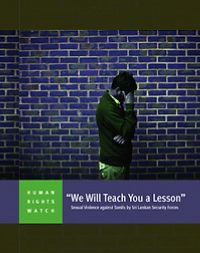
Human Rights Watch has released “We Will Teach You a Lesson”

(February, 2013)

Sexual Violence against Tamils by Sri Lankan Security Forces:

(London) – Sri Lankan security forces have been using rape and other forms of sexual violence to torture suspected members or supporters of the Liberation Tigers of Tamil Eelam (LTTE), Human Rights Watch said in a report released February, 2013. While widespread rape in custody occurred during the armed conflict that ended in May 2009, Human Rights Watch found that politically motivated sexual violence by the military and police continues to the present...2013......Please click the image above to freely download the 144page report via HUMAN RIGHTS WATCH... 

View original post

Drones from the Other Side | MichaelMoore.com.

The Bureau of Investigative Journalism has launched an ambitious new project aiming to identify as many as possible of those killed by CIA drOnes in Pakistan.namedead

It has launched a dedicated website – www.thebureauinvestigates.com/namingthedead – which will list the known names of those reported killed by drones together with as much biographical information as can be gathered.

At launch, the Bureau is publishing in English and Urdu the names of over 550 people – both militants and civilians. This list will grow in the future.

Of the named individuals:
  • 295 are civilians, including 95 children
  • 255 are alleged militants – of whom 74 are classed as senior commanders
  • Just two are women

Naming the Dead builds on the Bureau’s two-year project tracking drone strikes in Pakistan and the numbers of people reportedly killed. This extensive research has found that at least 2,500 people have reportedly been killed, including at least 400 civilians. But almost nothing is known about the identities of these casualties.

The Obama administration has claimed that drones are a highly precise weapon that target al Qaeda and affiliated groups, while causing almost no civilian harm. But it does not publish its own account of who it believes has been killed. By gaining a clearer understanding of who is dying in drone strikes the Bureau aims to inform the debate around the effectiveness of the US’s use of drones – and around this rapidly evolving weapons system.

Based at City University London, the Bureau works in collaboration with other groups to get its investigations published and distributed. Since its foundation the Bureau has  worked with BBC File On Four, BBC Panorama, BBC Newsnight, Channel 4 Dispatches, Channel 4 News, al Jazeera English, the Independent, the Financial Times, the Daily Telegraph, the Sunday Times, Le Monde, mediapart, the Guardian, the Independent, the Daily Mirror, the Observer and the Daily Mirror. 

…exctract of thought provoking piece, zapped over earlier, from the Australian Nuclear Free Alliance…

As the dust starts to settle and Australia reflects on the outcomes of the recent federal election many Aboriginal people have growing concerns over Tony Abbotts new Indigenous Advisory Council and the agenda behind its plans for ‘real action for Indigenous Australians’.

The Council appears to be on the road from idea to institution, with scant consultation or consent from Aboriginal and Islander people. In the style that has marked so much of successive governments approaches to our issues the proposed Council is top down and unrepresentative with Tony Abbott and Nigel Scullion being joined at the table by Warren Mundine, Noel Pearson and Marcia Langton.

There may be more Aboriginal ‘leaders’ involved, but who knows – and that is the whole point. Unlike ATSIC or the newly re-elected National Congress – with all their limitations and flaws – the Indigenous Advisory Council is hand-picked by the politicians, not promoted by our people.

This is not to say that these three individuals do not have things to offer and positive contributions to make. But they do not have a mandate to represent all our views and they hold views about Aboriginal ‘development’ that are far removed from the lived experience and deeply held aspirations of many Aboriginal people. Particularly in relation to the role of the State and of the resource sector in the Coalitions new ‘open for business’ Australia…

...Mining is neither a new development nor a new answer to old problems. Mining has been around for hundreds of years. Look at Aboriginal life in Australia’s mining regions around Roeborne, Port Hedland and Port Augusta. Spend a couple of days out at Laverton, go talk to the folks at the missions in Kalgoorlie and tell us mining is pulling Aboriginal people out of poverty or reducing the rates of kidney disease and cancers. Look at the youth suicide rates, our people’s lack of representation in Parliaments and over representation in prisons. It’s not as simple as saying mining will pull us out of poverty, stop the welfare dependence and ‘save us’. It hasn’t done it in the last 200 years of occupation and excavation.

::: click here for piece in full : : :

A US-led trade deal is currently being negotiated that could increase the price of prescription drugs, weaken financial regulations and even allow partner countries to challenge American laws. But few know its substance. The pact, the Trans-Pacific Partnership (TPP), is deliberately shrouded in secrecy, a trade deal powerful people, including President Obama, don’t want you to know about…

…The negotiations are shrouded in secrecy, and once they are completed, Obama wants to rush the agreement through Congress — fast-tracking, they call it — with our elected representatives given the choice only of voting it up or down. Last year, over 130 members of Congress asked the White House for more transparency about what’s being negotiated, and were essentially told to go fly a kite. ..

…You can be sure of this, however: a select group of corporate partners — companies like General Electric, Goldman Sachs, and Pfizer, the pharmaceutical giant — are not likely to be in the dark. Players like these stand to be the real beneficiaries of the agreement, because like other so-called “free trade” agreements, TPP actually will reward those at the top, even as it creates rules to override domestic laws on the environment, workplace safety, and investment. Corporate lobbyists already are lining up in Washington to ram the agreement through once the White House hurries it out of the delivery room. How do we know this? Because some vigilant independent watchdogs are tracking the negotiations, with sources they trust, and two are with me now…

YVES SMITH is an expert on investment banking and the founder of Aurora Advisors, a New York based management consulting firm. She runs the “Naked Capitalism” blog, a go-to site for information and insight on the business and ethics of finance.

DEAN BAKER is co-director of the progressive Center for Economic and Policy Research in Washington, DC. He’s been a senior economist at the Economic Policy Institute and a consultant to Congress and the World Bank. I rarely miss his blog, “Beat the Press,” and I’m a regular reader of his column in the “Guardian” newspaper…

…clickonthruheretoAlterNet…

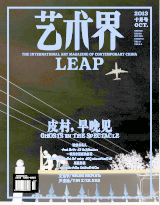
艺术界 LEAP 23

leapoct13

“While capitalist methods of production spur urban growth, their attendant practice of driving out whole communities has provided a temporary space for new segments of the population to gather. On the northeastern outskirts of the capital of the world’s factory one such space exists; it is called Picun.”

::: more in LEAP’s October issue, “Ghosts in the Spectacle,”…click above or below to access LEAP 23 :::

leapoct13gold

After releasing records with 4AD for a large part of their career, Cocteau Twins decided to take a step towards independence and started up the Bella Union record label, through which they could release their own work as well as any collaborative efforts. The band split up not long after, but instead of letting the newly formed label go under, Robin Guthrie, Cocteau Twins’ founder and lead guitarist and Simon Raymonde, the band’s bassist since 1984, decided to take charge of it…more @ bellaunion.com

banalityofevil...

Hannah Arendt, philosopher and writer, covered Adolf Eichmann’s trial for the New Yorker from Jerusalem, where he faced a court in 1961. The latter Gestapo head evaded capture until 1960 and had been living in Argentina. She witnessed successive psychiatrists declare him to be clinically sane, his demeanour was ‘ordinary’…

“in certain circumstances, the most ordinary, decent person can become a criminal”

Banality of Evil’, H.Arendt (1963)

A United Nations’ special rapporteur has called on the United States and Britain to release documents on their use of torture in the Iraq war, Press TV reports…

Guantanamo

“Despite this clear repudiation of the unlawful actions carried out by the Bush-era CIA, many of the facts remain classified, and no public official has so far been brought to justice in the United States…”

….UN special rapporteur on counter-terrorism Ben Emmerson said in a report to the UN Human Rights Council.

Emmerson, a British international lawyer, called on Washington “to publish without delay and to the fullest extent possible” the Senate Intelligence Committee report on the CIA rendition. He also called on Britain to submit its own version of the report as well.

…a fellow Bristolian-at-large…an interpretOr’s impression of Banksy in New York…as reuters.com reporting unexpected discovery of his painting, ‘the Banality of the Banality of Evil’, in Manhattan thrift store…plse. click image to access reuters

empirebanksy

Emma Donoghue in conversation with Sir Michael Rutter CBE FRS. This event was organised in partnership with the Royal Society of Literature and was held as part of the 2013 Royal Society Summer Science Exhibition.

Is the understanding of children a science or an art? Emma Donoghue’s seventh novel, Room, which has been garlanded with prizes and has sold over a million copies, explores the mind of a five-year-old, Jack, whose whole world is an 11 ft-square garden shed shared with his mother. Donoghue drew inspiration from ancient myths and from the horrific crimes of Josef Fritzl, but she has described the locked room as ‘a metaphor for the claustrophobic, tender bond of parenthood’, and much of the novel was based on close observation of her son, Finn. In a conversation chaired by Susannah Herbert, former literary editor of The Sunday Times, she talks to Sir Michael Rutter FRS, Professor of Developmental Psychopathology at the Institute of Psychiatry, King’s College London, about the enduring emotional consequences of significant childhood experiences, and the long-term effects of psychological and physical neglect on the development of the brain.

Emma Donoghue is an award-winning author. Sir Michael Rutter CBE FRS is Professor of Developmental Psychopathology at the Institute of Psychiatry. This event is chaired by Susannah Herbert who is Executive Director at the Forward Arts Foundation and former editor of the Sunday Times News Review

Warming up, yet waking up…?

Executive Summary…

• Americans’ belief in the reality of global warming has increased by 13 percentage points over the past two and a half years, from 57 percent in January 2010 to 70 percent in September 2012.

• At the same time, the number of Americans who say global warming is not happening has declined nearly by half, from 20 percent in January 2010 to 12 percent today.

• Those who believe global warming is happening are more certain than those who do not. Over half of Americans who believe global warming is happening (57%) say they are “very” (30%) or “extremely sure” (27%).

• By contrast, for the first time since 2008, fewer than 50 percent of the unconvinced are very (27%) or extremely sure of their view (15%), a decrease of 15 percentage points since March 2012.

• For the first time since 2008, more than half of Americans (54%) believe global warming is caused mostly by human activities, an increase of 8 points since March 2012. The proportion of Americans who say it is caused mostly by natural changes in the environment has declined to 30 percent (from 37% in March).

• For the first time since November 2008, Americans are more likely to believe most scientists agree that global warming is happening than believe there is disagreement on the subject (44% versus 36%, respectively). This is an increase of 9 points since March 2012.

• Today over half of Americans (58%) say they are “somewhat” or “very worried” – now at its highest level since November 2008.

• Americans increasingly perceive global warming as a threat to themselves (42%, up 13 points since March 2012), their families (46%, up 13 points), and/or people in their communities (48%, up 14 percentage points).

• Global warming is also perceived as a growing threat to people in the United States (57%, up 11 points since March 2012), in other modern industrialized countries (57%, up 8 points since March), and in developing countries (64%, up 12 points since March).

• A growing number of Americans believe global warming is already harming people both at home and abroad. Four in ten say people around the world are being harmed right now by climate change (40%, up 8 percentage points since March 2012), while 36 percent say global warming is currently harming people in the United States (up 6 points since March).

• Three out of four Americans (76%) say they trust climate scientists as a source of information about global warming, making them the most trusted source asked about in the survey. Scientists (who do not specialize in climate) are also trusted by a majority of Americans (67%), as are TV weather reporters (60%).

::: just click the tomato to access the report ::: 

tomato

AlterNet carried a story a few years back about APA report,’ Psychology and Global Climate Change: Addressing a Multi-faceted Phenomenon and Set of Challenges’ …bit of backstory below and full download open source…with disturbing new IPCC findings currently being released, we thought it well worth another look…

 Janet Swim, a social psychologist at Penn State, suggested the APA (American Psychological Association) create a task force to examine the relationship between psychology and climate change, two topics that weren’t readily connected for many APA members, let alone the broader climate science community.

“When I first thought about this, I had a limited range of what psychology could do,” Swim said. “I had no idea we’d end up with a 240-page report.” 

“Just as one might puzzle over the collapse of vanished regional civilizations like the Maya of Central America, the Anasazi of North America, the Norse of Greenland, and the people of Easter Island,” the report reads, “future generations may find it incomprehensible that people, particularly in industrialized countries, continued until well into the 21st century to engage in behavior that seriously compromised the habitability of their own countries and the planet.”

APA synopsis of Section 3: What are the psychosocial impacts of climate change?

Although they cannot be described with certainty given current research, the cumulative and interacting psychosocial effects of climate change are likely to be profound. Heat, extreme weather events, and increased competition for scarce environmental resources, compounded by preexisting inequalities and disproportionate impacts among groups and nations, will affect interpersonal and intergroup behavior and may result in increasing stress and anxiety. Even in the absence of direct impacts, the perception and fear of climate change may threaten mental health. However, there is reason to believe that positive consequences are also possible, as people take collective responsibility for a shared problem.

::: simply press image below to access report in full & pdf :::

marcqwash

Professor Maggie Snowling FBA FBPsS

About the lecture…

Without the ability to read fluently and with accurate comprehension, for many children there can be a downward spiral of poor educational achievement and career prospects. Studies following the development of children at family-risk of dyslexia have revealed that it is associated with language delays and speech difficulties in pre-school years before reading instruction even begins. Literacy outcomes in children depend not only on the risk factors that predispose reading difficulties but also on protective factors which mitigate the risk. Join Professor Snowling as she discusses the impact dyslexia has on society and asks whether it is possible to intervene early to ameliorate its impact.

About the speaker…

Professor Maggie Snowling FBA is President of St. John’s College, Oxford, and a Fellow of the British Psychological Society. She was a member of the Rose Review on Dyslexia and is Past-President of the Society for the Scientific Study of Reading. She is also a fellow of Academy of Medical Sciences.

::: please see our Psychology & wellbeing links section for further info :::

Lou Reed at Occupy Lincoln Center…

The late, great Lou Reed with Laurie Anderson joined Occupy Wall Street and Philip Glass to protest for free speech and assembly and against colonial-style arts funding, after the last performance of Glass’s “Satyagraha” opera at Lincoln Center Dec. 2011…

newstatebrand

animation: NASA

Anthropogenic climate change is the increase in average global temperatures due to human-caused changes in the earth’s atmosphere. Humans are intensifying the atmosphere’s natural greenhouse effect by releasing gases that trap heat energy, including carbon dioxide, methane, and water vapor, primarily through the burning of fossil fuels. These gases are changing in the chemical makeup of the atmosphere, leading to changes in the global climate. Overall, human release of greenhouse gas emissions leads to a rise in average global temperatures. At regional levels, this temperature increase can manifest in different ways depending on local factors.

There is a strong consensus amongst climate scientists, backed by decades of peer-reviewed research, that human greenhouse gas emissions are leading to unprecedented changes in the Earth’s climate.  If emissions exceed a critical ‘tipping point’, the planet is likely to be on course for abrupt or accelerated climate change, with grave risks to humans and ecosystems.


Reports & Studies


Helpful Links

jfkonsecrecy

“All of the prediction models suggest we are on a worst case trajectory and some cases worse than the worst case.”

James Murdoch, ‘This much I know’, Observer (UK), 7 June 2009 – via Murdoch’s Politics, David McKnight, Pluto Press (2013)

recognise

The relentless pursuit of profit is killing people, homogenizing human life and destroying our planet. Billions of us consumer citizens being  subjected to a seemingly eternal onslaught of mendacious, managerialistic and euphemistic twaddle…conditioned by Global Murdoch,  PR and additional forms of propaganda. It’s no accident in a way that Edward Bernays, originator of ‘Public Relations’,  was part of the Freud dynasty…Sigmund’s nephew, infact…’Good PR’ – as in effective – is invisible, but the impact, indelible…

20 or so years ago, an ex CEO of Washington-based PR corporation Hill & Knowlton….gave a lecture that was to prove infamous, in which he held in the one hand that morning’s edition of the NY Times, and in the other, a red marker pen, and he said something like…

“OK. This is today’s Times. I’m gonna circle with the marker every piece of editorial content that I know is derived from the PR industry. The paid advertising is already obvious, so I’ll leave that alone…I won’t circle that. …”

He then proceeded to circle what would amount to 70% of all edit content…page after broadsheet page, filled up with those red circles. He then expressed regret over his pivotal role in selling Gulf war One to middle America and beyond…

Under this man’s watch, Hill & Knowlton were hired 1990 by the Kuwaiti Royal Family, and they pioneered the VNR – video news release – as a core communications solution to drumming up public awareness of Kuwait and “them dastardly Iraqis and that baad, baad maaan, Sadaaammm…”

‘…Hello Kuwaiti Royal Family, wanna know how to get right inside the heads of several hundred million Americans who currently have neither knowledge or care of your existence ???’

‘…Errr, well, YES. Yes please…’

Thousands upon thousands of video cassettes were churned out to hundreds, if not thousands of US tv news stations, channels…coast to coast, border to border…far and wide…couriered by new networks like Fed Ex…and this every day, en masse, for more than a year…

One of the first VNRs contained footage of testimony to a US Joint Session of Congress Hearing on alleged Iraqi atrocities…This was the emotive and galvanising testimony by a young woman who addressed the hearing in person, claiming to have been a nurse at Kuwait General hospital…before Congress…under oath…describing babies being taken out of incubators by invading Iraqi forces…this testimony was released on thousands of VNRs…BUT….as Wikipedia and the annals of history remind us…

Nayirah Testimony refers to the controversial testimony given before the non-governmental Congressional Human Rights Caucus on October 10, 1990, by a female who provided only her first name, Nayirah. In her emotional testimony, Nayirah stated that after the Iraqi invasion of Kuwait she had witnessed Iraqi soldiers take babies out of incubators in a Kuwaiti hospital, take the incubators, and leave the babies to die. Though reporters did not then have access to Kuwait, her testimony was regarded as credible at the time and was widely publicized. It was cited numerous times by United States senators and the president in their rationale to back Kuwait in the Gulf War.

Her story was initially corroborated by Amnesty International[1] and testimony from evacuees. Following the liberation of Kuwait, reporters were given access to the country. An ABC report found that “patients, including premature babies, did die, when many of Kuwait’s nurses and doctors..fled” but Iraqi troops “almost certainly had not stolen hospital incubators and left hundreds of Kuwaiti babies to die.”[2][3]

In 1992, it was revealed that Nayirah’s last name was al-Ṣabaḥ (Arabic: نيره الصباح‎) and that she was the daughter of Saud bin Nasir Al-Sabah, the Kuwaiti ambassador to the United States. Furthermore, it was revealed that her testimony was organized as part of the Citizens for a Free Kuwait public relations campaign which was run by Hill & Knowlton for the Kuwaiti government. Following this, al-Sabah’s testimony has largely come to be regarded as wartime propaganda.

Making a killing?

Immigration Minister Scott Morrison has defended the use of the term “illegal arrivals” to describe asylum seekers, saying he is “calling a spade a spade”. (ABC News 21/10/13)

Here at the interpretOr, we are defending use of the term ‘gutless, nasty and deeply foul CONservative’ in describing Morrison, as we too are now “calling a spade a spade”

If you want to peel back the layers of deception pro-Israel groups and the media have created, Max Blumenthal’s new book.Goliath: Life and Loathing in Greater Israel is the perfect place to start. It’s the bluntest book you’ll read about the state of Israeli society, as it looks deep into the soul of an ethnocracy that dominates the lives of millions of Palestinians…

blumen

Blumenthal’s book, based on four years of on-the-ground reporting and research, takes the reader from the occupied West Bank to prisons for African refugees to Palestinian areas within Israel. Through a series of profiles and vignettes, he paints a devastating portrait of a country obsessed with demographics bent on permanently subjugating the non-Jews who live between the Mediterranean Sea and the Jordan Riverclick here for interview with Max Blumenthal @ AlterNet

Max Blumenthal is an award-winning journalist and bestselling author whose articles and video documentaries have appeared in The New York Times, The Los Angeles Times, The Daily Beast, The Nation, The Guardian, The Independent Film Channel, The Huffington Post, Salon.com, Al Jazeera English and many other publications. His new book, Goliath: Life and Loathing in Greater Israel, is in stores now. His 2009 book, Republican Gomorrah: Inside The Movement That Shattered The Party, is a New York Times and Los Angeles Times bestseller.

greenpeace

Ana Paula is a 31-year old from Brazil who wanted to peacefully protest Russia’s plans to drill the Arctic. Now she, along with her 29 crewmates from the Greenpeace ship Arctic Sunrise, is locked in a Russian jail with no release in sight. But we can throw her and the rest of her crew a lifeline.

The Greenpeace staff, some in solitary confinement, are now facing fifteen years in prison on trumped up charges of piracy. Their crime? Hanging a banner on a Russian oil rig to protest dangerous deepwater drilling in one of the earth’s most beautiful and fragile places. Many western governments have already spoken out, but now Ana Paula and Greenpeace are asking the Avaaz community to help build a truly global outcry. 

Together we can call on some of Russia’s strongest trade and political partners — Brazil, India, South Africa and the EU — to call for the release of the Arctic 30. Let’s reach 1 million to free Ana Paula and her friends. Once we hit that mark, Avaaz will project their faces in key public places to keep this story at the top of the news. (Avazz

click here to sign the petition via Avazz

Andy Forrest, welcome to Earthtalk.

 – G’day Breeonezlet, pleasure to be here…

Ok. Mr Forrest, as you know, this interview is likely to be reaching planets that are not entirely familiar with your profession. Can you describe a typical working day?

– Umm, yes. Yes, Breeonezlet, I can describe such a day. I tend to wear leeesure denims, nice shirts that are untucked, and I’m in charge of my very own mining company. We dig up iron ore – a vital resource. We keep the world turning.

 An important job, is it, back there on Earth?

– For me, mining is my life, my passion…kinda almost a religion.

Mr Forrest, how do your people feel about this ‘mining religion’?

– Look, at the end of the day, my people are very content, moving forwards.

 Mr Forrest, we understand that your area of Earth was populated by ‘traditional owners’ for around 90,000 of your Earth years. Can you describe your joy in sharing the bounty of the ‘mining religion’ with other ‘traditional owners’?

– Umm…well…My family have a long history in Western Australia, going as far back as the NINETEENTH CENTURY, Breeonezlet…quite frankly, we, umm…

Mr Forrest, you’re obviously a bright and numerate man, how does that compare to 350 centuries? 

– Well, the point is, the point is really…

 Mr Forrest, thank you. We’d better leave it there for now. Best wishes with your ‘mining religion’ job and we appreciate your time.

Well, viewers, that was Mr Forrest, one of Earth’s leading ‘miners’.  As we saw, he seemed reluctant to put his income source into perspective – this trait also has been a theme of this series on ‘Earth: roles, incomes and the future’

psych13

::: click here to access via issuu :::

The age of the superhuman

Christian Jarrett gets to grips with cyborg technology

I never forget a face!

Josh P. Davis, Ashok Jansari and Karen Lander investigate super-recognisers in the police and the general public

Who will become a super artist?
Jennifer E. Drake and Ellen Winner consider the significance of exceptional drawing skills in childhood

The super-altruists
Tom Farsides considers whether there is such a thing, and its potential cost

Searching for superhuman
Christopher C. French navigates the outer limits as he considers how psychologists should respond to extraordinary claims

::: click here to access via issuu :::

lmd1013

Current issue: October 2013

… Syrian crisis special report: US, France, Iran, UN; Germany, Merkel’s hat-trick, workers’ changing loyalties; US, decline of Detroit; Brazil, big business; Balkans, who lives where?North Korea, re-educating refugees; Burmese labour for Thailand’s fish trade; watching tv in China … and more…

::: just click cover pic to access :::

Sri Lanka’s toxic climate of intolerance and fear…

jfreos's avatarthe interpretOr

Sri Lanka, June 2013: intolerance and fear

“…A climate of intolerance and fear continues to sweep the island as the government’s stranglehold on the population grows ever tighter. In March, Chief Justice Shirani Bandaranayake was impeached after declaring a government bill unconstitutional.

Lawyers working on torture and other human rights cases have been targeted and harassed. Meanwhile, the cases of Kumar, Poddala and the many activists who have disappeared have not been independently or credibly investigated.

Yet the authorities claim that their human rights record has improved – a claim reinforced by their selection as hosts of the November meeting of Commonwealth leaders. It is a whitewash of immense proportions, says Poddala.

“I can’t understand why the Commonwealth has decided to do this,” he told us, “because no civil society organization is allowed to function there. There are no human rights in Sri Lanka.”

…for more on this story, click through…

View original post 4 more words

coontposter

syref

Watching the endless stream of dismal news from Syria, we can feel at a loss at how to help. The truth is that much more can be done to help millions bearing the brunt of the conflict; all that is missing is the political will to do it.

“Countries across the world can take concrete measures to alleviate the suffering of those who have been displaced by the conflict. More than 4.25 million have been displaced inside Syria and two million are refugees abroad, this amounts to nearly a third of the population. There is little political controversy in helping them, no bickering in the United Nations Security Council, no public disagreement between Russia and the USA. So why is it not happening? ” (AL Jazeera)

Amnesty International’s Deputy Director for Global Thematic Issues, outlines five concrete steps the international community can take to help those displaced by the Syrian conflict.

First: Borders must stay open to those escaping the conflict. Neighbouring countries have taken very large numbers of refugees but there have been some unfortunate exceptions. Jordan is not letting in, among others, Palestinian refugees who have been resident in Syria for decades. Egypt has turned away Syrians arriving in the country and deported several hundred others.

Second: The international community – particularly EU countries, Gulf countries Russia, China, India, the USA and others that have the economic means – must fully fund the UN humanitarian appeal for Syria. Humanitarian support must be sustained and not a one off contribution; there should be a clear commitment from individual countries and groupings like the G20 to ensure that humanitarian appeals continue to be funded.

Neighbouring countries, in particular Jordan and Lebanon, will need ongoing support to be able to continue hosting large numbers of refugees and providing them with essential services, such schooling and health care. Lebanon is now hosting 759,000 refugees from Syria; one in every six people in the country. Jordan, one of the most water-stressed countries in the world is now home to 525,000 refugees from Syria, a twelfth of the country’s population. Here again, the role of the international community is critical.

Third: Anyone fleeing Syria should be considered in need of international protection. The vast majority of refugees from Syria, including Palestinian refugees, are likely to meet the criteria for refugee status under international law. They should be able to access refugee protection and the benefits afforded by refugee status. Key to this is that refugees from Syria should not be restricted to short residency periods or excluded from family reunification.

Fourth: Refugees from Syria, like all refugees, should not be subject to immigration detention. Refugees from Syria have been detained in various countries including Bulgaria, Egypt and Greece. Immigration detention of refugees is unlawful under international law.

Fifth: European countries, which resettle a relatively small number of refugees, should take vulnerable refugees out of the region, either by offering to resettle them or through humanitarian admission programmes. These must be over and above paltry existing refugee resettlement programmes. And it must be a serious effort of resettling thousands of refugees, not just token numbers. Resettlement and humanitarian admission will only make a small dent in the very large number of refugees hosted by Syria’s neighbours, but it can be a very effective way of assisting those that are most vulnerable.


Will the new Iranian president’s diplomatic opening survive the onslaught from detractors like Israel, Saudi Arabia and members of the U.S. Congress?

The new Iranian leader’s diplomatic moves have brought hope to those searching for an end to hostility between Iran and the U.S. In the days leading up to the annual gathering of world leaders in New York, Iranian president Hassan Rouhani proclaimed to NBC News that Iran would not seek nuclear weapons under any circumstances and penned a Washington Post op-edin which he declared, “I’m committed to fulfilling my promises to my people, including my pledge to engage in constructive interaction with the world.”

It was all part of Rouhani’s effort to pave the way for a potential new chapter in U.S.-Iranian relations…

::: click here for piece in full @ AlterNet :::


childbps

Laboratory research pioneered by psychologist Carol Dweck has shown the short-term benefits of praising children for their efforts rather than their inherent traits. Doing so leads children to adopt a so-called “incremental mindset” – seeing ability as malleable and challenges as an opportunity to learn.


Now a new study co-authored by Dweck and led by Elizabeth Gunderson has made the first ever attempt to monitor how parents praise their young children in real-life situations, and to see how their style of praise is related to the children’s mindset five years later.

The researchers observed and recorded 53 individual parents interacting with their children in the home for 90 minutes, whether playing, having a meal or whatever. They did this when the children were aged 14, 26 and 38 months. Five years later, the researchers caught up with the kids and asked them questions about their attitudes and mindset towards ability, challenges and moral goodness.


The key finding was the more parents tended to praise their pre-school age children for effort (known as process praise, as in “good job”), the more likely it was that those children had a “incremental attitude” towards intelligence and morality when they were aged seven to eight…

::: click here for this piece in full at BPS Research Blog :::


Oz taxpayer money now funding the live export of children…

abbchild

The Australian government has started exporting children and their families to offshore detention facilities. The first four children went to Manus Island, a place notorious for it’s deadly form of malaria. Others will be slated for transfer to Nauru and Manus. The physical and psychological price of detaining these children cannot be calculated. But the dollar price can. According to the Expert Panel on Asylum Seekers the estimated cost of housing asylum seekers on Nauru and Manus Island will be $2.3 billion over four years (more if the number of boat arrivals continue to rise). That amounts to $575,000,000 a year, $1,575,342.46 a day, $65,639.27 per hour, $1093.99 per minute or $18.23 a second.

$483,054,183.03…as of 4.29pm 23 Sept ’13


A short animated film introducing OpenIDEO, an online community where people can create solutions to some of the world’s toughest challenges. http://openideo.com

There are reasons to celebrate despite continued economic stagnation and growing debt: the culture of resistance in the US is here and it’s having an effect. This week, AlterNet reflects on the second anniversary of Occupy Wall Street and the fifth anniversary of the financial collapse…

There are reasons to celebrate despite continued economic stagnation and growing debt: the culture of resistance in the US is here and it’s having an effect. The corporate power that has so blatantly stomped on our rights and whipped Congress to do its bidding is faltering and losing its grip. There are cracks in the pillars of power, and it’s up to us to pry them open and shine light on the lies and corruption that have been used to steal our future. We see a movement that is building momentum.

AlterNet looks back over the events of the past two years and we feel cautiously optimistic. We remember wondering as we watched the Arab Spring bloom and the encampments grow in Spain and state capitals like Madison whether people in the US were ready to rise up and demand more than the crumbs we’ve been convinced to accept for decades…

::: click here for piece in full @ Alternet :::