


One presidential hopeful’s assessment is that the child care system in the U.S. is disastrous. And based on the findings of a new survey, many working parents in the U.S. have reason to agree. The Pew Research Center…
|
TOP STORIES THIS WEEK
|
|
WORKING IN THESE TIMES
|
Challenges and problems can derail your creative process … or they can make you more creative than ever. In the surprising story behind the best-selling solo piano album of all time, Tim Harford may just convince you of the advantages of having to work with a little mess.

In awe of his older brother, William, Henry James declared himself inadequate — to his family, as well as to the times. It improved his writing markedly… more »
The first email was sent in 1971. Since then email has gone from obscure to beloved to barely tolerated. Yet it endures. Why?… more »
All roads of American modernism didn’t run through James Laughlin, but many of them intersected there… more »
Arts & Letters Daily is brought to you by
The Chronicle of Higher Education
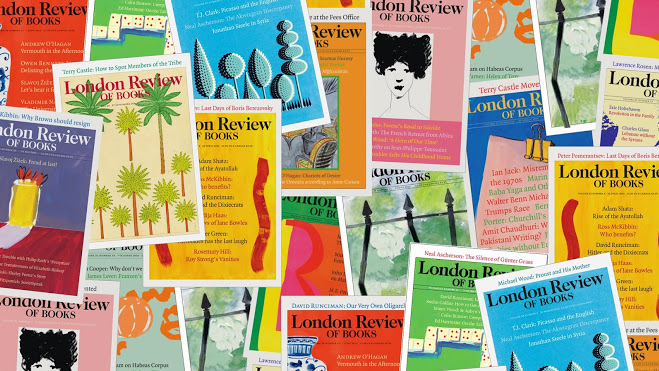
…France, assault on liberties, FN rise; EU Schengen under threat; special report, Latin America’s right turn; Tunisia five years on; US primaries socialism gets a voice; Korean reunification, a waiting game; Africa, presidents for life, Benin’s black market; US tough-on-crime sheriffs; Cross and Crescent…
::: click here or cover to access…English language :::
excerpt:
With over a billion users, Facebook is changing the social life of our species. Cultural commentators ponder the effects. Is it bringing us together or tearing us apart? Psychologists have responded too – Google Scholar lists more than 27,000 references with Facebook in the title. Common topics for study are links between Facebook use and personality, and whether the network alleviates or fosters loneliness. The torrent of new data is overwhelming and much of it appears contradictory. Here is the psychology of Facebook, digested:
Is Facebook making us lonely and sad?
This is the crunch question that has probably attracted the most newspaper column inches (and books). A 2012 study took an experimental approach. One group were asked to post more updates than usual for one week – this led them to feel less lonely and more connected to their friends. Similarly, a survey of over a thousand FB users found links between use of the network and greater feelings of belonging and confidence in keeping up with friends, especially for people with low self-esteem. Another study from 2010 found that shy students who use FB feel closer to their friends (on FB) and have a greater sense of social support. A similar story is told by a 2013 paper that said feelings of FB connectedness were associated with “with lower depression and anxiety and greater satisfaction with life” and that Facebook “may act as a separate social medium …. with a range of positive psychological outcomes.” This recent report also suggested the site can help revive old relationships.
Yet there’s also evidence for the negative influence of FB. A 2013 study texted people through the day, to see how they felt before and after using FB…
::: click here for this extensive piece in full + open access @ BPS Research Digest :::
…I have no idea how Sacha Baron Cohen’s Ali G character sneaked through my gate to ask Noam outrageous things like, “How many words does you know?” and “What is some of them?” I do remember that Noam came to me afterward looking dazed. “No more men in gold suits,” he said, sighing…
::: click on through for piece in full @ The Chronicle of Higher Education :::

excerpt…
DEC 17, 2015 SCIENCE
Can psychological research change your life? Most of the time, no—findings by psychologists don’t usually bear on everyday concerns. My colleagues at Yale, for instance, study topics such as the neuroscience of memory, how babies reason about social groups, and decision-making in psychopaths. Such studies are intended to explore how the mind works, and while their findings might ultimately make the world a better place—at least this is what we say in our grant proposals—that’s not their immediate focus…
Paul Bloom is a contributing writer for The Atlantic and the Brooks and Suzanne Ragen Professor of Psychology at Yale University. He is the author of a forthcoming book about empathy.
The Powers of Ten films are two short American documentary films written and directed by Charles and Ray Eames. Both works depict the relative scale of the Universe according to an order of magnitude (or logarithmic scale) based on a factor of ten, first expanding out from the Earth until the entire universe is surveyed, then reducing inward until a single atom and its quarks are observed.


One presidential hopeful’s assessment is that the child care system in the U.S. is disastrous. And based on the findings of a new survey, many working parents in the U.S. have reason to agree. The Pew Research Center…

Along with a $1.1 trillion spending bill that will keep government funded…

The Communications Workers of America (CWA) on Thursday endorsed Sen. Bernie…
Marina Abramović’s art pushes the boundary between audience and artist in pursuit of heightened consciousness and personal change. In her groundbreaking 2010 work, “The Artist Is Present,” she simply sat in a chair facing her audience, for eight hours a day … with powerfully moving results. Her boldest work may still be yet to come — it’s taking the form of a sprawling art institute devoted to experimentation and simple acts done with mindful attention. “Nothing happens if you always do things the same way,” she says. “My method is to do things I’m afraid of, the things I don’t know, to go to territory that nobody’s ever been.


The Indigenous Peoples’ Pavilion at the UNFCCC COP 21 in Paris is located within the civil society ‘Climate Generations Space’, directly adjacent to the COP 21 “Blue Zone” negotiation space.
The Indigenous Peoples’ Pavilion is organized and programmed by the International Indigenous Peoples’ Forum on Climate Change (IIPFCC) with support from the Governments of Norway and France, in addition to UNDP.
Indigenous Peoples around the wOrld…
There are over 370 million indigenous people around the world. They have their own distinct languages, cultures, and social and political institutions apart from mainstream society. Though divided amongst all continents, at least 5000 different peoples, and approximately 4000 languages, they are coming together with a common voice to address historic inequities which have resulted in these groups being some of the most marginalized and victimized communities.
Indigenous Peoples, the Environment and Climate Change…
Given their widespread reliance on natural resources and ecosystems, indigenous peoples and local communities are especially vulnerable to, and disproportionately impacted by, climate change. They are being forcibly removed from their lands by deforestation, sea-level rise, major infrastructure projects, and conflict arising from resource scarcity. All the while, they play a critical role in climate change mitigation and adaptation through their historic and effective role as stewards of much of the world’s remaining forests….
source: IIPFCC ::: click logo, or here, to access :::
As climate talks in Paris approach, stakes are high for frontline communities with the most to lose. Yesterday, UNICEF reported that children will suffer the harshest impacts from rising temperatures. Their findings revealed that “over half a billion children live in extremely high flood occurrence zones; nearly 160 million live in high or extremely high drought severity zones.”
The billions of children in these vulnerable areas are also living below the poverty line. Along with death and devastation brought on by climate change impacts, rising temperatures can also contribute to malnutrition, malaria and diarrhea — all of which are deadly to children. With the WMO revealing that this year is the hottest on record, NGOs are turning up the pressure on negotiators to deliver an even stronger deal to “avert these costs for the world’s poorest people.”
Coverage
Tools and Resources
::: click above to access @ Al Jazeera :::

|
TOP STORIES THIS WEEK
|
|
It is not a radical political vision. It’s an unflinching commitment to democracy.
BY THEO ANDERSON
The response to the Paris attacks should be to bring back class struggle by insisting on global solidarity of the exploited.
BY SLAVOJ ZIZEK
A stint in the slammer convinced the conservative author that liberals are crooks.
Our response to such unspeakable tragedies can’t be to create even more tragedies in other countries.
BY GREGORY SHUPAK
It’s unconscionable that refugees fleeing the horrors of war and poverty are being met with calls for their removal by the counties they are seeking safety in.
Some of Zizek’s ideas about Syrian refugees skirt dangerously closely to the Right’s.
Salaita’s settlement is a victory for him and academic freedom. But will we ever know who was watching him?
BY MARILYN KATZ
A new film traces the history of America’s most famous housing projects.
BY MAYA DUKMASOVA
A fundamental aspect of ISIS’ strategy lies in the necessity of a heavy-handed, reactionary response from the West to further their own narrative, ideology and recruiting.
BY TOM ENGELHARDT
Zionism began as class-oriented project within the Jewish community. Opposing it requires a class analysis of who benefits from Zionism within that community.
BY BENJAMIN BALTHASER
Activists said the reading materials were untested, insensitive and clueless.
BY SARAH LAHM
The greatest threat to Israel’s security today is neither ISIS nor Iran, but its own occupation of Palestine.
BY MARC DAALDER
In order to create a more egalitarian society, we must take back the reins of our government from the billionaire class.
BY BERNIE SANDERS
|
| WORKING IN THESE TIMES |
| Security Guards from Chicago’s O’Hare Airport Join One-Day Nationwide Airport Worker Strike
Security guards at O’Hare International Airport in Chicago walk off the job as part of a wave of labor actions at 11 major American airports this week.
BY TOM LADENDORF
|
| RURAL AMERICA |
|
Industrialized countries are the biggest contributors to global warming, but it is farmers and rural communities that are among the first to suffer from climate change.
BY RURAL AMERICA IN THESE TIMES
|
There is perhaps no better demonstration of the folly of human conceits than this distant image of our tiny world. To me, it underscores our responsibility to deal more kindly with one another, and to preserve and cherish the pale blue dot, the only home we’ve ever known.
Carl Sagan

We must show Islamophobes that there is no clash of civilizations; just a clash of moral values between decent human beings and mass-murdering lunatics.
Excerpt…
It can be hard not to fall for simplistic narratives fed to us by mainstream media during such times. After all, it seems more convenient to believe that the Paris attacks demonstrate that there is a war between the West and Islam as it provides a relatively straightforward answer to a largely complex problem. However, such rhetoric, whether we realise or not, only strengthens the narrative of IS.
“Attacks like the ones tonight in Paris are committed to purposely trigger an Islamophobic backlash,” writes Nader Atassi, an anti-IS blogger. “That backlash is not an unintended consequence of such attacks; it is part of their logic. Isis wants an Islamophobic backlash because it lends credence to their narrative that there is a war between the West and Islam. By strengthening and emboldening the xenophobic right-wing in Europe, they strengthen their own worldview as well. And the most tragic irony is that the backlash may target refugees who themselves had been fleeing Isis’ reign of terror.”
::: just click New Statesman logo above for this and other pieces, free + in full :::
What happened in Paris on November 13 has happened before, in a shopping district of Beirut on November 12, in the skies over Egypt on October 31, at a cultural center in Turkey on July 20, a beach resort in Tunisia on June 26—and nearly every day in Syria for the last four years.
The scenario is by now familiar to all of us. News of the killings will appear on television and radio. There will be cries of horror and sorrow, a few hashtags on Twitter, perhaps even a change of avatars on Facebook. Our leaders will make staunch promises to bring the terrorists to justice, while also claiming greater power of surveillance over their citizens. And then life will resume exactly as before.
Except for the victims’ families. For them, time will split into a Before and After. We owe these families, of every race, creed, and nationality, more than sorrow, more than anger. We owe them justice.
We must call to account ISIS, a nihilistic cult of death that sees the world in black and white, with no shades of gray in between.We must call to account Bashar al-Assad, whose response to peaceful protesters in the spring of 2011 was to send water cannons and military tanks to meet them.
We must call to account the governments of the United States, France, Britain, Russia, Iran, and many others, who lent support and succor to tyrant after tyrant in the Middle East and North Africa, and whose interventions appear to create 10 terrorists for every one they kill.
We must call to account George W. Bush and Dick Cheney, whose disastrous invasion of Iraq in 2003 and subsequent disbanding of the Iraqi army destabilized the entire region.
Wahhabi ideas have spread throughout the region not because they have any merit—but because they are well funded. We must call to account the Saudi kings—Salman, Abdullah, and Fahd—whose funding of Wahhabi doctrine gave rise to the scourge of Islamic extremism…’
::: click on through here for piece in full + free @ The Nation :::
…excerpt from The Tree:
In the first concrete legal action against ExxonMobil’s web of climate lies, New York Attorney General Eric Schneiderman has announced he will investigate whether the oil giant knowingly misled the public and investors about the dangers of climate change. Last month from InsideClimate News and the Los Angeles Times revealed that Exxon’s own scientists warned the company’s top leadership that burning fossil fuels causes climate change with potentially “catastrophic” impacts as far back as 1977. Yet despite this warning the company spent decades funneling millions of dollars into groups that dispute or cast doubt on the connection between fossil fuels and climate change. With the dirty tactics of fossil fuel companies well and truly in the open, the ExxonMobil investigation should be a warning shot for other companies that they will no longer be allowed to peddle misinformation and must once and for all wake up to the dampening demand for fossil fuels…
More recent coverage of Exxon Mobil climate change revelations…
- More oil companies could join Exxon Mobil as focus of climate investigations (New York Times)
- ExxonMobil under investigation over claims it lied about climate change risks (Guardian)
- Exxon Mobil investigated in New York over possible lies on climate (New York Times)
- Gore calls for Exxon Mobil inquiry on climate change (New York Times)
- Congressmen call on SEC to investigate Exxon’s climate disclosures (Inside Climate News)
- Exxon knew about climate change almost 40 years ago (Scientific American)
- ExxonMobil targets journalists and activists after climate change investigation (Motherboard)
Projected impact of the former on Paris Climate Talks?
The New Matilda:
‘Malcolm Turnbull’s Dirty Money Means Oz Won’t Be Taken Seriously At Paris Climate Talks, says 350.org’
Climate advocacy group 350.org has demanded Malcolm Turnbull divest from ExxonMobil, which is under investigation for a climate change cover-up…
::: click here for piece in full @ The New Matilda :::
WORKING IN THESE TIMES
Labor For Bernie Sanders Activists Say They Are Undeterred By Union Endorsements of Hillary Clinton
RURAL AMERICA
|
PATRICK COCKBURN
The military balance of power in Syria and Iraq is changing. The Russian air strikes that have been taking place since the end of September are strengthening and raising the morale of the Syrian army, which earlier in the year looked fought out and was on the retreat. With the support of Russian airpower, the army is now on the offensive in and around Aleppo, Syria’s second largest city, and is seeking to regain lost territory in Idlib province. Syrian commanders on the ground are reportedly relaying the co-ordinates of between 400 and 800 targets to the Russian air force every day.

… Russia’s Syrian game; Middle East’s new players; Dilma Rousseff’s troubles; China special it’s the economy stupid; brave new countryside; climate special report Paris talks must not fail; ‘reality rift’ between facts and words; disputed future of northern territories; gas fields in the eastern Med; bye bye bayou; Google under EU scrutiny; before big data; supplement solidarity for kids… and more…
Can we, as adults, grow new neurons? Neuroscientist Sandrine Thuret says that we can, and she offers research and practical advice on how we can help our brains better perform neurogenesis—improving mood, increasing memory formation and preventing the decline associated with aging along the way.
“It’s like having a global 24-hour-a-day, 365-day-a-year search warrant running on whole societies, including Australia.”
Senator Scott Ludlam
Australia accessed private internet data gathered by the NSA even more than Britain, according to a previously unreported document released by Edward…
As Mental Health Week 2015 draws to a close, here’s an enaging and succinct short on Mindfulness…
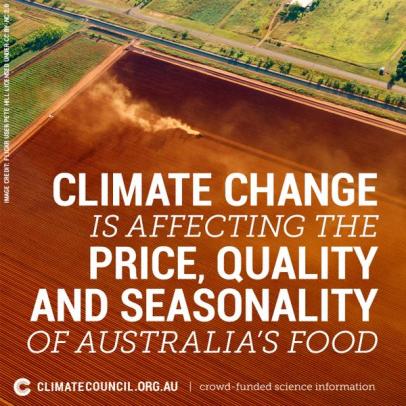
“Australia is one of the most vulnerable developed countries in the world to climate change impacts. This is already posing very significant challenges to food production. Food prices will continue to go up, the quality of food could be compromised and the seasonality of food could change as the climate continues to warm and weather patterns become more unpredictable. Many of our favourite foods, including milk, fruit, vegetables, wine and beef are already being affected by climate change and these impacts will grow as weather extremes get worse.”
The Climate Council’s Professor Lesley Hughes
Climate change represents a clear and growing threat to Australia’s food security, according to a new report from The Climate Council. Titled Feeding a hungry nation: climate change, food and farming in Australia, the report shows that rising temperatures and lower rainfall have already affected crop yields, and both yields and quality will continue to decrease as climate change drives more frequent and intense extreme weather events, such as bushfires and drought. As agricultural commodities are worth roughly $50 billion a year, and the agriculture, forestry and fishing sector employs 2.6 per cent of all Australians, the impact on Australia’s economy will likely be great – particularly if action to address climate change remains inadequate. The Climate Council warns that strong, urgent action to transition to a low carbon economy is needed, and if undertaken will – like more efficient use of water resources and protection of farmland from coal mining – help Australia secure its food supply while tapping into the vast co-benefits of climate action.

Amid a last minute scramble, leaders from the United States and 11 other Pacific Rim countries announced Monday that they had reached agreement on a sweeping trade deal, one that critics, including US presidential candidate Bernie Sanders, say will slash standards and protections for both consumers and workers—with impacts to be felt across the globe.
The agreement, known as the Trans Pacific Partnership (or TPP), which would tie together as much as 40 percent of the world’s economy, has for nearly 8 years been negotiated in secret. Though details of the compromise were not yet revealed early Monday, critics said that—minutia aside—the global trade pact will certainly be a boon for corporate power…
“TPP is a deal for big business,” said Nick Dearden, director of the UK-based Nick Dearden,Global Justice Now.
“Wall Street and other big corporations have won again. It is time for the rest of us to stop letting multi-national corporations rig the system to pad their profits at our expense.”
– Bernie Sanders
Presidential candidate Bernie Sanders was also quick to condemn the deal. Saying he was disappointed but not surprised by the “disastrous” agreement, Sanders added: “Wall Street and other big corporations have won again. It is time for the rest of us to stop letting multi-national corporations rig the system to pad their profits at our expense.”
The compromise was reached after five days of round-the-clock negotiations in Atlanta, Georgia. U.S. President Barack Obama reportedly “spent recent days contacting world leaders to seal the deal.”
The negotiations had been extended after talks got stuck over the issue of how long a monopoly period should be allowed on next-generation biotech drugs. The compromise reportedly reached between the U.S. and Australia “is a hybrid that protects companies’ data for five years to eight years,” the New York Times reports, falling short of the 12 years desired by U.S. negotiators…’

Climate change is unfair. While rich countries can fight against rising oceans and dying farm fields, poor people around the world are already having their lives upended — and their human rights threatened — by killer storms, starvation and the loss of their own lands. Mary Robinson asks us to join the movement for worldwide climate justice.
Mary Robinson served as president of Ireland from 1990 to 1997, and as UN High Commissioner for Human Rights from 1997 to 2002. She now leads a foundation devoted to climate justice. Full bio
“Australia needs to get our planes out of Syria. We’re only adding to the chaos and confusion, and putting more lives at risk. The Liberal Government couldn’t articulate a strategy or exit plan when this involvement first began, and this mess we’re in is the result.
“There is no clarity around this alliance. Nuclear-armed states with an already strained relationship are proceeding on an ad-hoc basis. Already we’ve seen the consequences of this, with Russian bombs seemingly striking US-backed rebels, not ISIS.
“This is a tinderbox set to explode. Airstrikes from all sides must cease until the anti-ISIS forces have a shared understanding of how they’ll proceed.
“Australia could play a key role in bringing those parties together, instead of participating in uncoordinated airstrikes in Syria.
“It was heartening to see the Labor party highlight the need for a debate about the attacks on Syria. Perhaps next time they’ll give our servicemen and women their due and join the Greens in making this point before our forces are deployed, instead of rubber stamping every Coalition misadventure overseas in an effort to avoid being labelled ‘weak’ on National Security.
Russia and the United States agree to call urgent military talks to head off the risk of clashes between their forces after Moscow’s dramatic entrance into the Syrian war and its claimed assault on the Islamic State group.
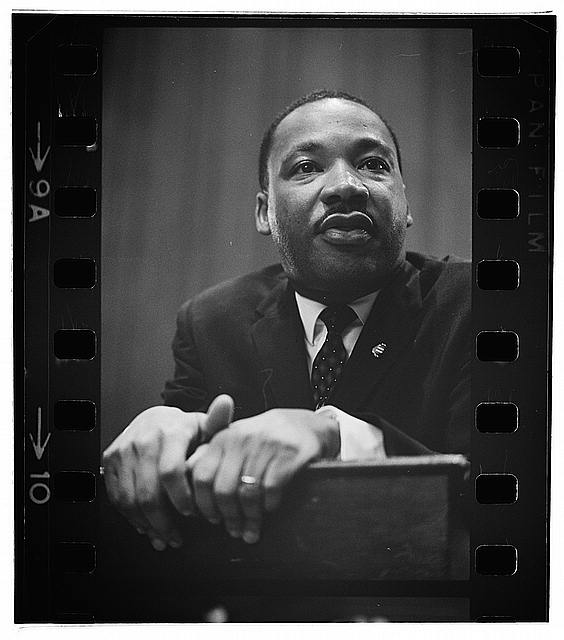
I refuse to accept the view that mankind is so tragically bound to the starless midnight of racism and war that the bright daybreak of peace and brotherhood can never become a reality.
C21 hereditary tyrant


'If artists betray the social conscience and the basic principles of being human, where does art stand then?' Ai Weiwei

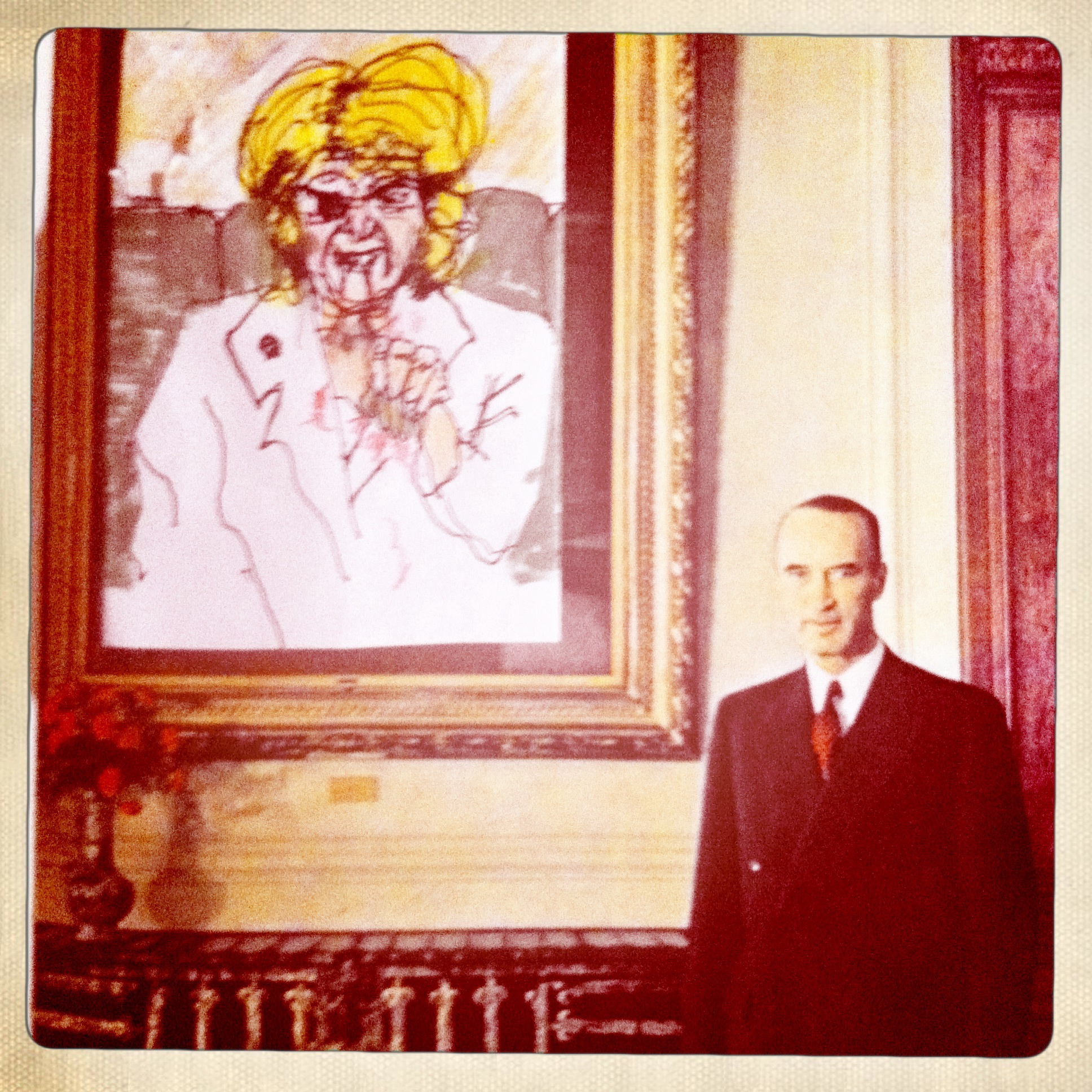
chamber of horrOrs...


jellybellypolies of the very recent past


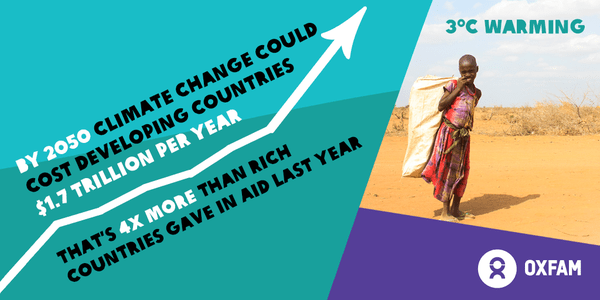


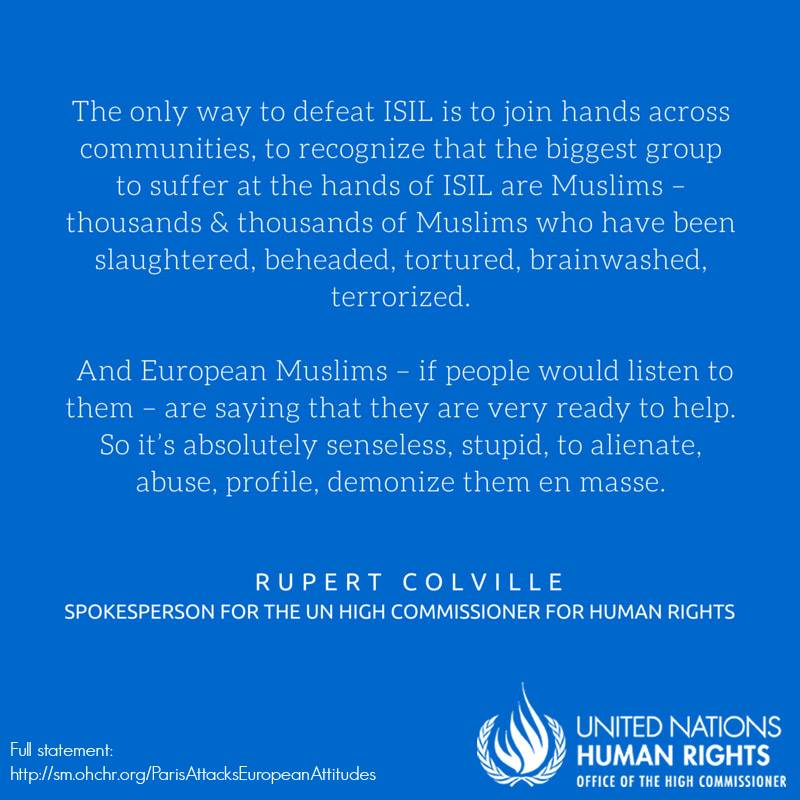








 the interpretOr