
Category: media
To combat online censorship, Reporters Without Borders is unblocking access to 9 news websites in order to make them available in the 11 countries where they are currently banned.
The nine mirror sites created by Reporters Without Borders…
- Grani.ru, blocked in Russia, is now available at https://gr1.global.ssl.fastly.net/
- Fergananews.com blocked in Kazakhstan, Uzbekistan and Turkmenistan, is now available at https://fg1.global.ssl.fastly.net/
- The Tibet Post International, blocked in China, is now available at https://tp1.global.ssl.fastly.net/
- Dan Lam Bao, blocked in Vietnam, is now available at https://dlb1.global.ssl.fastly.net/
- Mingjing News, blocked in China, is now available at https://mn1.global.ssl.fastly.net/news/main.html
- Hablemos Press, blocked in Cuba, is now available at https://hp1.global.ssl.fastly.net/
- Gooya News, blocked in Iran, is now available at https://gn1.global.ssl.fastly.net/
- Gulf Centre for Human Rights, blocked in United Arab Emirates, is now available at https://gc1.global.ssl.fastly.net/
- Bahrain Mirror, blocked in Bahrain and Saudi Arabia, is now available at https://bahrainmirror.global.ssl.fastly.net/
This list is also available at https://github.com/RSF-RWB/collateralfreedom
To help make freely-reported news and information available in these countries, all Internet users are invited to join in this operation by posting this list on social networks with the #CollateralFreedom hashtag.
The former prime minister of Australia, Kevin Rudd, is also a longtime student of China, with a unique vantage point to watch its power rise in the past few decades. He asks whether the growing ambition of China will inevitably lead to conflict with other major powers — and suggests another narrative.
TED 2015, filmed March 2015.

|

Momentum continues to build for the next UN Framework Convention on Climate Change (UNFCCC) meeting in Paris this December, with nations realising the huge benefits of climate action and getting on with the job of developing their national emissions reduction plans for the negotiations. These action plans – known as “Intended Nationally Determined Contributions” (INDCs) – marry national goals reflecting individual circumstances and ambitions with a UN framework to keep average global warming below the internationally agreed 2DegC red line.
So far, Switzerland, the European Union, Norway, and Mexico have all submitted plans, but Australia has further cemented its reputation as a coal-obsessed wrecker by not only ignoring the deadline, but dragging its feet and only now calling for public submissions on what it should do. Its discussion paper ignores the 2DegC red line, it attempts to cook the books (again) by describing its current target as “equivalent to a reduction of 13 per cent below 2005 levels” instead of referring to its inadequate five percent below 1990 levels commitment. It also totally ignores the “5-25 per cent range” ittrumpeted in early 2010.
While the rest of the world moves forward, Australia’s climate change policy is “on course for ‘disastrous’ 4DegC warming” as it allows polluters to increase emissions as much as they like without penalty. While railing against the age of entitlement, the Abbott government is looking for special treatment to keep burning and selling coal. It claims it is determined to reduce emissions “without destroying jobs”, but its actions demonstrate that it does not understand the health, employment, environmental and economic benefits that come with cleaning up its economy. The Government has been captured by a dying coal industry, is fighting the future for it, and dooming Australia to climate pariah status on the world stage for its dim prospects.
Related Tree Alerts
- Australia cooking the books to meet emissions target as carbon pollution soars
- Climate Change Authority finds Australia’s 5% emissions target “not credible”
- Australia on a wing and a prayer as momentum builds for global climate deal
- Study shows keeping most coal in the ground is the only way to contain climate change
- Australian government’s “hard-line ideological agenda” at COP19 damaging reputation
Tweets…
- MT @Mattias_S: #Australia – when can we expect your #climate contributions, #INDC , You’re already behind #Mexico – Is that leadership?
- MT @MattGrudnoff: PM ‘Australia open for business’. Unless you’re an industry the govt is ideologically opposed to #auspol #climate http://t.co/E7UjKBOIqS
- MT @fionamcrobie: Submissions on Australia’s post-2020 emissions reduction target can be made here: http://t.co/v65OQQe89B #auspol #climate
By Rami Khouri / AlterNet
April 3, 2015
BEIRUT — The agreed parameters of a Joint Comprehensive Plan of Action (JCPOA) on Iran’s nuclear program that were reached Thursday between Iran and the P5+1 powers represent a monumental achievement that affirms the power of reason and diplomacy over the ravages of fear and warfare. The technical details of the complex understanding remain to be completed. For now, though, the lasting significant aspects of this development are about the past and the future: The past being the bold leadership that Iran and the United States have shown in launching and advancing the diplomatic negotiations, and the future being about the potential significant regional changes that will follow the implementation of a full agreement…
::: click here for piece in full @ AlterNet :::
Rami G. Khouri is was founding director and now senior policy fellow of the Issam Fares Institute for Public Policy and International Affairs at the American University of Beirut. Follow him on Twitter @ramikhouri.
The Booker prize winner Ian McEwan on the Charlie Hebdo attacks and freedom of speech…
“…We need to teach everyone just how important freedom of speech is…”
“…Talking and writing is all we’ve got. Slaughtering eacother is going to bring us to the very gates of hell.”


One of the six realms on the Buddhist Wheel of Life is the Hungry Ghost Realm, its inhabitants “creatures with scrawny necks, small mouths, emaciated limbs and large, bloated, empty bellies. This is the domain of addiction.”
A ravaged German-Canadian man is one day quoting the final lines of Goethe’s Faust, the next delivering a drug-fuelled anti-Semitic diatribe; a woman, very pregnant and intent on keeping her baby, is found beaten up on the sidewalk and screaming for drug money: these are among the hungry ghosts Dr. Gabor Maté encounters in his job as resident doctor at the Portland Hotel on Vancouver’s Downtown Eastside.


|
TOP STORIES THIS WEEK
|
|
It’s clear that Rahm Emanuel is out for himself and his rich friends, not for Chicagoans. BY RICK PERLSTEIN Anti-fracking forces pushed Gov. Andrew Cuomo (D) to pass the ban, and proved conventional wisdom wrong. BY ERIC WELTMAN In order to resolve the Israeli-Palestinian conflict, we should forget, not dwell in, an ancient past. BY SLAVOJ ZIZEK
Palestinian children are taken from their beds in night raids and not returned to their families for months. BY BETH MASCHINOT
By any other name, it still smells like torture. BY FLINT TAYLOR
The redesigned New York Times Magazine aims for a global outlook, but comes off as elitist. BY SUSAN J. DOUGLAS Public mental healthcare has been gutted in the past 50 years. An innovative Illinois law may provide an answer. BY ANNE-MARIE CUSAC Does a story-sharing program offer a chance at Southern reconciliation? BY THEO ANDERSON
While money poured into the recent elections, voters showed that they are tired of business as usual. BY KARI LYDERSEN
Kent Russell seeks to lay claim to the raw, serious stuff of the American male past. BY CHRIS LEHMANN The city’s progressives should claim no easy victories. BY MARILYN KATZ The victory wouldn’t have been possible without agitation from the grassroots. BY JAY CASSANO |
| WORKING IN THESE TIMES |
| How Chicago’s Grassroots Movements Defeated Rahm Emanuel at the Polls
The progressive swing in Chicago’s recent elections was no coincidence, it came out of years of grassroots organizing. BY AMISHA PATEL |


blurb…
Each generation of artists has to be sensitive to the needs of changing social and cultural structures in order to select the tactics of their practice. Tactics involve shaking off the rigidity of the art system—its productions and value systems—and, ultimately, mobilizing spaces beyond artistic practice. This issue’s cover feature probes into how artists worldwide “strategize”: we examine the art fair, corporatized art production, the urban context, invented and incorporated artist identities, and other tactics that expand the possibilities for contemporary art.
In addition, Leap’s middle section introduces two artists—Liu Wei, a unique Beijing figure, and medium-savvy Taiwanese video artist Kao Chung-Li. Robin Peckham uses diagrams to investigate the material and linguistic features of Liu’s work between 1999 and 2015; while Hsu Fang-Tze analyzes Kao Chung-Li’s video practice by way of his machines (including all sorts of video cameras, projectors and other mechanisms for image circulation propelled by capitalism), and looks at how the artist turns his eye back on the intellectual hegemony of image machines and machine images alike…

March 2015…
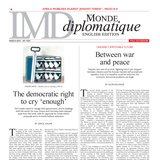
… Greece, under fire; Ukraine special report ,can the ceasefire hold? nuclear fuel in question, the territory Russia doesn’t want; US-Iran, time for a nuclear deal? Israel, ‘Bibi’s’ (sic) latest trick; radicalisation, Africa’s jihadist threat, France’s sink estates, mobilising Muslim leaders; North Korea’s new girl power; HSBC, Europe’s taxing problem… and more…
::: click cover to access :::

Current issue: January 2015
… Cuba in from the cold; drugs companies’ hard sell special report; rise and rise of Boko Haram;Darfur: the trouble with UN sanctions; Turkey: farewell to post-Ottoman dreams, Romaopening; Central Asia’s shifting plates; US special report: the meaning of Ferguson, is Iraq the new Vietnam? Australia courts the Chinese dragon; India’s car workers fight for rights… and more…
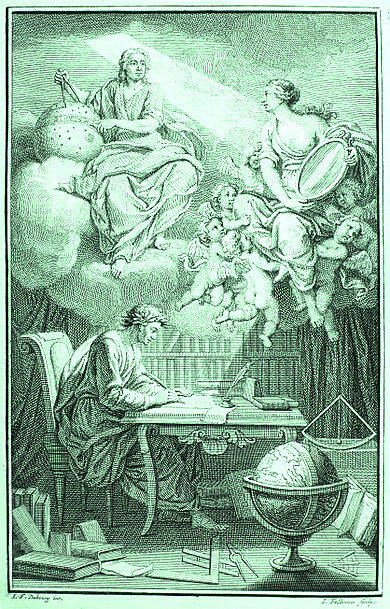
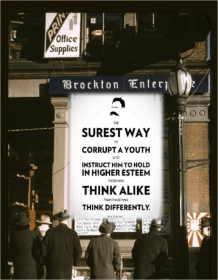
“I detest what you write, but I would give my life
to make it possible for you to continue to write…”
Francois-Marie Arouet de Voltaire, Letters, 1770.
 Rupert Murdoch
 Maybe most Moslems peaceful, but until they recognize and destroy their growing jihadist cancer they must be held responsible. (07/01/15)
Big jihadist danger looming everywhere from Philippines to Africa to Europe to US. Political correctness makes for denial and hypocrisy. (10/01/15)
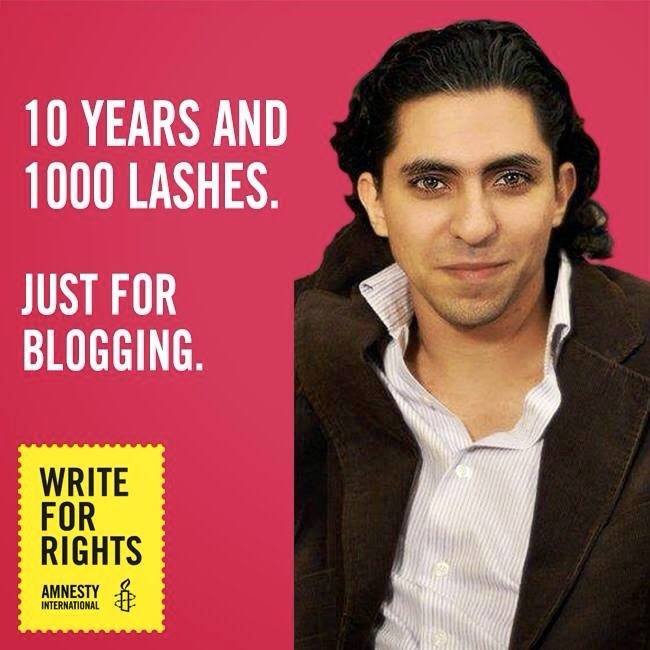
Saudi Arabia lashes a liberal blogger 50 times in public, despite widespread international outrage and calls for clemency from human right groups…
Hillel Neuer, Executive Director of UN Watch, said on twitter that blogger and activist, Raif Badawi, was lashed outside a mosque in the Red Sea coastal city of Jeddah on Friday, (09/01/15).
Badawi is due to undergo 50 lashes every week after Friday prayers, which will continue for 20 weeks until his punishment is complete.
Amnesty International says Badawi, who started the “Free Saudi Liberals” website, was sentenced to 10 years in prison and 1,000 lashes on charges related to accusations he insulted Islam on the online forum.
He was also ordered by Jeddah’s Criminal Court to pay a fine of $266,000.

Synthesis Report (2014) – IPCC
The Synthesis Report distils and integrates the findings of the three working group contributions to the IPCC (Intergovernmental Panel on Climate Change) Fifth Assessment Report — the most comprehensive assessment of climate change yet undertaken, produced by hundreds of scientists — as well as the two Special Reports produced during this cycle.
 Summary for Policymakers
SPM + Longer Report
Headline Statements
Factsheets
Video
Quick link to report PDFs


DID YOU MISS IT…

excerpt…
“…Earlier this month, the British Broadcasting Corporation, which sees itself as still the best broadcaster in the world, gave a well-bred expression of fear. Peter Horrocks, who has just stepped down as head of the BBC World Service, said “we are being financially outgunned by Russia and the Chinese (broadcasters) … the role we need to play is an even handed one. We shouldn’t be pro one side or the other, we need to provide something people can trust.”
Horrocks was saying that people could trust the BBC; they couldn’t trust the Russians and the Chinese; but that the latter were now real competition.
The Russian broadcaster, Russian Today (RT) found that offensive. In a bad tempered exchange with CNN’s Christiane Amanpour, RT’s presenter Anissa Naouai (who is American) said that her channel’s job was “closing the holes” in mainstream Western channels’ coverage — holes of misrepresentation, unchecked assertion and bias. She admitted – indeed proclaimed – that the Kremlin funded the channel: but it’s reason for doing so is that President Vladimir Putin “wants … Russia to be respected, mutually respected on an equal playing base, and he wants dialogue to prevail.”
RT has denied that it gets more funding than the BBC, and in a feisty reply to the charge, the broadcaster said that money did not account for its growing popularity; that is “happening because audiences around the world, including in the UK, have become inundated with the same talking points from the mainstream media and are looking for something fresh.”
But money isn’t the point. The Russian and Chinese English-language channels – RT and CCTV News – are provided by state broadcasters of the world’s two leading authoritarian states. The news and analyses they give to their own populations cannot do other than conform closely to the policies and priorities of the rulers of these states…”
John Lloyd co-founded the Reuters Institute for the Study of Journalism at the University of Oxford, where he is Director of Journalism. Lloyd has written several books, including “What the Media Are Doing to Our Politics” (2004). He is also a contributing editor at FT and the founder of FT Magazine.

Gaza City – Since this summer’s devastating war in the Gaza Strip, the number of patients seeking help from the Gaza Community Centre’s mental health programme has jumped by close to 50 percent.
The centre, which previously handled about 15 patients daily, is now seeing up to 25, administrators say – and the Gaza City centre is just one of three branches of Gaza’s mental health network. The NGO’s psychiatry, social work and physiotherapy services are available for free to residents, but social stigma still prevents an untold number from seeking help.
Psychologist Hasan Zeyada spoke with Al Jazeera about the challenges facing Gazans in the wake of a war that killed 2,200 Palestinians, and amid an ongoing, crippling siege.
Al Jazeera: How has your patient load changed since the summer war?
Hasan Zeyada: We have more cases that are referred to our centres. It’s the immediate reaction after war. A lot of people had psychological and behavioural consequences because of the trauma during the military Israeli aggression. A lot of people, they are in need of consultation, they are in need of intervention. We started to do our intervention immediately through field visits for the families who lost their homes and lost their family members, and for the injured people…
“The war was brutal and it was for a long time, and it’s the third experience for the children here in Gaza, so a lot of people have already developed acute stress disorder and post-traumatic stress disorder. They are in need of intervention.”
::: click on through to piece in full @ Al Jazeera :::

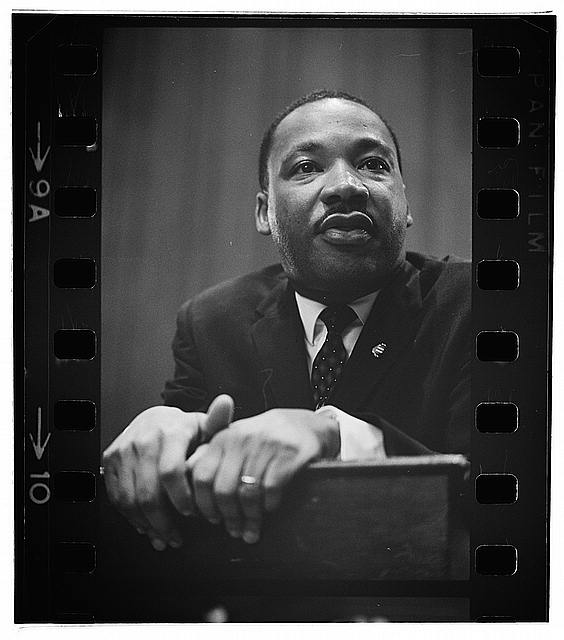
This is not your sanitized, Hollywood version of Dr. King.As “Selma” opens in a number of cities this week and expands to nationwide release in a couple of weeks, the country is given a chance to assess the legacy of Dr. Martin Luther King Jr. and the civil rights movement. Doing so is particularly relevant right now, in light of boisterous protests against police brutality that have been going on since the summer…
…just click image for piece in full @ AlterNet…
Doubts as water from giant China South North Water Diversion Project reaches capital
http://t.co/0xjqZvJcRWhttp://t.co/gGIeKsj6kZ

Prayer vigil held in New York for slain police officer
http://t.co/jzOcfZ2HKchttp://t.co/jiMBTQnhFn
Malaysia’s worst flooding in decades has forced some 118,000 people to flee their homes http://t.co/lx2IeJhDPGhttp://t.co/dAX4MGDm7n
Swedish protesters denounce mosque arson attack
Orphaned by 2004 tsunami, UK flip-flop kings repay Sri Lankan kindness


POPULAR
 SONY HACK: CLOONEY SAYS MOVIE IS ABOUT SNOWDEN, NOT JOURNALISM
 IRONY 101: STUDY ETHICS WITH LEGAL ACE WHO SANCTIONED NSA WIRETAPPING, CIA TORTURE
 MEET ALFREDA BIKOWSKY, THE SENIOR OFFICER AT THE CENTER OF THE CIA’S TORTURE SCANDALS
 BILLION DOLLAR SURVEILLANCE BLIMP TO LAUNCH OVER MARYLAND
 THE LATEST TWIST IN THE BIZARRE PROSECUTION OF BARRETT BROWN

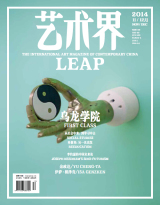
In “First Class,” LEAP takes a look at at contemporary art education from the bottom up, thinking in terms of learning rather than teaching; we invite educators, curators, and artists—especially those who have recently left school—to share their experiences of self-education, and to discuss the possibilities of a hidden curriculum.
McKenzie Wark introduces a perfect example of interdisciplinary thinking—Joseph Needham. According to Needham, the processes of thought and movement would dominate the his future plans, not only for understanding biological systems or the social structure of China’s past, but to infer the outcome of current and future social systems. Karen Archey explores German artist Isa Genzken’s practice, demonstrating her unique sense of artistic “fun.” Through an interpretation of Yu Cheng-Ta’s new work “Practicing LIVE,” Rikey Cheng expands on the alienation of the piece’s creation, improvisational structures, imitation, irony, and self-referentiality.
In our regular column “My Miles,” we interview Korean artist Haegue Yang, exploring how her practice is tied to her cultural and linguistic backgrounds, travels, and other abstract narratives; “Shop Talk” analyzes the ways in which Liu Xinyi’s work is grounded in political histories of text and image; in “On Canvas,” Song Yi attempts to decipher Liu Chuanhong’s Memoir in Southern Anhui, in which every possible medium is brought into play to convey Liu’s dreamscape; and “New Directions” brings in two young artists, Wang Xin and Austin Lee. In addition, you’ll also read about Guccivuitton, an artist-run gallery in Miami Beach, in “Institutional Critique”; the architectural exhibition “Modernism Revisited,” which stresses an exploration of modernism neglected by mainstream purview; the excavation of “Exhibition and Expediency” in Huang Sun Quan’s new solo exhibition; and a semi-fictional piece from Indonesia by Adam Bobbette.

As Australia picked up its shameful fourth Fossil of the Day award at the Lima climate talks Thursday (11/12/14), Climate Action Tracker (CAT) released a new analysis showing that creative accounting and years of diplomatic manoeuvring are allowing Australia to increase emissions while still meeting its minimum five per cent reduction commitment. CAT says in real terms Australia’s emissions are likely to be 26 per cent above 2000 levels by 2020, and a huge 47-59 per cent above its original Kyoto pledge.
Yet while its actual emissions are soaring, Australia can still meet its already lax commitments with barely any action thanks to being selective on baseline emission sources, and its creative approach to accounting for land use change and forestry. Australia has now taken to making threats if it is not allowed to use these favourable rules, which would allow it to emit a further six per cent more carbon on top of its already worst-in-show per capita emissions.
abstract…
In slapstick comedy, the worst thing that could happen usually does: The person with a sore toe manages to stub it, sometimes twice. Such errors also arise in daily life, and research traces the tendency to do precisely the worst thing to ironic processes of mental control. These monitoring processes keep us watchful for errors of thought, speech, and action and enable us to avoid the worst thing in most situations, but they also increase the likelihood of such errors when we attempt to exert control under mental load (stress, time pressure, or distraction).
Ironic errors in attention and memory occur with identifiable brain activity and prompt recurrent unwanted thoughts;…piece in full pdf below…
| Author: | Wegner, Daniel M. |
| Citation: | Wegner, Daniel M. 2009. How to think, say, or do precisely the worst thing for any occasion. Science 325(5936): 48-50. |
| Full Text & Related Files: | Worst_Thing.pdf (229.5Kb; PDF) |

extract…
International law prohibits the granting of immunities to public officials who have engaged in acts of torture. This applies not only to the actual perpetrators but also to those senior officials within the US Government who devised, planned and authorised these crimes.
As a matter of international law, the US is legally obliged to bring those responsible to justice. The UN Convention Against Torture and the UN Convention on Enforced Disappearances require States to prosecute acts of torture and enforced disappearance where there is sufficient evidence to provide a reasonable prospect of conviction. States are not free to maintain or permit impunity for these grave crimes.
It is no defence for a public official to claim that they were acting on superior orders. CIA officers who physically committed acts of torture therefore bear individual criminal responsibility for their conduct, and cannot hide behind the authorisation they were given by their superiors.
However, the heaviest penalties should be reserved for those most seriously implicated in the planning and purported authorisation of these crimes. Former Bush Administration officials who have admitted their involvement in the programme should also face criminal prosecution for their acts.
President Obama made it clear more than five years ago that the US Government recognises the use of waterboarding as torture. There is therefore no excuse for shielding the perpetrators from justice any longer. The US Attorney General is under a legal duty to bring criminal charges against those responsible.
Torture is a crime of universal jurisdiction. The perpetrators may be prosecuted by any other country they may travel to. However, the primary responsibility for bringing them to justice rests with the US Department of Justice and the Attorney General.”
(*) Check the Special Rapporteur’s full report: http://www.ohchr.org/Documents/HRBodies/HRCouncil/RegularSession/Session22/A-HRC-22-52_en.pdf
Ben Emmerson (United Kingdom) is the Special Rapporteur on the promotion and protection of human rights and fundamental freedoms while countering terrorism. On 1 August 2011, he took up his functions on the mandate that was created in 2005 by the former United Nations Commission on Human, renewed by the UN Human Rights Council for a three year period in December 2007, in September 2010 and again in March 2013. As Special Rapporteur he is independent from any Government and serves in his individual capacity. Learn more, log on to:http://www.ohchr.org/EN/Issues/Terrorism/Pages/SRTerrorismIndex.aspx
The Special Rapporteurs are part of what is known as the Special Procedures of the Human Rights Council. Special Procedures, the largest body of independent experts in the UN Human Rights system, is the general name of the Council’s independent fact-finding and monitoring mechanisms that address either specific country situations or thematic issues in all parts of the world. Special Procedures’ experts work on a voluntary basis; they are not UN staff and do not receive a salary for their work. They are independent from any government or organization and serve in their individual capacity.
UN Human Rights, country page – United States of America: http://www.ohchr.org/EN/Countries/ENACARegion/Pages/USIndex.aspx







 the interpretOr