
Category: psycholOgy
British Psychological Society research digest:
‘You’ve probably experienced this. You’re in the middle of telling your friend a story when his eyes flick across to his phone. Perhaps he even picks it up, checks the screen. “Sorry, go on,” he says. But your flow is interrupted. And you know his mind is at least half elsewhere.
Shalini Misra and her team approached 100 pairs of people (109 women; average age 33) in cafes across Washington DC and neighbouring districts. They asked them to chat for ten minutes at a table in the cafe about a trivial topic (plastic festive trees) or about the most meaningful events of the past year. For each pair, the researchers observed from a discreet distance and checked whether either party put a mobile device on the table, or held one in their hand. After ten minutes was up, each person in each pair was asked to fill out a few questionnaires about the conversation and their partner.
Feelings of “interconnectedness” (rated by agreement with statements like “I felt close to my conversation partner”) were reduced for pairs in which a mobile device was placed on the table or held by one of them. Similarly, “empathetic concern” (measured by items like “To what extent did your conversation partner make an effort to understand your thoughts and feelings about the topic you discussed?”) was rated lower by pairs in which a mobile device was brought into view. The topic of conversation made no difference to these results, but the reduction in empathetic concern associated with the presence of a mobile device was especially pronounced for pairs of people who were in closer relationships, perhaps because their expectations about the interaction were higher…’
::: click on through to the results @ BPS research digest :::
Bestselling author and researcher Jon Kabat-Zinn explores how mindfulness-based stress reduction can help you to go beyond the self, to identify and alleviate suffering in others. This clip is from the “Practicing Mindfulness & Compassion” conference on March 8, 2013. The Greater Good Science Center co-hosted this event.
Jon Kabat-Zinn is Professor of Medicine Emeritus and creator of the Stress Reduction Clinic and the Center for Mindfulness in Medicine, Health Care, and Society at the University of Massachusetts Medical School. Kabat-Zinn was a student of Zen Master Seung Sahn and a founding member of Cambridge Zen Center.
Sonja Lyubomirsky, PhD, examines happiness and how we can use our minds to better handle life’s challenges…
AMY GOODMAN: From disease to addiction, parenting to attention deficit disorder, Canadian physician and bestselling author Gabor Maté’s work focuses on the centrality of early childhood experiences to the development of the brain, and how those experiences can impact everything from behavioral patterns to physical and mental illness. While the relationship between emotional stress and disease, and mental and physical health more broadly, is often considered controversial within medical orthodoxy, Dr. Maté argues too many doctors seem to have forgotten what was once a commonplace assumption, that emotions are deeply implicated in both the development of illness, addictions and disorders, and in their healing.
Dr. Maté is the bestselling author of four books: When the Body Says No: Understanding the Stress-Disease Connection; Scattered: How Attention Deficit Disorder Originates and What You Can Do about It; and, with Dr. Gordon Neufeld,Hold on to Your Kids: Why Parents Need to Matter More than Peers; his latest is called In the Realm of Hungry Ghosts: Close Encounters with Addiction.
In our first conversation, Dr. Maté talked about his work as the staff physician at the Portland Hotel in Vancouver, Canada, a residence and harm reduction facility in Downtown Eastside, a neighborhood with one the densest concentrations of drug addicts in North America. The Portland hosts the only legal injection site in North America, a center that’s come under fire from Canada’s Conservative government…
DR. GABOR MATÉ: When people are mistreated, stressed or abused, their brains don’t develop the way they ought to. It’s that simple. And unfortunately, my profession, the medical profession, puts all the emphasis on genetics rather than on the environment, which, of course, is a simple explanation. It also takes everybody off the hook.
AMY GOODMAN: What do you mean, it takes people off the hook?
DR. GABOR MATÉ: Well, if people’s behaviors and dysfunctions are regulated, controlled and determined by genes, we don’t have to look at child welfare policies, we don’t have to look at the kind of support that we give to pregnant women, we don’t have to look at the kind of non-support that we give to families, so that, you know, most children in North America now have to be away from their parents from an early age on because of economic considerations. And especially in the States, because of the welfare laws, women are forced to go find low-paying jobs far away from home, often single women, and not see their kids for most of the day. Under those conditions, kids’ brains don’t develop the way they need to…
::::::::
“…if you look at the preponderance of ADD in North America now and the three millions of kids in the States that are on stimulant medication and the half-a-million who are on anti-psychotics, what they’re really exhibiting is the effects of extreme stress, increasing stress in our society, on the parenting environment. Not bad parenting. Extremely stressed parenting, because of social and economic conditions. And that’s why we’re seeing such a preponderance…”
::::click here for piece in full @ AlterNet::::
Obviously some people lie more often than others. What’s surprising is new research showing that the spread of lying propensity through the population is uneven. There is a large majority of “everyday liars”, and a small minority of “prolific liars”.
A few years ago Kim Serota and his colleagues put a figure on this. They surveyed a thousand US citizens and found that five per cent of the sample were responsible for 50 per cent of all lies told. Now Serota’s group have analysed data from nearly 3000 people in the UK and they’ve found the same pattern – the existence in the population of a minority of extremely prolific liars.
This new online survey is based on data collected as part of a public engagement project by the Science Museum in London in the Spring of 2010. Participants (51 per cent were female; average age 44.5) reported how often they told little white lies and how often they told big lies, as well as sharing their attitudes to, and experiences of lying.
The spread of answers was clearly skewed. Serota’s statistical analysis showed that 9.7 per cent of the UK sample were prolific liars. They averaged 6.32 little white lies per day and 2.86 big lies per day, compared with an average of 1.16 daily white lies and 0.15 daily big lies (about one per week) by the majority group of everyday liars.
::: click here for this piece in free + full @ BPS Research Digest :::
Steve Hickman, Psy.D., Executive Director of the UC San Diego Center for Mindfulness joins William Mobley, MD, PhD for a discussion of how to be present in the moment and leverage the practice of mindfulness to stay engaged, focused, and fulfilled.
1. Want people to trust you? Try apologising for the rain.
“Superfluous apologies represent a powerful and easy-to-use tool for social influence,” the researchers said. “Even in the absence of culpability, individuals can increase trust and liking by saying ‘I’m sorry’ – even if they are merely ‘sorry’ about the rain.”
2. The 100+ most followed psychologists and neuroscientists on Twitter.
When we updated the list in July, the top five were: Andrew Mendonsa (clinical psychologist), Kiki Sanford (neurophysiologist turned science communicator), Sam Harris (neuroscientist and author), Richard Wiseman (psychologist, blogger and author) and Laura Kauffman (child psychologist). Look out for another update next year.
3. Smiling fighters are more likely to lose.
… [UFC] fighters who smiled more intensely prior to a fight were more likely to lose, to be knocked down in the clash, to be hit more times, and to be wrestled to the ground by their opponent (statistically speaking, the effect sizes here were small to medium). On the other hand, fighters with neutral facial expressions pre-match were more likely to excel and dominate in the fight the next day, including being more likely to win by knock-out or submission.
4. A study of suicide notes left by children and young teens.
Contrary to their predictions, the researchers said that “the notes are coherent and do not reveal confusion or overwhelming emotions. The children and young adolescents emphasise their consciousness of what they are about to do and they take full responsibility.”
5. Women’s true maths skills unlocked by pretending to be someone else.
By separating their performance from their own identity, it seems the women performing under an alias no longer felt pressure to avoid being seen as an example of the harmful gender stereotype [that women are weaker at maths than men].
6. Older, more experienced therapists cry more often in therapy.
Looking at the correlates of being a therapist who cries in therapy, it was older, more experienced therapists and those with a psychodynamic approach, who were more likely to be criers. Surprisingly perhaps, female therapists were no more likely to cry in therapy than male therapists, despite the fact that they reported crying more often in daily life than the men.
7. Kids experience schadenfreude by age four, maybe earlier.
The kids of all ages (four to age years) showed evidence of schadenfreude, suggesting their emotional response to another person’s distress was influenced by their moral judgements about that person. That is, they were more likely to say they were pleased and that it was funny if the story character experienced a misfortune while engaging in a bad deed.
| 8. LEGO figures are getting angrier. |
Nevermind increasingly violent video games or the ever-present danger of an uncensored internet, a far more insidious and unexpected change is afoot that could be affecting our children’s emotional development. Researchers have discovered that the faces on LEGO Minifigures are becoming increasingly angry and less happy.
9. The supposed benefits of open-plan offices do not outweigh the costs.
“Our results categorically contradict the industry-accepted wisdom that open-plan layout enhances communication between colleagues and improves occupants’ overall work environmental satisfaction,” the researchers concluded. They added: “… considering previous researchers’ finding that satisfaction with workspace environment is closely related to perceived productivity, job satisfaction and organisational outcomes, the open-plan proponents’ argument that open-plan improves morale and productivity appears to have no basis in the research literature.”
10. Working memory training does not live up to the hype.
The results were absolutely clear. Working memory training leads to short-term gains on working memory performance on tests that are the same as, or similar to, those used in the training. “However,” the researchers write, “there is no evidence that working memory training produces generalisable gains to the other skills that have been investigated (verbal ability, word decoding, arithmetic), even when assessments take place immediately after training.”
–Compare this year’s top 10 to last year’s.
–See also: the top 10 psychology books of 2013.
Christian Jarrett has edited and written the BPS Research Digest since its inception in 2003 and he created the blog in 2005 (contact him on christianjarrett [@] gmail.com). Christian chooses and writes up the studies covered here. He also compiles the fortnightly Digest email, manages the Twitter and Facebook pages, helps with promotion and advertising, and oversees the new Occupational Digest (edited by Dr Alex Fradera).
The number of teenagers deliberately hurting themselves is on the increase. For example, the latest data for England show that over 13,000 15- to 19-year-old girls and 4,000 boys were admitted to hospital for this reason in the 12-month period up to June this year, an increase of 10 per cent compared with the previous 12-month period. More than ever we need to understand why so many young people are resorting to this behaviour.
A common motivation teenagers give is that non-suicidal self-harm provides a way to escape unpleasant thoughts and emotions. Another motive, little explored before now, is that self-harm is a way to deliberately provoke a particular desired feeling or sensation. A new paper from US researchers has explored this aspect of self-harm, known as “automatic positive reinforcement” (APR).
Edward Selby and his colleagues gave 30 teenagers who self-harm (average age 17; 87 per cent were female) a digital device to carry around for two weeks. Twice a day, the device beeped and the teens were asked to record their recent thoughts of self-harm, any episodes of self-harm, their motives, their actual experiences of what it felt like, as well as answering other questions…
::: click here for piece in full @ BPS Research Digest :::
J citation: Edward A. Selby, Matthew K. Nock, and Amy Kranzler (2013). How Does Self-Injury Feel? Examining Automatic Positive Reinforcement in Adolescent Self-Injurers with Experience Sampling. Psychiatry Research DOI:10.1016/j.psychres.2013.12.005
Further reading…
Goth subculture linked with history of suicide and self harm
The attitude of casualty staff towards self-harm
Tattoos, body piercings and self-harm – is there a link?
The sight of their own blood is important to some people who self-harm
Amnesty’s recent report is available to all in free and full – simply click image below for pdf…

here’s an extract re MENTAL HEALTH…
…A number of service providers and asylum seekers expressed concern about deteriorating mental health. STTARS and IHMS mental health team are struggling to cope with existing demand for their services, and this is only expected to grow as the population and length of detention increases. Some asylum seekers felt that there was a deliberate “psychological war”177 on them (by the Australian Government). A service provider said, “This is the process of how you break someone mentally,” when describing the conditions in the detention centre.178
“We are dying here… I am dying many times a day.”
—J.K., 15 November 2013
Jacopo Annese, a neuroanatomist and director of the Brain Observatory at UC San Diego, takes a humanistic approach to studying brains by getting to know donors while they are living in order to understand posthumously how their brain structure affected their personalities, memories and health. Annese explains his research to The Atlantic’s Ron Brownstein, as part of The Atlantic Meets the Pacific 2013 conference presented by The Atlantic and UC San Diego.

Hannah Arendt, philosopher and writer, covered Adolf Eichmann’s trial for the New Yorker from Jerusalem, where he faced a court in 1961. The latter Gestapo head evaded capture until 1960 and had been living in Argentina. She witnessed successive psychiatrists declare him to be clinically sane, his demeanour was ‘ordinary’…
“in certain circumstances, the most ordinary, decent person can become a criminal”
‘Banality of Evil’, H.Arendt (1963)
Emma Donoghue in conversation with Sir Michael Rutter CBE FRS. This event was organised in partnership with the Royal Society of Literature and was held as part of the 2013 Royal Society Summer Science Exhibition.
Is the understanding of children a science or an art? Emma Donoghue’s seventh novel, Room, which has been garlanded with prizes and has sold over a million copies, explores the mind of a five-year-old, Jack, whose whole world is an 11 ft-square garden shed shared with his mother. Donoghue drew inspiration from ancient myths and from the horrific crimes of Josef Fritzl, but she has described the locked room as ‘a metaphor for the claustrophobic, tender bond of parenthood’, and much of the novel was based on close observation of her son, Finn. In a conversation chaired by Susannah Herbert, former literary editor of The Sunday Times, she talks to Sir Michael Rutter FRS, Professor of Developmental Psychopathology at the Institute of Psychiatry, King’s College London, about the enduring emotional consequences of significant childhood experiences, and the long-term effects of psychological and physical neglect on the development of the brain.
Emma Donoghue is an award-winning author. Sir Michael Rutter CBE FRS is Professor of Developmental Psychopathology at the Institute of Psychiatry. This event is chaired by Susannah Herbert who is Executive Director at the Forward Arts Foundation and former editor of the Sunday Times News Review
Warming up, yet waking up…?
Executive Summary…
• Americans’ belief in the reality of global warming has increased by 13 percentage points over the past two and a half years, from 57 percent in January 2010 to 70 percent in September 2012.
• At the same time, the number of Americans who say global warming is not happening has declined nearly by half, from 20 percent in January 2010 to 12 percent today.
• Those who believe global warming is happening are more certain than those who do not. Over half of Americans who believe global warming is happening (57%) say they are “very” (30%) or “extremely sure” (27%).
• By contrast, for the first time since 2008, fewer than 50 percent of the unconvinced are very (27%) or extremely sure of their view (15%), a decrease of 15 percentage points since March 2012.
• For the first time since 2008, more than half of Americans (54%) believe global warming is caused mostly by human activities, an increase of 8 points since March 2012. The proportion of Americans who say it is caused mostly by natural changes in the environment has declined to 30 percent (from 37% in March).
• For the first time since November 2008, Americans are more likely to believe most scientists agree that global warming is happening than believe there is disagreement on the subject (44% versus 36%, respectively). This is an increase of 9 points since March 2012.
• Today over half of Americans (58%) say they are “somewhat” or “very worried” – now at its highest level since November 2008.
• Americans increasingly perceive global warming as a threat to themselves (42%, up 13 points since March 2012), their families (46%, up 13 points), and/or people in their communities (48%, up 14 percentage points).
• Global warming is also perceived as a growing threat to people in the United States (57%, up 11 points since March 2012), in other modern industrialized countries (57%, up 8 points since March), and in developing countries (64%, up 12 points since March).
• A growing number of Americans believe global warming is already harming people both at home and abroad. Four in ten say people around the world are being harmed right now by climate change (40%, up 8 percentage points since March 2012), while 36 percent say global warming is currently harming people in the United States (up 6 points since March).
• Three out of four Americans (76%) say they trust climate scientists as a source of information about global warming, making them the most trusted source asked about in the survey. Scientists (who do not specialize in climate) are also trusted by a majority of Americans (67%), as are TV weather reporters (60%).
::: just click the tomato to access the report :::

AlterNet carried a story a few years back about APA report,’ Psychology and Global Climate Change: Addressing a Multi-faceted Phenomenon and Set of Challenges’ …bit of backstory below and full download open source…with disturbing new IPCC findings currently being released, we thought it well worth another look…
Janet Swim, a social psychologist at Penn State, suggested the APA (American Psychological Association) create a task force to examine the relationship between psychology and climate change, two topics that weren’t readily connected for many APA members, let alone the broader climate science community.
“When I first thought about this, I had a limited range of what psychology could do,” Swim said. “I had no idea we’d end up with a 240-page report.”
“Just as one might puzzle over the collapse of vanished regional civilizations like the Maya of Central America, the Anasazi of North America, the Norse of Greenland, and the people of Easter Island,” the report reads, “future generations may find it incomprehensible that people, particularly in industrialized countries, continued until well into the 21st century to engage in behavior that seriously compromised the habitability of their own countries and the planet.”
APA synopsis of Section 3: What are the psychosocial impacts of climate change?
Although they cannot be described with certainty given current research, the cumulative and interacting psychosocial effects of climate change are likely to be profound. Heat, extreme weather events, and increased competition for scarce environmental resources, compounded by preexisting inequalities and disproportionate impacts among groups and nations, will affect interpersonal and intergroup behavior and may result in increasing stress and anxiety. Even in the absence of direct impacts, the perception and fear of climate change may threaten mental health. However, there is reason to believe that positive consequences are also possible, as people take collective responsibility for a shared problem.
::: simply press image below to access report in full & pdf :::

Professor Maggie Snowling FBA FBPsS
About the lecture…
Without the ability to read fluently and with accurate comprehension, for many children there can be a downward spiral of poor educational achievement and career prospects. Studies following the development of children at family-risk of dyslexia have revealed that it is associated with language delays and speech difficulties in pre-school years before reading instruction even begins. Literacy outcomes in children depend not only on the risk factors that predispose reading difficulties but also on protective factors which mitigate the risk. Join Professor Snowling as she discusses the impact dyslexia has on society and asks whether it is possible to intervene early to ameliorate its impact.
About the speaker…
Professor Maggie Snowling FBA is President of St. John’s College, Oxford, and a Fellow of the British Psychological Society. She was a member of the Rose Review on Dyslexia and is Past-President of the Society for the Scientific Study of Reading. She is also a fellow of Academy of Medical Sciences.
::: please see our Psychology & wellbeing links section for further info :::
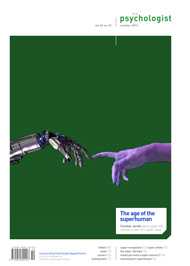
::: click here to access via issuu :::
The age of the superhuman
Christian Jarrett gets to grips with cyborg technology
Josh P. Davis, Ashok Jansari and Karen Lander investigate super-recognisers in the police and the general public
Who will become a super artist?
Jennifer E. Drake and Ellen Winner consider the significance of exceptional drawing skills in childhood
The super-altruists
Tom Farsides considers whether there is such a thing, and its potential cost
Searching for superhuman
Christopher C. French navigates the outer limits as he considers how psychologists should respond to extraordinary claims

Laboratory research pioneered by psychologist Carol Dweck has shown the short-term benefits of praising children for their efforts rather than their inherent traits. Doing so leads children to adopt a so-called “incremental mindset” – seeing ability as malleable and challenges as an opportunity to learn.
Now a new study co-authored by Dweck and led by Elizabeth Gunderson has made the first ever attempt to monitor how parents praise their young children in real-life situations, and to see how their style of praise is related to the children’s mindset five years later.
The researchers observed and recorded 53 individual parents interacting with their children in the home for 90 minutes, whether playing, having a meal or whatever. They did this when the children were aged 14, 26 and 38 months. Five years later, the researchers caught up with the kids and asked them questions about their attitudes and mindset towards ability, challenges and moral goodness.
The key finding was the more parents tended to praise their pre-school age children for effort (known as process praise, as in “good job”), the more likely it was that those children had a “incremental attitude” towards intelligence and morality when they were aged seven to eight…
::: click here for this piece in full at BPS Research Blog :::
A short animated film introducing OpenIDEO, an online community where people can create solutions to some of the world’s toughest challenges. http://openideo.com
The British Psychological Society has a fantastic public access research hub, called BPS Research Digest ( http://bps-research-digest.blogspot.com.au/), that continues to empower the visitor with an extensive array of topical and well researched pieces…here at the interpretOr, we just couldn’t go past this meta analysis on psychotherapy over drugs…extract below…
Kathryn McHugh and her colleagues identified 34 relevant peer-reviewed studies up to August 2011 involving 90,483 people, in which the participants were asked to indicate a straight preference between psychotherapy or drugs. Half the studies involved patients awaiting treatment, the others involved participants who were asked to indicate their preference if they were diagnosed with a psychiatric disorder. The researchers had hoped to study preferences among patients with a diverse range of diagnoses but they were restricted by the available literature – 65 per cent studies pertained to depression with the remainder mostly involving anxiety disorders.
Overall, 75 per cent of participants stated a preference for psychotherapy over drugs. Stated differently, participants were three times as likely to state that they preferred psychological treatment rather than medication. The preference for therapy remained but was slightly lower (69 per cent) when focusing just on treatment-seeking patients, and when focusing only on studies that looked at depression (70 per cent). Desire for psychotherapy was stronger in studies that involved more women or younger participants.
Many young people diagnosed with mental disorders have acted on their beliefs in ways that threaten authorities…

…Many young people diagnosed with mental disorders are essentially anarchists who have the bad luck of being misidentified by mental health professionals, who 1) are ignorant of the social philosophy of anarchism; 2) embrace, often without political consciousness, its opposite ideology of hierarchism; and 3) confuse the signs of anarchism with symptoms of mental illness.
The mass media equates anarchism with chaos and violence. However, the social philosophy of anarchism rejects authoritarian government, opposes coercion, strives for greatest freedom, works toward “mutual aid” and voluntary cooperation, and maintains that people organizing themselves without hierarchies creates the most satisfying social arrangement. Many anarchists adhere to the principle of nonviolence (though the question of violence has historically divided anarchists in their battle to eliminate authoritarianism). Nonviolent anarchists have energized the Occupy movement and other struggles for economic justice and freedom...writes psychologist Bruce e Levine…
::: this piece continues in full @ AlterNet…just click here :::
Yesterday, the Greens stepped forward with their position on mental health, calling on more sessions of psychological care to be made available to those who need them….
…Earlier today, the Chair of the Australian Mental Health Commission (AMHC) and the Chair of the Mental Health Council of Australia both called on our politicians to recognise the unspoken need for urgent reform. As Professor Allan Fels said in his statement, “This deafening silence on mental health cannot be justified”.
The ‘Alliance for Better Access’ is recognised by the major parties as a stakeholder on this significant issue of public concern, but right now we need all sides of politics to tell us what they intend to do ahead of the election. Join us in calling for policy reform. Tell our politicians that mental health matters to you leading up to the election.
You can find out how this issue is developing at http://www.betteraccess.net/index.php/information/latest-news/green-light and have your say.
Please spread the word. Every voice makes a difference!
Dr Ben Mullings, Alliance for Better Access
PsyCh Journal, China’s first international psychology journal, is the ‘flagship journal’ of the Institute of Psychology, Chinese Academy of Sciences – the only national psychology research institute in China…
PsyCh Journal is freely available during 2013 – just click August cover @ left to access…
Bruce E. Levine, a practicing clinical psychologist, writes and speaks about how society, culture, politics and psychology intersect @AlterNet and beyond…. His latest book is Get Up, Stand Up: Uniting Populists, Energizing the Defeated, and Battling the Corporate Elite. His Web site is www.brucelevine.net
…Underlying many of psychiatry’s nearly 400 diagnoses is the experience of helplessness, hopelessness, passivity, boredom, fear, isolation, and dehumanization—culminating in a loss of autonomy and community-connectedness. Do our societal institutions promote:
- Enthusiasm—or passivity?
- Respectful personal relationships—or manipulative impersonal ones?
- Community, trust, and confidence—or isolation, fear and paranoia?
- Empowerment—or helplessness?
- Autonomy (self-direction)—or heteronomy (institutional-direction)?
- Participatory democracy—or authoritarian hierarchies?
- Diversity and stimulation—or homogeneity and boredom?
Research (that Bruce E. Levine documented in Commonsense Rebellion) shows that those labeled with attention deficit hyperactivity disorder (ADHD) do worst in environments that are boring, repetitive, and externally controlled; and that ADHD-labeled children are indistinguishable from “normals” when they have chosen their learning activities and are interested in them. Thus, the standard classroom could not be more imperfectly designed to meet the learning needs of young people who are labeled with ADHD.
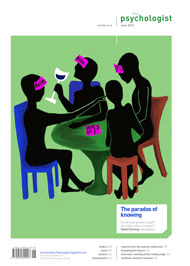
JUNE 2013
The paradox of knowing
Why do we have greater insight into others than ourselves? David Dunning outlines some intriguing research.
Big Picture: Personal space – Letters – News – Digest – Reports from the Annual Conference – Society – Careers – Reviews – New voices: An ecological approach to audio description – Looking Back: Freud and the British royal family – One to One… with Stephen Murgatroyd
Cosgrove L, Krimsky S (2012) A Comparison of DSM-IV and DSM-5 Panel Members’ Financial Associations with Industry: A Pernicious Problem Persists. PLoS Med 9(3): e1001190. doi:10.1371/journal.pmed.1001190
Introduction
All medical subspecialties have been subject to increased scrutiny about the ways by which their financial associations with industry, such as pharmaceutical companies, may influence, or give the appearance of influencing, recommendations in review articles [1] and clinical practice guidelines [2].
Psychiatry has been at the epicenter of these concerns, in part because of high-profile cases involving ghostwriting [3],[4] and failure to report industry-related income [5], and studies highlighting conflicts of interest in promoting psychotropic drugs[6],[7].
The revised Diagnostic and Statistical Manual of Mental Disorders (DSM), scheduled for publication mid May 2013 by the American Psychiatric Association (APA), has created a firestorm of controversy because of questions about undue industry influence. Some have questioned whether the inclusion of new disorders (e.g., Attenuated Psychotic Risk Syndrome) and widening of the boundaries of current disorders (e.g., Adjustment Disorder Related to Bereavement) reflects corporate interests [8],[9]. These concerns have been raised because the nomenclature, criteria, and standardization of psychiatric disorders codified in the DSMhave a large public impact in a diverse set of areas ranging from insurance claims to jurisprudence. Moreover, through its relationship to the International Classification of Diseases[10], the system used for classification by many countries around the world, the DSM has a global reach.
…this open source article continues by clicking through here t0 PLOS Medicine…
“The Human Zoo is a place to learn about the one subject that never fails to fascinate – ourselves. Are people led by the head or by the heart? How rational are we? How do we perceive the world and what lies behind the quirks of human behaviour?
Michael Blastland presents a curious blend of intriguing experiments to discover our biases and judgements, conversations, explorations and examples taken from what’s in the news to what we do in the kitchen – all driven by a large slice of curiosity.
Nick Chater, Professor of Behavioural Science at Warwick University, is on hand as guide and experimenter in chief.”
BBC Radio 4: click here to enter ZOO…
- Contributor – Professor Nick Chater (www.wbs.ac.uk)
- Contributor – Dr Nick Yeung (www.neuroscience.ox.ac.uk)
- Contributor – Andrew Pontzen: Cosmological Pianist (www.cosmocrunch.co.uk)
- Contributor – Professor Kathleen Vohs (www.carlsonschool.umn.edu)
- Baumeister & Tice: Ego Depletion Manipulations (www.psy.fsu.edu)
- PNAS: External Influences on Judges’ Decisions (www.pnas.org)
- YouTube – Change Blindness (www.youtube.com)
- Contributor – Professor Steven Connor (www.stevenconnor.com)
- Warwick Business School – Change Blindness Experiment(www.weblab.wbs.ac.uk)
- Big Think – Ego Depletion, Motivation & Attention (bigthink.com)
- Huffington Post – Articles by Professor Katherine Vohs (www.huffingtonpost.com)
- Science Now – Multitasking Splits the Brain (news.sciencemag.org)
- NPR – Think You’re Multitasking? Think Again. (www.npr.org)
 Click icon for unlimited FREE access to all Routledge Psych Journals throughout February.
10 of the best psychology links from the past week:
1. There’s More to Life Than Being Happy – by Emily Esfahani Smith for the Atlantic. “Leading a happy life, the psychologists found, is associated with being a ‘taker’ while leading a meaningful life corresponds with being a ‘giver’.”
3. Psychologists discuss the cocktail party effect – BBC Radio 4.
4. How switching tasks maximises creative thinking.
5. The Examined Life by Stephen Grosz – stories and case studies from 25 years as a London psychoanalyst – was BBC Radio 4’s Book of the Week. The book is “already something of a literary sensation“, says the Guardian.
6. The 12 cognitive biases that prevent you from being rational.
7. Psychological insights into human attention from the skills of a pick-pocket– by Adam Green for the New Yorker.
8. The jobs with the most psychopaths.
9. Psychologists discuss disgust – BBC Radio 4.
10. New book that’s definitely worth a look – The World Until Yesterday in which Jared Diamond explores what we can learn from traditional societies. Tom Payne, the Telegraph reviewer, said it left him “riveted and thinking hard“. But Wade Davis for The Guardian was less enthusiastic: “the lessons [Diamond] draws from his sweeping examination of culture are for the most part uninspired and self-evident.”
_________________________________
Post compiled by Christian Jarrett (@psych_writer) for the BPS Research Digest.
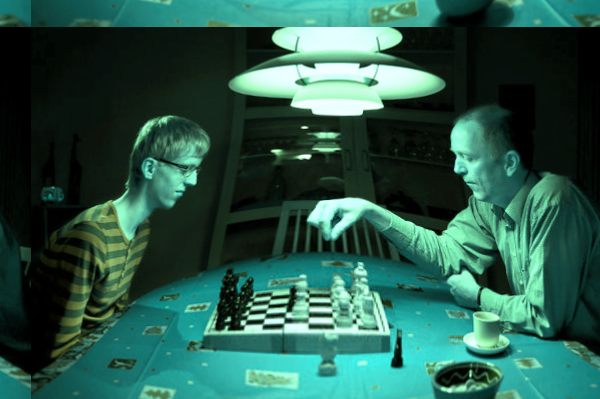 A company that only employs people with autism is changing attitudes towards autistic workers:
“At the outset, it was Thorkil’s aim to persuade Danish tech companies to hire his autistic employees. Now he wants all kinds of companies, all over the world, to learn from what Speecialisterne is doing. He figures that if he is successful, then maybe a national railway will consider hiring a candidate as seemingly unlikely as his son, as long as he has the right skills.”
Click here for The Autism Advantage story in full @ NYTimes.com
Gareth Cook is a Pulitzer Prize winner, a columnist for The Boston Globe and editor of ‘‘Best American Infographics’’ (fall 2013).
Who understands the human mind better: Psychologists or crime writers? This was the theme of a free public event organised by the Society’s Scottish branch, which took place recently at the Royal College of Surgeons in Edinburgh. Karen Goodall (Queen Margaret University, Edinburgh) listened to the debate – this report originally appeared in the August edition of The Psychologist, (British Psychological Society):
“Despite the summer downpour the venue was full, a testament to the popularity of the speakers: best-selling novelist Ian Rankin and psychologist Professor Richard Wiseman, (of ’59 seconds’ fame). Rankin, arguably Scotland’s best crime writer, is author of 33 titles, including the hugely popular Inspector Rebus series. He recently received the OBE for services to literature. Wiseman researches the psychology of luck, self-help, persuasion and illusion, and is the most followed UK psychologist on Twitter. His bestselling books have been translated into over 30 languages and he was named one of the top 100 people who make Britain a better place to live…
…click here for this story in full & free at the BPS’s Psychologist.

Keynote address by:
BARONESS SUSAN GREENFIELD CBE conducts research on novel mechanisms of neurodegeneration at Oxford University, and recently served as Chancellor of Heriot Watt University (2005–2012). Susan has received 30 Honorary Degrees from British and foreign universities. Other awards include the Michael Faraday Medal from the Royal Society (1998), Honorary Fellowship of the Royal College of Physicians (2000), L’Ordre National de la Légion d’Honneur (2003), American Academy of Achievement Golden Plate Award (2003), Honorary Fellowship of the Royal Society of Edinburgh (2007), and the Australian Medical Research Society Medal (2010).
To find out more go to: http://www.susangreenfield.com
 PsyCh Journal, China’s first international psychology journal has just launched and describes itself as the “flagship journal of the Institute of Psychology, Chinese Academy of Sciences” – the only national psychology research institute in China – and is freely available during 2012 – read it online here….

The interpretOr understands that PsyCh J is looking for submissions from both within and outside of China. It’ll be interesting to see if the scope and range of this new J includes reporting on issues related to human rights, such as ethnic stereotyping, conformity and obedience to authority…could be that there are counterparts to Milgram, Zimbardo et al. just waiting to break through…we live in hope.
The September issue of The Psychologist magazine, with a special focus on traffic and transport psychology, has been made entirely open access – get PDFs of all the articles, or read it via the Issuu web platform.
The Psychologist is published by the BPS (British Psychological Society) of which an interpretOr is a member…it’s succinct, eclectic and thought-provoking.

"In terms of theorists I was more influenced by Thomas Szasz’s The Myth of Mental Illness and his concept of the therapeutic state. When I was a very disturbed young man I felt my sanity under threat and picked up on Szasz’s thinking and started to think as Laing did,  that sanity was a bit like the realist novel — a socioculturally determined construct.
This may sound rather like a feeble answer, but I’m always amazed that other people don’t write about these things because they seem to me so obviously fascinating. "
this fascinating and funny interview is here free + in full @ the PARIS REVIEW

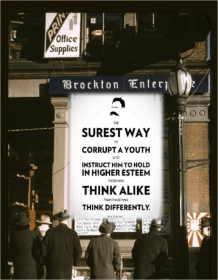
“There is growing evidence that how we act is often influenced more by what we think others think than what we think ourselves. Before the Gulf War, for instance, most Americans were against invasion, most Americans thought that other Americans were for the war, and the latter rather than the former led them to accept the invasion without overt dissent.”
Steve Reicher (University of St Andrews) & Alex Haslam (University of Exeter): excerpt of letter published in the July 2012 issue of the Psychologist (British Psychological Society).
“Throughout the world now there is a gradual movement towards seeking a more compassionate way of living. Although we’ve learned that we can build efficient systems, cut our costs and do things increasingly cheaply, this is not a very pleasant way to live. We can end up in an efficient world that is uninhabitable – except for the relatively few wealthy.”
Professor Paul Gilbert, University of Derby and director of Derbyshire Mental Health Trust (UK)





 the interpretOr