Category: psycholOgy


’72? I must have been around 4, 4 or 5. Still toddlerish, for sure. I was taken one day to this seemingly strange place – it felt a bit like a clinic of some sort…big and weird, anyway. I guess at that tender age, I didn’t yet have any meaningful reference points…playgroup, nope. It just seemed unfamiliar, bit kinda cold…

I think one of the men, maybe more, had a beard. A beard and some sort of overall, bit like a house painter or a technician. Look, what I really remember very clearly – lucidly even – was the marshmallow bit. I’ll come back to that in a sec….

“So, Keith…we seem to be getting closer. We’re back at Stanford, by the sounds of it….”

Back at…at Stanford, yes. Hhhhhh…look, I can’t escape it. Ever. I mean 40 friggin’ years haunted by a friggin’ marshmallow. Come on…!

Keith, I can hear your rage…maybe more exposure therapy, you know, systematic desensitization…??

I know, I know. Look, Stella, I really know that everything you’re doing is for the best. For me…It’s just…it’s just that it’s been all over the news again. The big FOUR O…

Keith, I’m aware of that. The Gladwell book, Z’s recent appearances…

I mean…part of me feels that I was almost kinda “arrested” at Stanford. Almost like part of my development was cryogenically frozen. Heck…why? I just wanta…to know WHY?

Look, the original Mischel study, of which you were a part…

…reluctantly, in retrospect. Errr, a toddler. Please remember Stella, a TODDLER. Fourish, no consent. Well, only that handed over by “them”…

Them? Oh yes, them. And how are “them”?

Stop trying to derail me here. I’m not here to discuss “them”…

My intention was not to derail or diminish your experience, Keith. Please…maybe we can explore the marshmallow?

Ok, ok, ok. I’d like to do that. The marshmallow. I mean, what would any other sane, hungry toddler do? You tell me, huhhh? Nearly an hour prior, sitting in the back of their car. Bored. Probably thirsty too. Then a strange place with creepy people – that marshmallow was my only sensory escape. It was comforting. Comforting and delicious…

Keith, how did you feel as you ate it? Ate the marshmallow…

Relieved. It was my salvation. I loved it.

You loved it…

Yes…

But it didn’t last?

Of course it didn’t last. I ate it and the bearded fxxxxxs wouldn’t gimme another one. Not…even…one…more. I mean, one more! How hard is that? I’m four and in a university of repute, in the psych department and all I wanted was one more friggin’ marshmallow. Ahheuuuu….phneurr…

oh, Keith…

(jamesh 2012)
Psychological research can often confirm existing hunches. For those of us that find Fox ‘News’, Caucasian editorials, Abbott rhetoric and resource business platitudes STUPID, as well as offensive, the May ’12 issue of the Psychologist (journal of the British Psychological Society) is coming to the rescue…

‘Think less and become more conservative’:

“The less time or mental effort a person puts into thinking about an issue, the more likely they are to espouse a politically conservative perspective. That’s according to a new study by Scott Eidelman and his team, who stress that their point is ‘not that conservatives rely on low effort thought’ but that ‘low effort thinking promotes political conservatism’…

….reduced mental effort encourages more conservative beliefs fits with prior research suggesting that attributions of personal responsibility (versus recognising the influence of situational factors), acceptance of hierarchy and preference for the status quo – hallmarks of conservative belief.”

Think more and become less conservative? Bring it on.

“People did not believe in my facts and thought my theories unsavory. Resistance was strong and unrelenting.”

‘Addressing the topic of mental health in Australia (and its treatment) are: Professor Allan Fels, head of the newly established National Mental Health Commission; former Australian of the Year Professor Patrick McGorry, head of Orygen Youth Health and one of the National Mental Health Commissioners, and Barbara Hocking, Executive Director of SANE Australia…’

Please click link below to go directly to this discussion:

the monthly: mental health & australia ’12

Videorative Portrait of Randall Okita…

“a picture of the mind… a map of emotions…painted with meanings”

The March 2012 issue of the Psychologist (Brit Psych Soc.) cites a fantastic new initiative and resource aimed at broadening ‘UNDERSTANDING of MENTAL HEALTH’.

“This pack is an invaluable resource for anyone educating others about mental health. It is perfect for schools, but should also be used elsewhere. Training volunteers, police officers, and medical students are all possibilities.”

David Rye, Chairman of ‘Working Mind’ (part of the UK mental health charity, ‘Mind’)

The pack contains over 100 personal accounts of people with mental health issues and was put together by researchers at Surrey Child & Adolescent MH Services, the University of Oxford and the Royal College of Psychiatrists and is endorsed by the BPS.

It is free to download and includes teacher/trainer resources, in addition to the 100+ perspectives from people in the community:

www.mentalhealtheducation.org.uk/home/

The Royal Society (UK) promotes excellence in scientific research and has recently published a report, ‘Brain Waves: neuroscience and the law’ (Dec 2011), focussing on new findings in neuroscience and their implications for the judiciary, lawyers and policy makers.

Supported by the British Psychological Society (BPS):

“The 36-page document, which is freely available online (at tinyurl.com/brainwaves4), charts the rising influence of neuroscience evidence in courts of law. For example, of 722 US court cases in which neurological or behavioural genetics evidence was submitted in defence, 199 and 205 took place in 2008 and 2009, respectively, compared with 101 and 105 in 2005 and 2006.”

Brain Waves (& the Law) was chaired by Professor Emeritus of Experimental Psychology Nicholas Mackintosh at the University of Cambridge and a key  recommendation of the report was that contacts between brain researchers and lawyers should be strengthened. Furthermore, the report frames the broader implications as follows:

More broadly, progress in neuroscience is going to raise questions about personality, identity, responsibility, and liberty, as well as associated social and ethical issues. The aim of the Royal Society’s Brain Waves project is to explore what neuroscience can offer, what are its limitations, and what are the potential benefits and the risks posed by particular applications.

All Brain Waves reports are freely available @  http://royalsociety.org/policy/projects/brain-waves

The practice of offering routine post-trauma psychological debriefing (Critical Incident Stress Debriefing – CISD) has declined significantly in recent years, attributable in part to adverse findings of the NICE (National Institute for Health & Clinical Excellence, UK) meta analysis of 2005. The British Psychological Society (BPS) research blog is currently critiquing the methodology and findings of NICE et al and citing new evidence that CISD may be beneficial, if not imperative, after all:

“We have been told that the case against debriefing is proven and the debate is closed,” Hawker, Durkin and Hawker conclude. “We disagree … We predict that appropriate psychological debriefing will be shown to have benefits for secondary victims of trauma who have been briefed together and who have worked together through traumatic events. Research into these uses of debriefing should be encouraged and supported.”

Hawker, D., Durkin, J., and Hawker, D. (2011). To debrief or not to debrief our heroes: that is the question.   J. Clinical Psychology and Psychotherapy, 18 (6), 453-463 

Hawker et al, are a team of therapists and trauma consultants who’ve worked extensively with NGOs, aid workers and emergency responders and have called for post-trauma debriefing to be resurrected for these specific client groups.

Professor Kandola (British Psychological Society) focuses on ethnicity in ‘practice’, specifically, how bias operates in organisations. He covers neuropsychological research and its role on implicit associations, how the way we socialise and interact in the workplace impacts on minority group members and how stereotyping and assumptions not only impact decisions but also the behaviour of minority group members themselves at work.

All we need is love?

French researchers say that adding the text “donating=loving” to a charitable collection box almost doubled the amount of money they raised.

Nicolas Guéguen and Lubomir Lamy placed opaque collection boxes in 14 bakeries in Brittany for two weeks. All the boxes featured the following text in French: “Women students in business trying to organise a humanitarian action in Togo. We are relying on your support”, together with a picture of a young African woman with an infant in her arms. Some boxes had this additional text in French just below the money slot: “DONATING=LOVING”; others had the text “DONATING=HELPING”; whilst others had no further text below the slot. Different box types were placed in different bakeries on different days and the amount of money collected each day was recorded.

Their results found that the text on the donation boxes made a profound difference. On average, almost twice as much money was raised daily in boxes with the “donating=loving” text, as compared with the “donating=helping” boxes Guéguen and Lamy think that the word “loving” acts as a prime, activating related concepts such as compassion, support and solidarity, and thereby encourages behaviour consistent with those ideas. Such an explanation would fit the wider literature showing how our motivations and attitudes can be influenced by words and objects without us realising it.

source: British Psychological Society Research Digest & cited December 2011

More info can be accessed by clicking underlined text.

Looking at intrinsic and extrinsic values & motivation seems timely… 

EXTRINSIC VALUES:

CONFORMITY, TO ‘FIT IN’ WITH OTHER PEOPLE.

IMAGE, TO LOOK ATTRACTIVE TO OTHER PEOPLE IN TERMS OF BODY AND CLOTHING.

FINANCIAL SUCCESS. TO BE WEALTHY AND MATERIALLY SUCCESSFUL RELATIVE TO OTHERS.ACHIEVEMENT. PERSONAL SUCCESS THROUGH DEMONSTRATING COMPETENCE ACCORDING TO SOCIAL STANDARDS.POWER SOCIAL STATUS AND PRESTIGE, CONTROL OR DOMINANCE

INTRINSIC VALUES:

AFFILIATION, TO HAVE SATISFYING RELATIONSHIPS WITH FAMILY AND FRIENDS. SELF-ACCEPTANCE . TO FEEL COMPETENT AND AUTONOMOUS. COMMUNITY FEELING, PRESERVING AND ENHANCING THE WELFARE OF THOSE WITH WHOM ONE IS IN FREQUENT PERSONAL CONTACT (THE ‘IN-GROUP’). UNIVERSALISM, UNDERSTANDING, APPRECIATION, TOLERANCE, AND PROTECTION FOR THE WELFARE OF ALL PEOPLE AND FOR NATURE.

More @ http://www.pirc.info

The Public Interest Research Council is an independent charity integrating key research on climate change, energy & economics – widening its audience and increasing its impact. Examination of the intrinsic/extrinsic paradigm is an important element of their recent paper, Think Of Me As Evil :

 “Despite its alarmist title, this is a careful evaluation of the costs and benefits of advertising. It makes a good case, on economic, social, and cultural grounds, for respite from the all-pervasive advocacy of consumerism.”

Avner Offer, Chichele Professor of Economic History, All Souls College, Oxford, and author of The Challenge of Affluence

“The Resilient Brain: Cognition and Ageing”, The annual British Academy/British Psychological Society Lecture, was given by Professor Lorraine Tyler FBA at the Royal Society, London, September 2011.

 Professor Tyler discusses research that takes a positive view of changes across the lifespan, and in doing so, is starting to overturn existing stereotypes of ageing.

“Five praises a day for young children, can greatly enhance positive interactions between them and their caregivers.”

The Psychologist, January, 2012.

The Psychologist is the official monthly publication of The British Psychological Society. It serves as a forum for communication, discussion and debate on a range of psychological topics.

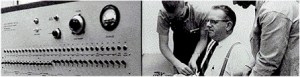
infamous Milgram experiment…will he or won’t he?

Below is a concise PPT that I put together for a general audience, (feel free to click on ‘theobedience’ hotlink below for the ppt. download)

theobedience

Just a week ago, Trinity College Dublin said NO to British hatemeister and BNP leader, Nick Griffin, debating immigration at the University. Even the conservative Daily Telegraph (UK) recently headlined “The rise of the far-Right: Europe’s worrying trend.”

With the ascendancy of the abominable BNP in the UK, Front Nationale in France, and other political movements that are motivated by discrimination, division, the attribution of blame and implicit conformity, sharing perspectives on antidotes to tyranny is as necessary now as ever. Add into the mix economic tsunamis and the urgency intensifies.

Hannah Arendt, philosopher and writer, covered Adolf Eichmann’s trial for the New Yorker from Jerusalem, where he faced a court in 1961. The latter Gestapo head evaded capture until 1960 and had been living in Argentina. She witnessed successive psychiatrists declare him to be clinically sane, his demeanour was ‘ordinary’…

“in certain circumstances, the most ordinary, decent person can become a criminal”

Banality of Evil’, H.Arendt (1963)

Evidence based research of the social psychology of tyranny and despotism evolved from a very humanistic intention to understand more about the situational dynamics that underpinned and facilitated the ascendancy of Hitler and Stalin…and the many people who were “just following orders.” ‘Banality of Evil‘ was the impetus for Professor Stanley Milgram’s notorious Yale obedience studies, (1963,1965 & 1974)…more on this on the hotlink above.

Milgram gave the world even more tangible evidence that as humans, there can be a very strong tendency to obey authority, even in violation of conscience.

Add to the vertical social dynamic of obedience to authority the horizontal peer pressure of conforming to group norms and we have the essential ingredients for tyranny and despotism.

“The power of authorities is demonstrated not only in the

extent to which they can command obedience from

followers, but also in the extent to which they can define

reality and alter habitual ways of thinking and acting.”

Phillip Zimbardo, The Lucifer Effect (2007)

Having had a former incarnation as a Psych lecturer, this interpretOr just wants to share a few scraps of evidence on the attached ppt.

(J Healy, MBPsS, Assoc MAPS)