Latest Entries »

That veritable organ of climate change denial ” The Australian” has published an opinion piece by Maurice Newman, the business adviser for Prime Minister Tony Abbott, calling for an investigation into the warming bias of the scientists at the Australian Bureau of Meteorology. (BOM).

Many readers of the article have been outraged by the comments of Newman, who has a history of making unqualified remarks against climate change action and especially including his constant tilting at windmills of the electricity generation type, they and the Greens Senators should call his bluff by supporting his call and instigate such an inquiry.

For balance the inquiry should add a component that also looks at bona fides of those making the claim of climate scientists fudging the science. In particular it would look at the vested interest of those making the claim, and who is funding the “independent spokespersons”  such as the well travelled Lord Monkton and the line up of mouthpieces that grace the Murdoch media with their quasi-scientific views.

Perhaps Rupert Murdoch could be called in to tell the inquiry whether he has a vested interest in preventing the uptake of renewable energy by publishing the proliferation of denialist views in his media outlets.

An inquiry should establish if a criminal offence is being committed by either side of the debate by falsifying the information for their own profit. After all if the scientists are correct millions will die and many species will be lost from warming of above 2 degrees.


The sad thing about children’s exam nerves is that their fears often become self-fulfilling. Too much anxiety and they can end up under-performing relative to their abilities.

A team of psychologists led by Fred Paas and colleagues has taken a cognitive psychology approach to this situation. Children have a certain amount of “working memory” capacity, they say, and it’s either used up by the task at hand, or by external pressures, such as intrusive, worrying thoughts. Paas and his team have explored the benefits of a simple strategy that’s designed to help children focus more on the school test, and less on worrying.

Over 100 children (aged 11-12) at three Greek primary schools sat a maths test. Stress was ratcheted up with a timer (three minutes per question) and a prize for the best performer in each class. Crucially, the researchers gave half the students one minute at the test start to skim through all 10 of the maths problems – this was the simple intervention. The researchers said this should reduce anxiety and boost confidence by “activating the relevant schemas for solving the test problems”. The remaining students acted as controls and had an extra minute to answer the first problem.

The good news is that the children who took a minute to skim through the questions performed better on average than the control students, and this was true regardless of their tendency to experience test-related anxiety. Because the students’ self-reported levels of mental exertion didn’t vary across the control and intervention conditions, the researchers said this shows…

::: click through here to piece in full+free @ BPS Research Digest :::

afp

23:32 GMT – Flag raising ceremony – The focus for many protesters this morning is a flag raising ceremony in the Wanchai district where a number of senior city officials are expected to attend as part of the National Day celebrations.

Hundreds of demonstrators are already converging on the area, trying to make their way into Golden Bauhinia Square where the ceremony takes place.

The annual ceremony is often targeted by pro-democracy activists. But never has it taken place before against a backdrop of continued street protests and sit-ins by tens of thousands of demonstrators..

afp

HONG KONG – Thousands of pro-democracy protesters thronged the streets of Hong Kong, some of them jeering National Day celebrations, as demonstrations spread to a new area of the city.  Video | Full Article

Why Australia Urgently Needs an Indigenous Bill of Rights

by JOHN PILGER

There are times when farce and living caricature almost consume the cynicism and mendacity in the daily life of Australia’s rulers. Across the front pages is a photograph of a resolute Tony Abbott with Indigenous children in Arnhem Land, in the remote north. “Domestic policy one day,” says the caption, “focus on war the next.”

Reminiscent of a vintage anthropologist, the prime minister grasps the head of an Indigenous child trying to shake his hand. He beams, as if incredulous at the success of his twin stunts: “running the nation” from a bushland tent on the Gove Peninsula while “taking the nation to war”. Like any “reality” show, he is surrounded by cameras and manic attendants, who alert the nation to his principled and decisive acts.

But wait; the leader of all Australians must fly south to farewell the SAS, off on its latest heroic mission since its triumph in the civilian bloodfest of Afghanistan. “Pursuing sheer evil” sounds familiar; of course, an historic mercenary role is unmentionable, this time backing the latest US installed sectarian regime in Baghdad and re-branded ex Kurdish “terrorists”, now guarding Chevron, Exxon Mobil, Marathon Oil, Hunt Oil et al.

No parliamentary debate is allowed; no fabricated invitation from foreigners in distress is necessary, as it was in Vietnam. Speed is the essence…

::: click here for piece free + in full @ CounterPunch :::

And here’s to unshackling from

the House of Windsor,

too…

Here @ the interpretOr, we reckon that it’s puffed-up, greedy windbags like Joe Hockey, rather than renewable energy, that are the real blot on the landscape…

ABC News, 17 SEPT, 2014:

Federal Treasurer Joe Hockey has made more critical comments about the way wind farms look, describing them as “appalling”.

Mr Hockey said renewable energy was “hugely important” but believed wind turbines were ruining beautiful bits of the Australian landscape.

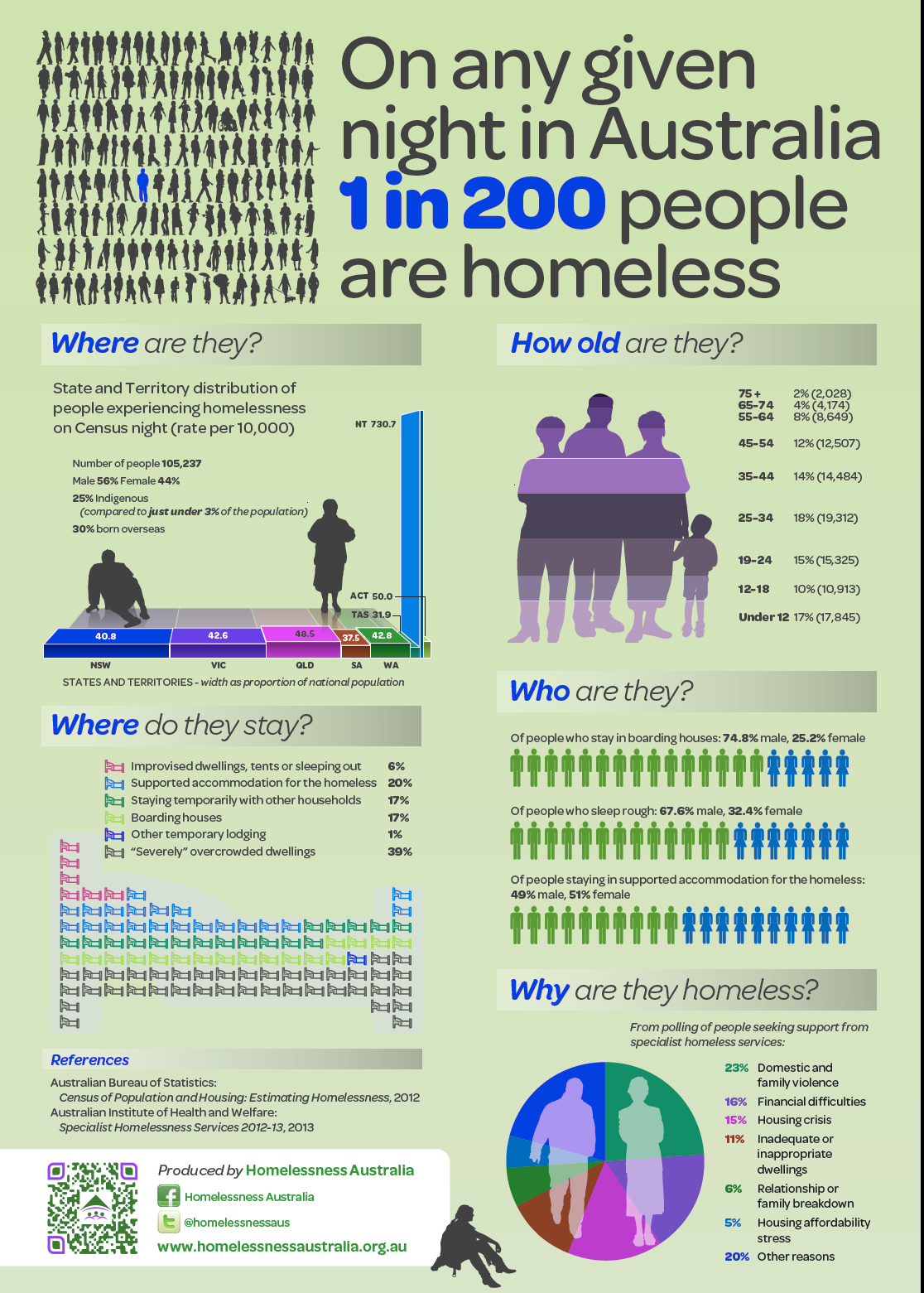
According to Scott Ludlam, an Australian Greens Senator for Western Australia, the Abbott Government has slashed over half a billion dollars from programs designed to address Australia’s housing affordability crisis…

IF YOU RENT
12,000 affordable rentals won’t be built because Abbott scrapped the National Rental Affordability Scheme.

FIRST HOMEBUYERS
The savings scheme designed to help people save a deposit for their first home has been axed.

SENIORS
A pilot program designed to help seniors to downsize into more appropriate housing has been cancelled.

IF YOU FIND YOURSELF HOMELESS
Homelessness services are already stretched thin and their funding beyond 2015 is uncertain. $44 million for new shelters and crisis accomodation facilities has also been cut.

These short sighted cuts will do little to ease the pressure on Australians who are already doing it tough. Nor will it prompt the investment in diverse affordable new housing that Australia needs. This will only increase the number of people experiencing homelessness. Tony Abbott has made it very clear that he doesn’t care about Australia’s who are doing it tough. His cuts to those who are most vulnerable, while letting big business get a free ride, are unconscionable.

THE GREENS WILL FIGHT THESE BUDGET ATTACKS. 

Tell us your story or sign up to find out more about how you can join the campaign against Tony Abbott’s cruel cuts.

You can also check out our comprehensive plan to address Australia’s housing affordability crisis.

HOMELESS14

spwho2014_report_publication

-click cover for report –

key messages from WHO: 

Suicides take a high toll. Over 800 000 people die due to suicide every year and it is

the second leading cause of  death in 15-29-year-olds.

There are indications that for each adult who died of suicide there may have been

more than 20 others attempting suicide.

Suicides are preventable. For national responses to be
effective, a comprehensive multisectoral suicide
prevention strategy is needed.

Restricting access to the means for suicide works. An
effective strategy for preventing suicides and suicide
attempts is to restrict access to the most common means,
including pesticides, firearms and certain medications.

Health-care services need to incorporate suicide
prevention as a core component. Mental disorders and
harmful use of alcohol contribute to many suicides around
the world. Early identification and effective management
are key to ensuring that people receive the care they need.

glac

inthesetimes

STORIES THIS WEEK

The End of History?

The short, strange era of human civilization seems to be drawing to a close.

BY NOAM CHOMSKY

Why have American politicians and editorial boards been silent in the face of extreme violence?
BY MARILYN KATZ

For 30 years, scientist Theo Colborn has fought the chemical industry-and won.

BY MOLLY M. GINTY

In 1824 in Pawtucket, R.I., women weavers led the mother of all strikes.

BY JOEY L. DEFRANCESCO AND DAVID SEGAL

In Ari Folman’s new film, fantasy is a slippery slope.

BY SADY DOYLE

COMMENTARY

Black workers’ struggles in the labor movement have won important gains-including transformation of unions themselves.

BY LEO GERARD

WORKING IN THESE TIMES

Fast-Food Workers Turn Up the Heat

The fast-food workers’ movement embraces civil disobedience.

BY AMIEN ESSIF

 gr


03 Sep 2014 | Scott Ludlam
Nuclear

Confirmation that the Australian Government has suspended potential uranium sales to the Russian Federation has been welcomed by the Greens, after questions placed by Adam Bandt MP in the House and Senator Scott Ludlam in the Senate.

“The Australian Greens have argued that uranium sales to the Russian Federation should never have been contemplated in the first place,” Senator Ludlam said.

“President Putin’s implied threat of nuclear escalation last week, saying, “I want to remind you that Russia is one of the leading nuclear powers,” underlies the risks that Australia faces in fuelling the nuclear industry in Russia and elsewhere.

“With heightened tensions resulting from Russia’s military actions in eastern Ukraine, it is entirely appropriate for the Australian Government to prevent Australian uranium from being shipped to the Russian Federation,” said Senator Ludlam.

“The Greens believe we should revert to an outright ban and caution Prime Minister Abbott against opening a new line of atomic instability with India, which has refused to sign up to international legal agreements on non-proliferation and disarmament.”

leap28     未标题-1     leap28

As four of the world’s most preeminent biennials/triennials are on the cusp of opening right here in the Far East, LEAP dedicates its August issue to the notion of the biennial. However, rather than a collection of reviews of biennials, this cover feature is composed as a set of allegories for an imaginary biennal. “Allegory for a Biennale” does not attempt to answer any of the questions raised by mega-exhibitions, but to dismantle them. Wang Jiahao designs the ultimate museum machine; Einar Engström employs narrative to magnify the logical flaws of pushing the boundaries of art to its extremes; Lightstalker illuminates the multi-dimensional gazes between traditional Chinese fiction and Western painting; and Jacob Dreyer introduces the conceptual grandeur of the ideal that so often sidles up to art—the image, power, and capital. Meanwhile, the feature also includes two actual art events—one an exhibition on the margins that define Hong Kong history and identity, the other a project on those that define Mainland modernization and urbanization. Finally, recapitulating these explorations of art’s existence in zones of creative and political instability, artist Larissa Sansour presents a renewed imagination of the Palestinian state in her work “Nation Estate.” In the accompanying mini-feature “The Soul of Wit,” Yang Zi investigates the role of comedy in four studies of Chinese contemporary art, and Feng Qing pens a treatise on the philosophy of humor; and artist Lin Ke stretches dry humor to its limits in “Seven Humorous Poems.”

c02f4cff7df21e1f889b23243d78c765

Current issue: September 2014

… France, where is the left? Scotland decides;Islamic State fills deep void;

Sinai, a fury of revenge; Israel and Russia, unexpected friends; Ukraine, life on hold;

Panama Canal, China muddies the water; TTIP, see and read only for profit;

Cairo, back to the wall; a place in the sun… and more…

2014_wspd_banner_english

2014_wspd_cycle_web

2014_wspd_banner_english

rojoehoc

  • Frances Abbott accepted a $60,000 ‘chairman’s scholarship’ for her course at the Whitehouse Institute of Design
  • Liberal supporter Les Taylor sits as chairman on the board of governors at the school
  • Students claim ‘more deserving’ candidates than PM’s daughter

By SARAH DEAN and FREYA NOBLE

Ms Abbott, 22, accepted a ‘chairman’s scholarship’ for her Bachelor of Design course from the Whitehouse Institute of Design, where Liberal supporter Les Taylor sits as chairman on the board of governors.

The news came on Wednesday, the same day that thousands of students protested across Australia about the cuts to tertiary education funding, announced in Mr Abbott’s federal budget.

Read more: http://www.dailymail.co.uk/news/article-2636121/Classmates-Tony-Abbotts-daughter-outraged-Frances-awarded-60-000-scholarship-deserving-students.html#ixzz3BS5vOKbv
Follow us: @MailOnline on Twitter | DailyMail on Facebook

By guest blogger Robin Abrahams.

If you’ve been on the internet at all this year, you may have noticed an explosion of fiction-based personality quizzes. What house would you belong to inHogwarts—or in Westeros? Which “Mad Man” are you? WhatShakespeare role were you born to play?

Why do we want to know?

Researchers led by Randi Shedlosky-Shoemaker may have some answers. Their paper, “Self-Expansion through Fictional Characters” rests on the concept of parasocial relationships—a relatively new construct in the social sciences that is becoming increasingly relevant in our media-saturated age.

While there is a clear, bright line between real people and imaginary people (I exist, Hermione Granger does not), there is no such line dividing real and imaginary relationships. (As far as you are concerned, dear reader, both Ms. Granger and I are studious women who exist only on the page or screen.) Even in our most intimate personal relationships, we are often interacting with a mental model of our partner or parent, imagining their current state of mind, or how they would respond to whatever situation we find ourselves in. Although operationalised in this article as relationships with…

... SIMPLY CLICK HERE TO ACCESS THIS PIECE IN FULL & FREE @ THE BRITISH PSYCHOLOGICAL SOCIETY RESEARCH BLOG…

Here’s an extract from the report of the National Inquiry into Children in Immigration Detention, Australian Human Rights Commission, 2014…


9.3.1 Torture and trauma prior to arrival in Australia

Since more than 90 per cent of children in immigration detention over the period of the Inquiry have been found to be refugees, it follows that many children in immigration detention are likely to have been affected by prior experiences of trauma.(46)

The Inquiry commissioned a literature review to consider factors affecting the psychological well-being of child and adolescent refugees and asylum seekers.(47)The paper concludes that:

research clearly demonstrates that refugee children and adolescents are vulnerable to the effects of pre-migration, most notably exposure to trauma. It is also apparent that particular groups in this population constitute higher psychological risk than others, namely those with extended trauma experience, unaccompanied or separated children and adolescents and those still in the process of seeking asylum.(48)

The Inquiry received evidence from a range of sources that children in immigration detention may have experienced significant trauma prior to their arrival in Australia. For example, the Australian Association for Infant Mental Health (AAIMH) reported that:

Refugee parents may have experienced torture, imprisonment, persecution and institutional violence by the political regimes of their country of origin, or have witnessed a spouse or close family members undergoing such experiences.

Many families prior to detention in Australia have experienced long and perilous journeys and been in transit for months or years in refugee camps or in countries where they have had no citizenship rights, lived in very poor and overcrowded housing and where basic needs have been barely met. Children are conceived and born in such situations of deprivation, uncertainty and with minimal or no health care.(49)

The Inquiry also heard evidence that detainees were more likely than other asylum seekers to have had prior experiences of trauma:

Those who had suffered the most severe persecution are perversely at most risk of detention in Australia. This is not really surprising because these are the people most desperate to leave and hence the most likely to enter ‘illegally’ (sic).(50)

The Department acknowledges that pre-arrival experiences have a significant impact on the mental health of child detainees:

Of course, some of these people have had a very difficult and perilous voyage to get to Australia and they may well have other predispositions or issues in their life well before any thought of coming to Australia which might also be impacting on their personal circumstances whilst here.(51)

However, the Inquiry also received evidence that pre-arrival experience does not exclusively account for the mental health problems of children in detention. In other words, detention itself also had a significant impact on the mental health of children, particularly for those held in detention for prolonged periods.

International experience with refugee children resettled to Western countries indicates that while some mental health conditions from prior trauma may persist, particularly post traumatic stress reactions, children generally display a pattern of recovery and adaptation on arrival and integration in their new home.(52)

This can be compared with a 2003 report regarding asylum seekers and their children in a remote Australian detention centre, which found that the impact of detention outweighed that of pre-migration experiences on the development of psychiatric illness:

Lifetime assessment of psychiatric morbidity indicated that there was little psychopathology amongst the children prior to arrival in Australia. One child who had witnessed severe domestic violence in Iran had multiple previous disorders. In contrast at the time of assessment, after having spent in excess of two years in detention, all children were diagnosed with at least one psychiatric disorder and most (16, 80%) were diagnosed with multiple disorders, representing a 10-fold increase in the total number of diagnoses identified.(53)

The Migrant and Workers Resource Centre (MWRC) from Queensland conducted a study of 40 former child detainees and found that ‘[t]he detention of asylum seekers upon their arrival in Australia has a deleterious psychological effect upon asylum seekers through maintaining or aggravating these pre-existing conditions’.(54)

Furthermore, a psychiatrist who has examined several children detained at Woomera stated that detention was the worst thing that had happened to a number of them:

People are resilient and given appropriate circumstances, people can recover from the most horrible traumas, but on average you would expect a significant proportion of these children to continue to suffer, throughout their life, the effects of the detention experience. Now, that is obviously not the only traumatic experience that many of these children have had, but it is certainly – a number of the families that I’ve been involved with discussions about,the trauma – the traumatic nature of the detention experience has out-stripped any previous trauma that the children have had…

….So it has got to the point where being in detention is the worst thing that has ever happened to these children.(55)

ericblue


“Media reports that I have drawn or believe

there is a link between abortion and breast

cancer are incorrect…”

Eric Abetz.com … Friday, 08 August 2014 09:58

For far too many years suicide prevention has not engaged the perspectives of those who have lived through suicidal experiences. Because of social stigma and fear, as well as personal shame, a culture of silence prevailed. The Way Forward represents a seminal moment in this field’s history; it is an opportunity to benefit from the lived experience of suicide attempt survivors. Many of its recommendations are derived from evidence-based practices, and several are aspirational. All are grounded in the evidence of recovery and resiliency that is clear in the lives of our Task Force members. Viewing suicide prevention through the lens of the eight core values presented in The Way Forward can help us enhance safety while also bringing hope and meaning to those in suicidal despair.

The Core Values represent the group consensus on the values that attempt survivors want suicide prevention professionals and organizations to consider when developing or implementing suicide prevention supports. Research has indicated that promoting protective factors and addressing risk factors for suicide can prevent suicidal behavior.Therefore, it is reasonable to believe that activities that support the Core Values have the potential to prevent future suicide attempts, and improve the quality of life for people who have survived a suicide attempt.

Foster hope and help people find meaning and purpose in life

 Preserve dignity and counter stigma, shame, and discrimination

 Connect people to peer supports

 Promote community connectedness

 Engage and support family and friends

 Respect and support cultural, ethnic, and/or spiritual beliefs and traditions

 Promote choice and collaboration in care

 Provide timely access to care and support

SPRClogo

Zak Mohyuddin was born in Bangladesh, raised in Pakistan and moved to Tennessee years ago, in the 1970s. He was 18 when he arrived. Today, at age 58, he’s a longtime resident in Tullahoma, a small town in Coffee County, halfway between Nashville and Chattanooga...

PRI’s The World:

excerpt…

…But something else also happened — hitting close to home for Mohyuddin. Barry West — an elected commissioner at the time in the same county that Mohyuddin ran to represent — posted something online that made Mohyuddin shudder.

On West’s Facebook page, he shared an image showing a man with a double-barrel shotgun aiming, with eye closed. The caption read, “How to wink at a Muslim.” It went viral. But instead of ignoring it, Mohyuddin reached out to West and invited him over to his house for dinner.

Mohyuddin said that, during their evening together, West told him how he felt that the “word Muslim and terrorist were one and the same.”

“He didn’t think there was anything he’d done that was out of place,” Mohyuddin said. West said he was surprised by Mohyuddin’s dinner invite, but accepted. He said, “So, I apologized, and went to Zak’s home, my son and I.”

“We met with his family, and just had a real good conversation about the world situation, and what I had done. We were just full of questions,” West said, “because I had never been around a Muslim that close, to ask about his religion, or what he believes in.”

Mohyuddin said that it was important for him to reach out to a neighbor. “It’s not like I’m an immigrant living in a big city, where I can stay within my own community and remain in a bubble,”

PRI’s The World

RD-Header-main-2014v2


Remembering and imagining appear to be very different functions, one recovering true information from the past, the other considering the unreal or exploring the future. And yet many patients with damage to the hippocampus (a structure in the temporal lobes) – and resultant memory impairment – struggle in imagining the future. Moreover, neuroimaging data show the hippocampus is involved in both tasks. Taken together, this evidence suggests that memory for the past and imagination for the future may depend on shared neural processes.

A new imaging study by Brock Kirwan and his colleagues confirms at a broad anatomical level that both memory and future imagination call on similar regions of the hippocampus. But the research also shows how these two mental functions do depend on distinct neural processes after all.

Fourteen study participants were invited into a scanner where they were presented with photographs in a series of runs. One run contained…

... SIMPLY CLICK HERE TO ACCESS THIS PIECE IN FULL & FREE @ THE BRITISH PSYCHOLOGICAL SOCIETY RESEARCH BLOG…

Best-selling author and renowned neuropsychiatrist Daniel Siegel explains why adolescents turn to their peers and away from their parents for security, attachment, and approval.

This clip is from a March 11, 2014 talk for the UC Berkeley

The 72-hour ceasefire in Gaza has entered its final day. Talks are ongoing to extend the truce, but no agreement has been reached. Palestinian and Israeli officials are in Egypt, however have not held face-to-face negotiations on securing a lasting ceasefire. Meanwhile, Gaza is in a state of devastation and ruin. Close to 1,900 Palestinians were killed during the 29-day conflict, including at least 1,354 civilians, of whom 415 are children. More than 10,000 people have been injured. There are 373,000 children who require psychological support. Some 500,000 Palestinians have been displaced with 187,000 still living in U.N. emergency shelters. An estimated 10,000 homes have been completely destroyed, and 30,000 homes partially destroyed. On the Israeli side, 64 soldiers were killed in Gaza, and three civilians in Israel. We go to Jerusalem to speak with Christopher Gunness, a spokesman for the United Nations Relief and Works Agency for Palestine Refugees.

Panel members said phone data had limited role preventing terrorism in testimony before Senate judiciary committee

  excerpt… 

The members of president Barack Obama’s surveillance review panel on Tuesday rejected some of the central contentions offered by the National Security Agency for its bulk collection of phone records, including the program’s potential usefulness in preventing the 9/11 attacks.

Testifying before the Senate judiciary committee, members of the panel said that restricting the NSA is necessary in order to rebalance the competing values of liberty and security.

Richard Clarke, who was the White House’s counter-terrorism czar on 9/11, echoed the 9/11 Commission in saying that the biggest obstacle to preventing the terrorist attack was not the NSA collecting an insufficient amount of data, but a failure to share information already collected.

“If the information that the federal agencies had at the time had been shared among the agencies, then one of them, the FBI, could have gone to the Fisa Court and could have in a very timely manner gotten a warrant to monitor” US-based al-Qaida conspirators, Clarke told the Senate judiciary committee…

::: click here for piece in full :::

British Psychological Society research digest:

‘You’ve probably experienced this. You’re in the middle of telling your friend a story when his eyes flick across to his phone. Perhaps he even picks it up, checks the screen. “Sorry, go on,” he says. But your flow is interrupted. And you know his mind is at least half elsewhere.

Shalini Misra and her team approached 100 pairs of people (109 women; average age 33) in cafes across Washington DC and neighbouring districts. They asked them to chat for ten minutes at a table in the cafe about a trivial topic (plastic festive trees) or about the most meaningful events of the past year. For each pair, the researchers observed from a discreet distance and checked whether either party put a mobile device on the table, or held one in their hand. After ten minutes was up, each person in each pair was asked to fill out a few questionnaires about the conversation and their partner.

Feelings of “interconnectedness” (rated by agreement with statements like “I felt close to my conversation partner”) were reduced for pairs in which a mobile device was placed on the table or held by one of them. Similarly, “empathetic concern” (measured by items like “To what extent did your conversation partner make an effort to understand your thoughts and feelings about the topic you discussed?”) was rated lower by pairs in which a mobile device was brought into view. The topic of conversation made no difference to these results, but the reduction in empathetic concern associated with the presence of a mobile device was especially pronounced for pairs of people who were in closer relationships, perhaps because their expectations about the interaction were higher…’

::: click on through to the results @ BPS research digest :::

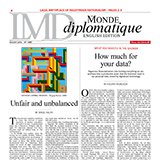
lmd814


August 2014

… assault on Gaza; Egypt’s workers struggle on; Syria’s new artists in exile; IT,

how much for your data? rise of the web documentary;

Piketty in the light of Marx; Latin America’s very modern coups;

Balkans, hope after the rains, Algeria’s frustrated youth;

Vietnam’s Costa del Cam Ranh;

Gabriel Garcia Marquezr emembered …

::: click cover to access :::

Russia has lost contact with its only missile detection satellite in geostationary orbit above the US. The satellite was originally supposed to operate until at least 2017, but began malfunctioning shortly after its launch in 2012. Russia still has two remaining missile detection satellites in elliptical orbits around the planet, but they are reportedly able to monitor US missile activity …click story for more @ the Global Catastrophic Risk Institute

:::::::: <<<  >>> ::::::::

What is the Global Catastrophic Risk Institute?

The Global Catastrophic Risk Institute (GCRI) is a nonprofit think tank working on the topic of global catastrophic risk. GCRI was founded in 2011 by Seth Baum and Tony Barrett. GCRI is geographically decentralized, meaning that it has no central headquarters and its affiliates are located in many places. GCRI works with researchers from many academic disciplines and professionals from many sectors.

As of July 2013, GCRI is a project of the fiscal sponsorship organization Social and Environmental Entrepreneurs.


CHILOUT.ORG

George Monbiot’s SPERI Annual Lecture, hosted by the Sheffield Political Economy Research Institute at the University of Sheffield, 2014.

‘…If we surrender to the financial agenda and say, “This market-led neoliberalism thing is the way forward,” then we shift social values. Environmentalists are among the last lines of defence against the gradual societal shift towards extrinsic values. If we don’t stand up and say, “We do not share those values, our values are intrinsic values. We care about people. We care about the natural world. We are embedded in our communities and the people around us and we want to protect them, not just ourselves. We are not going to be selfish. This isn’t about money”, who else is going to do it?’

eric2

“And I know that you will agree with me that standing up for Australia also means standing up for the God, who has so blessed our land. I believe this country hungers for a spiritual revival. I believe it longs to see traditional values reflected in public policy again.”

ERIC(K) ABETZ, Address to the Australian Christian Lobby Conference, Brisbane, May 2013.

jfreos's avatarthe interpretOr

The Abbot Point dredging project, recently approved by Australian environment minister, Greg Hunt, will allow India’s Adani Enterprises to build Australia’s biggest coal mine in the Galilee Basin in central Queensland, and dredge to allow massive coal ships to access their proposed new shipping terminal at Abbot Point…to send their coal overseas.

@ the interpretOr, we’re looking at the Indian Government’s recent report on Adani’s existing Mundra port operations that found incontrovertible evidence of:

destruction of mangroves,

blocking of creeks and…

…non-compliance of other clearance conditions.

The reporting committee, headed by Sunita Narain of Centre for Science and Environment, was set up by the Union Ministry of Environment and Forests (Government of india), to inspect ship-breaking facility of M/s Adani Port and SEZ Limited near Mundra West Port in Gujarat’s Kutch district. The committee submitted its report on April 18, 2013 and it can be downloaded in…

View original post 300 more words