
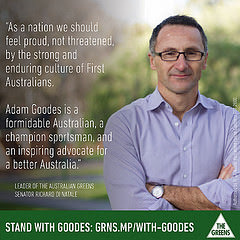
Adam Goodes is a proud Adnyamathanha man. He celebrates his Indigenous culture and calls out racism when he sees it.
We stand with him.
Adam Goodes is a proud Adnyamathanha man. He celebrates his Indigenous culture and calls out racism when he sees it.
We stand with him.
|
|
|
To mark the 800th year of Magna Carta, the Australian Human Rights Commission has released an animation, interactive infographic and teachers resource on the story of our freedom.
Transcript is at https://www.humanrights.gov.au/magnacarta/video/transcript.html
Animation produced by The Explainers.
|
|

Irving K. Barber Learning Centre Lecture presented by the Vancouver Institute. Webcast sponsored by the Irving K. Barber Learning Centre. Naomi Klein is the author of the critically acclaimed #1 international bestsellers, The Shock Doctrine: The Rise of Disaster Capitalism and No Logo: Taking Aim at the Brand Bullies which have each been translated into more than 30 languages. She is a contributing editor for Harper’s Magazine, a reporter for Rolling Stone, and a syndicated columnist for The Nation and The Guardian.
Naomi Klein is a member of the board of directors for 350.org, a global grassroots movement to solve the climate crisis. Her new book is This Changes Everything: Capitalism vs. The Climate (September, 2014). This lecture is co-sponsored by the Canadian Centre for Policy Alternatives, 350.org and Green College.


…Greece and the EU, what next? Russia re-enters the Balkans; Ukraine, inflating old fears of Russia doesn’t help; Mali, rebuilding a nation;South Africa, betrayal of a dream; radical Islam,Christianity of the poor; football, who pays for top clubs? the new Panama scandal; hooked on the Net…:
::: simply click cover to access :::
Sobriety, not austerity — Philippe Descamps
The UN’s Paris climate change conference in November doesn’t hold out much promise. Since the 1992 Earth Summit in Rio, fossil fuel consumption has gone on growing. The Green Climate Fund launched by the UN in 2011 has attracted only €10bn to date. In 2013 subsidies for fuels responsible for greenhouse gases totalled €400bn worldwide — four times the amount allocated to renewable energy sources.
Any international agreement will fail to keep global warming within 2ºC if governments insist on (…)
The 14 Defining Characteristics Of Fascism
Free Inquiry Spring 2003 5-11-3
1. Powerful and Continuing Nationalism – Fascist regimes tend to make constant use of patriotic mottos, slogans, symbols, songs, and other paraphernalia. Flags are seen everywhere, as are flag symbols on clothing and in public displays.
2. Disdain for the Recognition of Human Rights – Because of fear of enemies and the need for security, the people in fascist regimes are persuaded that human rights can be ignored in certain cases because of “need.” The people tend to look the other way or even approve of torture, summary executions, assassinations, long incarcerations of prisoners, etc.
3. Identification of Enemies/Scapegoats as a Unifying Cause – The people are rallied into a unifying patriotic frenzy over the need to eliminate a perceived common threat or foe: racial , ethnic or religious minorities; liberals; communists; socialists, terrorists, etc.
4. Supremacy of the Military – Even when there are widespread domestic problems, the military is given a disproportionate amount of government funding, and the domestic agenda is neglected. Soldiers and military service are glamorized.
5. Rampant Sexism – The governments of fascist nations tend to be almost exclusively male-dominated. Under fascist regimes, traditional gender roles are made more rigid. Divorce, abortion and homosexuality are suppressed and the state is represented as the ultimate guardian of the family institution.
6. Controlled Mass Media – Sometimes to media is directly controlled by the government, but in other cases, the media is indirectly controlled by government regulation, or sympathetic media spokespeople and executives. Censorship, especially in war time, is very common.
7. Obsession with National Security – Fear is used as a motivational tool by the government over the masses.
8. Religion and Government are Intertwined – Governments in fascist nations tend to use the most common religion in the nation as a tool to manipulate public opinion. Religious rhetoric and terminology is common from government leaders, even when the major tenets of the religion are diametrically opposed to the government’s policies or actions.
9. Corporate Power is Protected – The industrial and business aristocracy of a fascist nation often are the ones who put the government leaders into power, creating a mutually beneficial business/government relationship and power elite.
10. Labor Power is Suppressed – Because the organizing power of labor is the only real threat to a fascist government, labor unions are either eliminated entirely, or are severely suppressed.
11. Disdain for Intellectuals and the Arts – Fascist nations tend to promote and tolerate open hostility to higher education, and academia. It is not uncommon for professors and other academics to be censored or even arrested. Free expression in the arts and letters is openly attacked.
12. Obsession with Crime and Punishment – Under fascist regimes, the police are given almost limitless power to enforce laws. The people are often willing to overlook police abuses and even forego civil liberties in the name of patriotism. There is often a national police force with virtually unlimited power in fascist nations.
13. Rampant Cronyism and Corruption – Fascist regimes almost always are governed by groups of friends and associates who appoint each other to government positions and use governmental power and authority to protect their friends from accountability. It is not uncommon in fascist regimes for national resources and even treasures to be appropriated or even outright stolen by government leaders.
14. Fraudulent Elections – Sometimes elections in fascist nations are a complete sham. Other times elections are manipulated by smear campaigns against or even assassination of opposition candidates, use of legislation to control voting numbers or political district boundaries, and manipulation of the media. Fascist nations also typically use their judiciaries to manipulate or control elections.
They Thought They Were Free
By Milton Mayer

|
TOP STORIES THIS WEEK
|
|
Sanders’s laser-like focus on inequality is perfectly insync with the nation’s current political climate.
BY THEO ANDERSON Soon the Right will have to abandon its head-in-the-sand strategy–but its next tactic may be more dangerous. BY KATE ARONOFF A hawk’s eye-view of global warming. BY TODD MILLER AND ALEX DEVOID Blumenthal offers an unembellished look at the misery on the ground in the Gaza Strip during Israel’s Operation Protective Edge in 2014. BY BEN LORBER The New York Times is wrong: consumers eating grapes and mandarin oranges aren’t the ones really guilty of contributing to California’s water shortage. BY JIM NAURECKAS Jeb Bush’s Presidential Announcement Was Simultaneously Audacious and Underwhelming Bush’s presidential campaign announcement was high on the rhetoric. Unfortunately, it was also inconsistent with everything we already know about Jeb Bush. BY DAVID SIROTA The activists behind the group are known for pranking big corporate and governmental institutions. Now they have created a tool to help others do the same. BY MICHAEL PAYNE The new black comedy about nuclear war misses its target. BY EILEEN JONES |
| WORKING IN THESE TIMES |
| Chicago Charter School Students Say UNO Teacher Was Fired for Union Activism
It’s not every day that students walk out of school to demand the reinstatement of a fired teacher–let alone one they claim was fired for helping unionize the school. BY CRYSTAL STELLA BECERRIL |
| RURAL AMERICA |
|
A new bill passed by the North Carolina Senate could prevent evidence of animal cruelty or labor violations on factory farms from ever leaving the workplace. BY DAYTON MARTINDALE
|
Glenn Greenwald, best known for his series in “The Guardian” detailing classified information about global surveillance programs based on top-secret documents provided by Edward Snowden, spoke at the University of Utah on Tuesday, April 7, 2015.

excerpt from The Tree:
Two reports have undermined the Abbott Government’s rosy claims about the health of Australia’s World Heritage Great Barrier Reef. TheQueensland Auditor-General has released a scathing report on government efforts to improve the reef’s water quality, finding efforts to cut coral-killing runoff have been ineffective, and that information lacked transparency and misleading. A second report, by the Environmental Justice Australia and the US-based Earthjustice, has also found that the Reef’s current state meets as many as six of the eight criteria UNESCO uses in its “in danger” assessments. UNESCO only needs one for an “in danger” listing. Water quality and sediment issues are having a severe impact on the reef, but despite having knowledge of a report contradicting the government’s exaggerated claims of progress tackling these issues for several weeks, Environment Minister Greg Hunt pushed a misleading “report card” to UNESCO.
This move, part of a $218,000 lobbying effort detailed in documents obtained under FOI, resulted in a draft ruling not to list the natural icon as “in danger”, allowing massive coal projects to go ahead –assuming they don’t fall over economically first. The Federal government’s lobbying strategy may have avoided a negative listing for now, but UNESCO’s verdict was still not positive. The future of the reef and the $5 billion it contributes to the economy annually remains under serious threat if Australia keeps trying to export dirty coal to the world. Tourism operators are already being warned to stop using picturesque underwater photos of bright pink and yellow coral, as the reality is declining water quality is now so poor in places tourists cannot swim or snorkel…
- Sign: Standard chartered: Coral, not coal (Greenpeace)
- Satire to share: UNESCO Downgrades Icon To ‘Good Barrier Reef’ (SBS)
- Hashtags in use: #savethereef #SOSReef #FightForTheReef #UNESCO #coal #climate
|
TOP STORIES THIS WEEK
|
|
To break from the program of brutal austerity that has been imposed on Greece, its leaders have no choice but to take radical action. BY ALEXANDROS ORPHANIDES The Association for the Advancement of Creative Musicians brought jazz back from the brink by connecting it to black struggle. BY SALIM MUWAKKIL A new documentary follows the weird subculture of Vietnam War reenactors–some of whom were actually there. BY EILEEN JONES If Jeb Bush wants to distance himself from the family name, he needs to reassess his brother’s actions in Iraq. BY DAVID SIROTA An existentialist Swedish movie occupies a completely original universe. BY MICHAEL ATKINSON |
| WORKING IN THESE TIMES |
| This Small Town Shows Why The Trans-Pacific Partnership Could Be A Disaster For American Workers
Galesburg, Illinois, residents saw their jobs disappear after the passage of NAFTA. The TPP likely won’t be any different. BY PETER COLE |
| RURAL AMERICA |
|
The bill could be a game-changer for Native populations, finally allowing them the same opportunities to vote as other Americans. BY STEPHANIE WOODARD
|
+ 26 chapters of the TPP still secret…
The real intent of these provisions is to impede health, environmental, safety, and, yes, even financial regulations meant to protect America’s own economy and citizens. Companies can sue governments for full compensation for any reduction in their future expected profits resulting from regulatory changes.
We, the undersigned*, strongly urge the leaders of Indonesia, Malaysia, and Thailand, to protect migrants and refugees stranded on vessels in the Bay of Bengal and the Andaman Sea, to facilitate safe disembarkation, and to give priority to saving lives, protecting rights, and respecting human dignity.
Grave events in the Bay of Bengal and Andaman Sea in recent days involving migrants and refugees –Rohingya and others – from Bangladesh and Myanmar confirm that vulnerable people around the world are moving in search of safety and dignity, fleeing persecution, abject poverty, deprivation, discrimination, and abuse. Such perilous journeys, whether by land, sea, or air, have become a global phenomenon.
In Southeast Asia, more than 88,000 people have made the dangerous voyage by sea since 2014, including 25,000 who arrived in the first quarter of this year alone. Nearly 1,000 are believed to have perished at sea due to the precarious conditions of the voyage, and an equal number because of mistreatment and privation at the hands of traffickers and abusive smugglers. In the Bay of Bengal, migrants and refugees are fed only white rice and are subjected to violence, including sexual violence. Women are raped. Children are separated from their families and abused. Men are beaten and thrown overboard.
We are deeply concerned at reports that boats full of vulnerable women, men and children are unable to land and are stranded at sea without access to urgently needed food, water, and medical assistance. We urge States in the region to protect the lives of all aboard by allowing the passengers on these overcrowded boats to disembark safely.
We urgently call on leaders, with the support of ASEAN, to:
1. Make saving lives the top priority by inter alia significantly strengthening Search and Rescue (SAR) Operations.
2. Stop boat push-backs and measures to ‘help on’ boats to leave territorial waters, while ensuring that all measures taken are in strict accordance with the principle of non-refoulement and other fundamental human rights standards.
3. Provide for effective, predictable disembarkation to a place of safety with adequate and humane reception conditions.
4. Avoid the use of immigration detention and other punitive measures, and ensure that the human rights of all migrants and refugees are protected, and that all actions in regard to children are guided by the best interests of the child.
5. Set in place screening procedures staffed jointly by government and relevant international organization personnel to identify the individual circumstances of all those arriving, including a) individuals in need of protection as refugees, asylum-seekers, or stateless persons, b) victims of trafficking or persons at risk of torture or other cruel, inhumane, or degrading treatment if returned to their country of origin, c) migrants with health conditions in need of emergency medical care and first aid assistance, and d) migrants or others interested in voluntary return home.
6. Expand avenues for safe and legal migration, including for labour migration at all skills levels.
7. Expand efforts to prosecute traffickers and smugglers for their crimes in full accordance with international standards for human rights, while fully respecting the rights of victims.
8. Redouble efforts, nationally and through strengthened international cooperation, to address ‘push factors’ and the root causes of refugee and migrants flows, including discrimination, deprivation, persecution, and violations of human rights.
9. Put in place dedicated measures to combat xenophobia and discrimination against any group on the basis of race, sex, language, religion, ethnicity, nationality and national origin, or other status.
*António Guterres, UN High Commissioner for Refugees; Zeid Ra’ad Al Hussein, UN High Commissioner for Human Rights; William L. Swing, Director-General of the International Organization for Migration; and Peter Sutherland, Special Representative of the UN Secretary-General for International Migration and Development
See also Refugee Rights Action Network for Oz based info and events…
Professor Alex Haslam speaking at 2014 Division of Clinical Psychology annual conference in Glasgow.
For more information about DCP events visit the DCP website http://www.bps.org.uk/dcp

“…Climate change has become the premier environmental issue facing the globe. Carbon dioxide (CO2) emissions continue to grow and accumulate in the atmosphere. The average global temperature in 2014 was the highest recorded over the last century and a half. Most scientists say that climate change is a “very serious problem.” Yet virtually no progress has been made in convincing the general public of its serious nature, nor have significant steps been taken to curb emissions and slow warming. Why has progress been so halting?
The risks of a warming world and potential policies to deal with these risks are the subject of a short book by Gernot Wagner and Martin Weitzman…”
(click cover pic for piece in full + gratis @ The New York Review of Books)
Climate Shock: The Economic Consequences of a Hotter Planet
For more information about DCP events visit the DCP website http://www.bps.org.uk/dcp.
“Every time an agency sticks its hand up, either overtly or covertly, to be able to access the private records of ordinary people I am going to make an absolute point of pointing it out and putting it on the record so that maybe the government, once they are safely back in opposition, or the Australian Labor Party might want to rethink what they did to all Australian citizens when they waved through the data retention legislation upon all of us…”
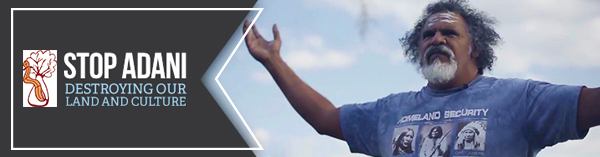
When we rejected Indian mining company Adani’s offer to exploit our land, they took aggressive legal action to overrule our rights just six days later. Now we have to fight to protect our land in court.
They have betrayed our trust and are getting set to destroy our land and our culture. You’ve pledged your support, but now I’m going to have to ask you, if you can, to help me again.We face losing everything that is our inheritance. But to mount this fight to protect our heritage, we need more than our conviction and courage. We urgently need funds to mount a legal challenge and appeal against Adani’s action. Can you please make a donation so we can fight Adani in court?
Adani is trying everything, and from the beginning have shown their arrogant, disrespectful treatment of our law and customs. They have misrepresented us, and they have betrayed us. They took action to remove our rights through a legal system designed to favour big mining over the rights of Indigenous peoples. It seems they’ll stop at nothing to get their mine, which will destroy our ancestral land and the underpinnings of our lore and culture.
If we can raise enough money, we will appeal the National Native Title Tribunal’s decision to allow the Queensland Government to issue mining leases to Adani, despite our refusal to enter an agreement with the company. The Tribunal even recognised that we have not given our consent or agreement to the mine, but still overruled our internationally recognised rights in favour of Adani.
The Tribunal has sanctioned the destruction of our ancestral lands and cultural heritage on the grounds that it’s in the ‘public interest’. We will contest the idea that building one of the world’s largest coal mines is good for the people and the country.
Our right to self-determination and free, prior, and informed consent is being trampled.
We have to fight back, but we can only do it with the help of our supporters. Can you please get behind us to fight for our rights and our land in court by donating to our fighting fund? http://www.getup.org.au/stand-with-us
The truth is we’re up against a multi-billion dollar company and a legal system that makes it very tough for traditional owners. We know we’ve got a strong, righteous case to run, but we’re not going to leave it at that.
We’ll continue to fight for our rights through the courts, and look to international law if need be. We will visit investment banks around the world to stop the project getting funding. And if it comes to it, we will take our fight all the way to the United Nations.
This fight will define our people and be a landmark moment for Indigenous rights and climate change in Australia. Can you help us defeat Adani by donating to our fighting fund?
Adani think they can walk all over us but they’ve never seen anything like this. Our lands and our way of life, and the legacy of our ancestors, mean too much to our people to rollover. We are here to fight and we won’t stop until our land is protected.
PS – After I first wrote to you and others, Wangan and Jagalingou people were overwhelmed by the response. To know that more than 90,000 people have chosen to stand with us as we fight to protect our land and our culture from Adani has given us real strength and confidence. On behalf of Wangan and Jagalingou people who are opposed to this mine, we sincerely thank you.

POPULAR
 CONGRESS TELLS COURT THAT CONGRESS CAN’T BE INVESTIGATED FOR INSIDER TRADING
 HOW TO KEEP NSA COMPUTERS FROM TURNING YOUR PHONE CONVERSATIONS INTO SEARCHABLE TEXT
 U.S. GOVERNMENT DESIGNATED PROMINENT AL JAZEERA JOURNALIST AS “MEMBER OF AL QAEDA”
 U.S. GOVERNMENT: WE CAN CLASSIFY ANYTHING AND JUDGES CAN’T STOP US
 SENATORS WANT TO “BLOW ISIS OUT OF THE WATER” WITH “FANCY MEMES”
… After Greece, who’s next? Iran and Saudi Arabia, strategic balancing act; Germany special report, politics and the euro; crisis in the Mediterranean, what asylum policy? untold stories. Piketty, the wealth of the wealthy, London, playground of the global rich… and more…click cover to access…

The Arctic is the “canary in the coal mine” of global warming. Over the past 50 years Arctic winters have gotten a whole lot warmer,rising in temperature by an average of 6.3 degrees Fahrenheit. With the region warming twice as fast as the rest of the world, changes in the Arctic are providing a preview of what is to come if climate change is not stopped. The picture is not pretty: the Arctic is suffering increasing coastal erosion, more acidic oceans, earlier spring snowmelt, drier landscapes, and more extensive wildfires. Significant habitat changes are also pushing many species—including the iconic polar bear—to the very brink of extinction.
The United States is taking over chairmanship of the Arctic Council at a challenging and critical time. Thanks to melting sea ice caused by climate change, the Arctic is opening up. This means that Arctic nations could soon begin sparring over new shipping routes and access to remote oil and gas deposits. At the same time, the region is being hit hard. Climate change is directly impacting the Arctic ecosystem. Rising sea levels are upending coastal settlements, while gas flaring is coating sea ice in a nasty layer of black carbon that speeds the melting causing over a million premature deaths each year from respiratory and heart disease.
If the United States wants to protect the Arctic from climate change, it can’t allow any more oil and gas drilling in the region. The Obama Administration has a unique ability to use its chairmanship of the Arctic Council to chart a new course for climate leadership in the region. According to a peer-reviewed study recently published in Nature, the world must choose between drilling for Arctic oil and maintaining a safe, liveable climate. Showing leadership on climate means cutting carbon emissions—not greenlighting oil companies’ risky plans to place new drilling rigs in the Arctic Circle.
Coverage
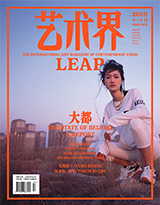
Beijing’s political role, historical narrative, geographical structure, and cultural memory culminate in a city where people share a common experience of culture and emotions. At the same time, Beijing’s unbridled growth can feel unfamiliar, a surreal mix of globalization and localization that has allowed Beijing to build its own traditions, becoming an extremely competitive art hub in the process. Yet there are moments where it diverges from this path. LEAP’s April issue, “The State of Beijing: A Report,” looks at the art capital from the perspectives of architecture, geography, exhibition history, and more, shedding a light on the the rawness and weirdness, authority and gravity that Beijing brings to the table.
This issue’s middle section introduces two important artists as well as new theories: Yuko Mohri’s electro-mechanical sound installations, Timur Si-Qin’s renditions of commercial objects and imagery through a neo-materialist lens, and musings on neoreactionary thoughts and Dark Enlightenment . Einar Engström investigates Mohri’s art via contemporary dynamics — her objects acting as intermediaries and persuading physical forces to reveal a natural order we are simply not accustomed to seeing; Lai Fei interviews Si-Qin, who describes China as a “giant processor of materials,” which may be the Beijing to come; and Matthew Shen Goodman adopts a new philosophy to examine the future of Beijing—a fragmented city-state that is fundamentally unknowable.
This issue’s bottom section features a total of 14 exhibition reviews, including “2015 Triennial: Surround Audience,” “Sharjah Biennial 12: the Past, the Present, the Possible,” “On Kawara: Silence,” “New Measurement and Qian Weikang: Two Case Studies in Early Chinese Conceptual Art,” as well as other major international exhibitions. In addition, you will find reviews of new work and solo exhibitions from Wang Gongxin, Huang Yong Ping, Ding Yi, Zeng Hong, Yang Xinguang, Mark Bradford, and Robert Zhao Renhui, among others.
…as UK election approaches, this message is more important than ever. Just say NO to those “sinister rightwing c**ts”…
 “We’re living in extreme times and if you listened to modern rock music you wouldn’t know that,” says Gillespie. “I just think it’s odd there’s no protest, resistance or critique of what’s going down. It’s like people are tranquilised. All the rights people had fought for – people like trade unionists, anarchists, artists – are being clawed back by extremists. These people [in charge] aren’t rational thinkers. Someone like Boris Johnson hides behind that bumbling public schoolboy image but he’s a sinister rightwing c**t trying to bring in anti-strike legislation … we’ve got to fight these fucking people!”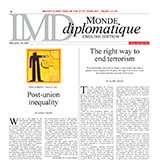
… redefining ‘terrorism’; Libya, from chaos to war; the IS brand of daily terror; 100 years on, the Armenians speak; US, nothing is as usual; an African Spring? Senegal, Burkina Faso, Nigeria; Sao Paulo’s water crisis; India’s giant, Tata in the 21st century; Algeria’s harkis; dancing for Kobane… and more…
::: just click cover above to access :::

This list is also available at https://github.com/RSF-RWB/collateralfreedom
To help make freely-reported news and information available in these countries, all Internet users are invited to join in this operation by posting this list on social networks with the #CollateralFreedom hashtag.
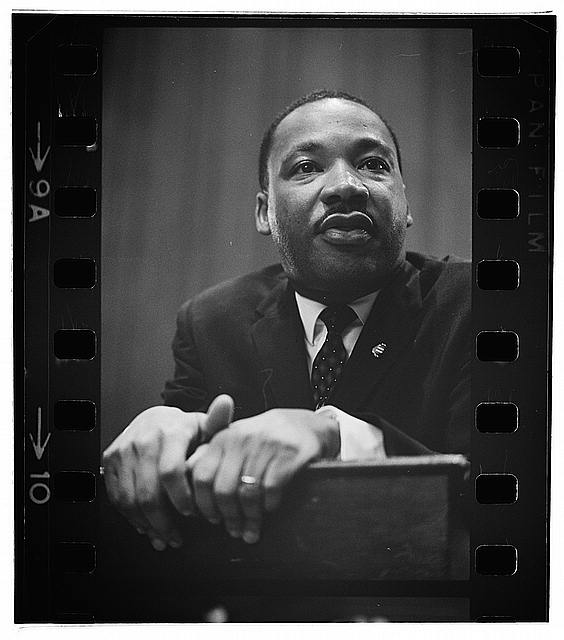
I refuse to accept the view that mankind is so tragically bound to the starless midnight of racism and war that the bright daybreak of peace and brotherhood can never become a reality.

C21 hereditary tyrant


'If artists betray the social conscience and the basic principles of being human, where does art stand then?' Ai Weiwei

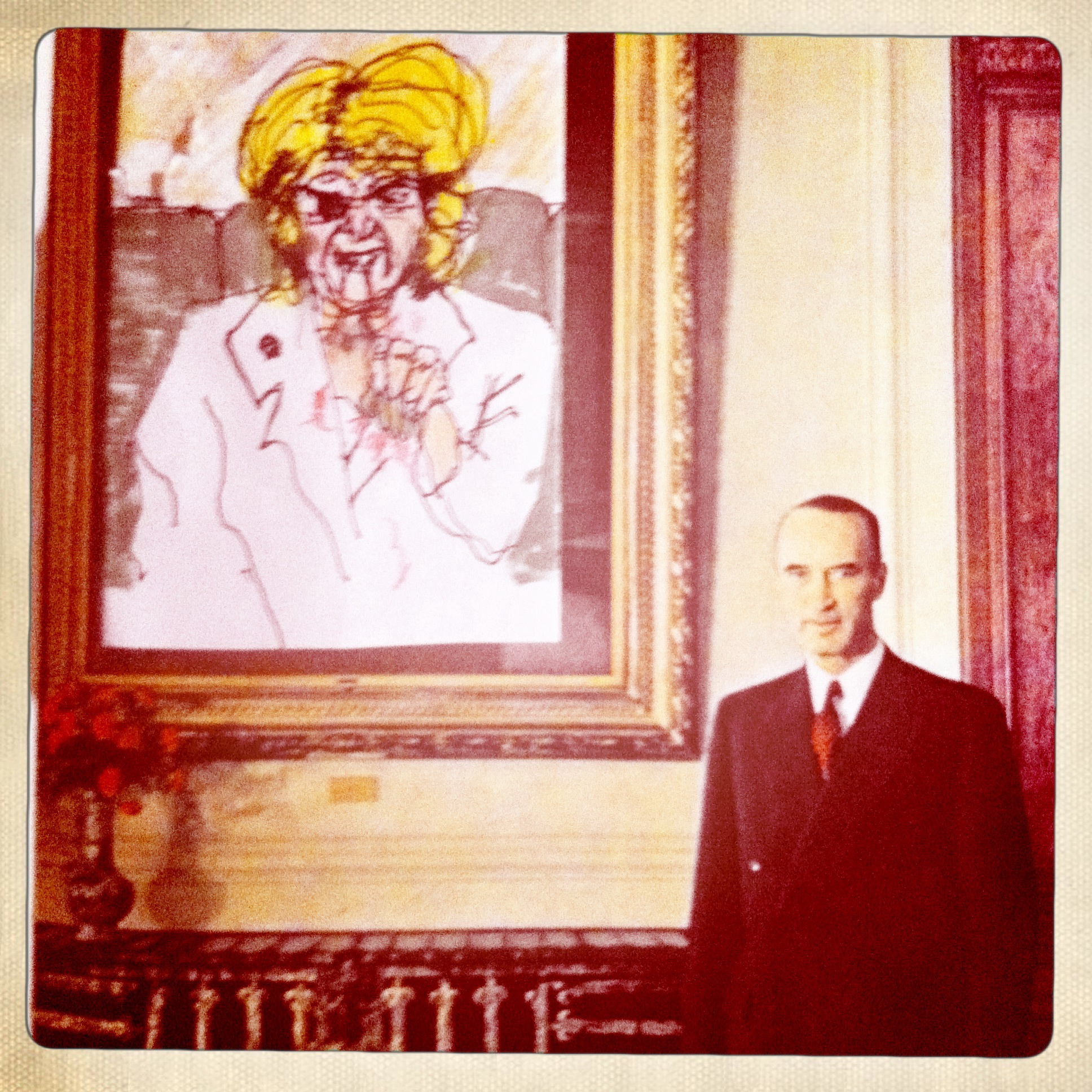
chamber of horrOrs...

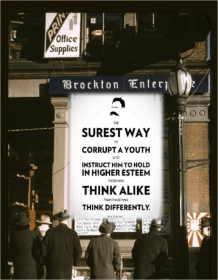

jellybellypolies of the very recent past


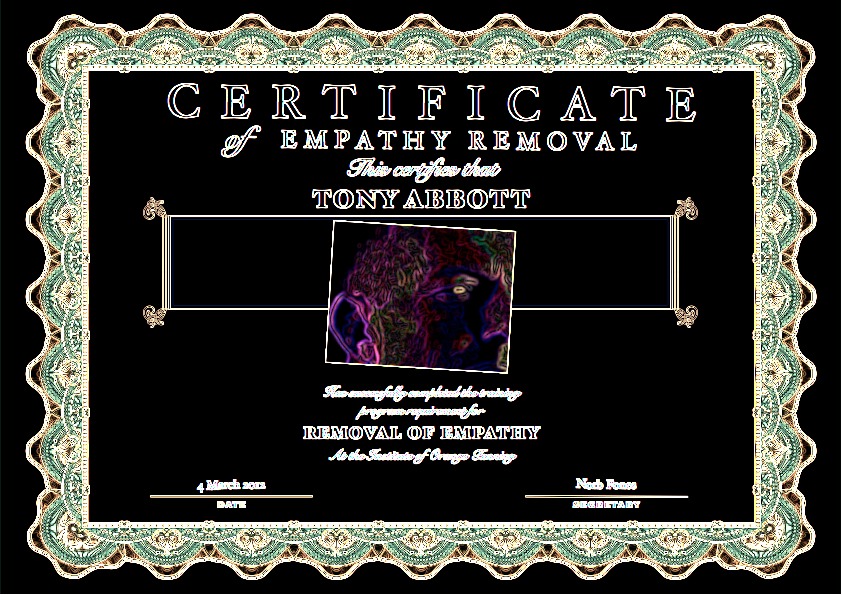


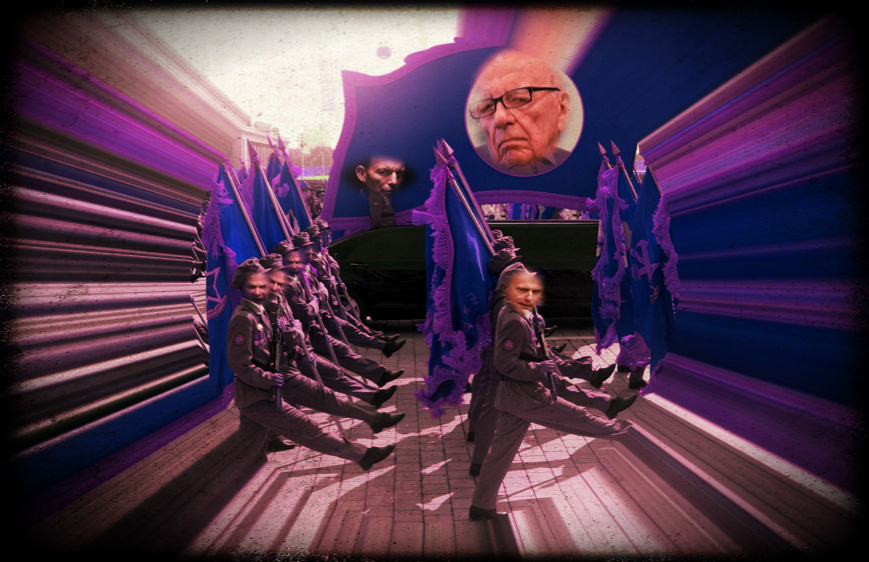


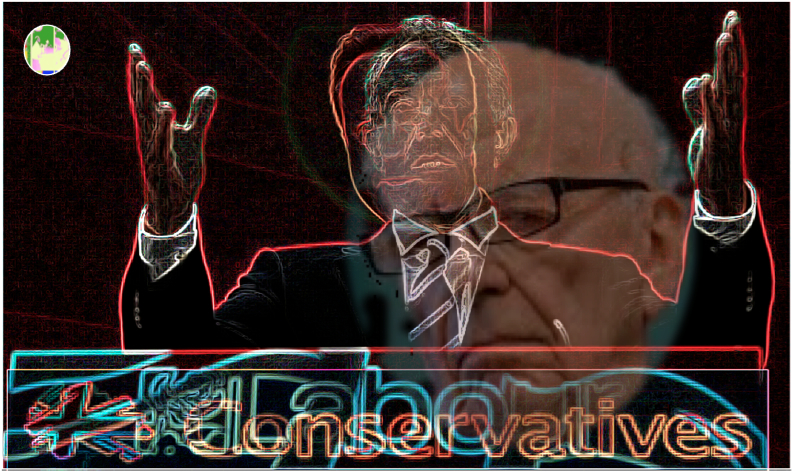





 the interpretOr