Category: thus far…


To recap. First, Cameron, Osborne and the Murdochs together embraced a relationship of mutual benefit, irrespective of the interests of the British public and democracy…

Second, the Murdochs knew what went on in the News of the World and approved of and supported the cover up and the pay-offs. Therefore the Prime Minister and Chancellor entered into an agreement with the bosses of a criminal organisation.

The third question is this: granted that Cameron and Osborne knew that the Murdochs were “tough” (just as did Thatcher and later Blair) did they also understand they had become criminal? After Cameron won the Tory party leadership in 2006, perhaps only the Guardian was trying to ring the alarm bell over the courtship. But after Goodman was jailed for hacking and Coulson resigned were these not danger signals? Osborne is said to have then recruited Coulson and Cameron agreed to give him “a second chance” as he put it. But really, did both of them believe the “rogue reporter” line?

It does not matter if you want to give them the benefit of the doubt because an identifiable moment in the run-up to the 2010 election removes all uncertainty. To explain this begs readers’ patience, but it is a defining moment. The fullest account so far is the gripping book subtitled ‘News Corporation and the Corruption of Britain’, Dial M for Murdoch. It’s by Tom Watson MP, the hero of the Select Committee and Martin Hickman of the Independent. (The hint in the title is heavy-handed – see openDemocracy’s review of the book by the author of The Murdoch Archipelago, Bruce Page, who agrees there is a comparison with KGB but denies that NewsCorp assassinates, and I agree with him).

The story seems to be this, drawn from Dial M for Murdoch (pp. 107-10, 167-181). After Cameron had put Andy Coulson in charge of his press and media operation in 2007, it emerged that as Editor of News of the World Coulson had employed Jonathan Rees.

Back in 1989 Rees was a partner with Daniel Morgan running a private detective agency. Apparently Morgan was concerned about Rees’ connections to corrupt police. After having a drink with Rees in a pub Morgan was murdered. Rees denied he was responsible. He went on to run a lucrative business obtaining stories while the police were suspicious and began to bug him. They recorded him saying “No one pays like the News of the World” and, more important, discovered that he was planning to plant cocaine on someone to fit her up. After he did so, he was charged with perverting the course of justice and given a seven-year sentence in 2000. Released in 2005 he was promptly re-employed by… Andy Coulson at the News of the World.

Liberal Party leader Tony Abbott shows his true colours in refusing to support a proposal to put in place an anti- corruption body or new codes of conduct for Members of the Australian Parliament.

Abbott considers that striving to demoralise and brutalise Craig Thompson on the floor of the parliament so that he will resign or have a psychological meltdown is a better solution for him to become Prime Minister than waiting for the next election, or for the proper procedures of the parliament and the law to be followed.

This shows two vital aspects of Abbott’s character. The first aspect is his ruthlessness that allows him to continually put his own ambition above any other consideration. The second is his deceit.

Abbott does not want stronger codes of conduct because he knows that at least one of the members of the Liberal/National coalition is likely to be caught by its provisions and penalties, and therefore strip her vote from the coalition negating the possible loss of Labor’s Craig Thompson.

The true reason Tony Abbott does not want to wait for any of the proper procedures or solutions to be used is because he wants an immediate election while Labor is at its weakest point. He does not want Labor’s program of reforms to be implemented because he knows they will be popular and that his alarmist rhetoric will be shown to be untrue, leaving him revealed as the emperor with no clothes.


Green Party leader Christine Milne has clearly articulated a major emerging issue for Australia and the countries of the South. The neo-colonial  pillaging of resources provides almost no benefit to the ordinary citizens of exploited countries and constitutes a  blatant dispossession of future generations.

Milne was responding to the announcement that the Australian government would allow foreign workers to be flown in to work on Gina Rinehart’s Roy Hill iron ore mine in Western Australia.

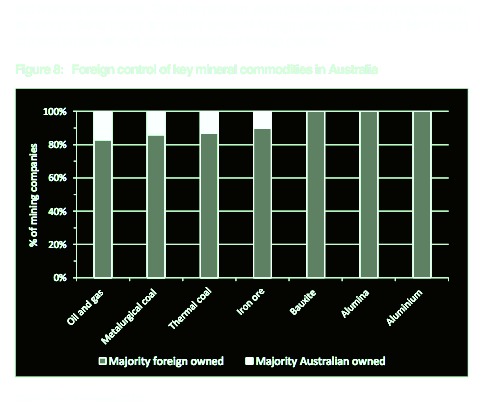
A recent report by the Australia Institute showed that 5 out of every 6 dollars profit from mining in Australia went to overseas investors and that most of the remaining profits went to a handful of wealthy Australians like Gina Rinehart. The most significant benefit to ordinary Australians is derived through the jobs of mine workers.

By eliminating Australian jobs there is very little benefit to this country in digging massive holes in the ground and the significant harm of creating environmental damage and global climate change.

Christine Milne is spot on in identifying the need for a new examination of the ramifications of the impacts of mining on this country and its people.

Australians are in danger of becoming the present day equivalent of the Incas and Aztecs whose Gold and Silver resources were plundered by Pizarro and Cortez and the surviving population was forced into slavery.

Gina, mmmmuhhhh. I am honoured to bee your guest this evening. Your guest here…here et your luvelee magnolia penthouse. Vwat splendid oils upon arrival! Z’art…

Yes, they’re super doops, aren’t they? Leni, I’ve commissioned a triptych by the late Saffron Legging that I shall be gifting to Morley. It’ll accompany the nugget inscribed with my ode d’or.

Vell, thets splendid fraulein Gina. Und ze subject matter….zee subject matter of this acqeezition.

Well, it wepwesents Western Australia, all the element things and nature…the air in the sky…

Ochhh, eet sounds marvelous…

And, and and, Leni…the subject matter includes a shark and a dog. Vwee see the doggie… swimming in the water…the ocean…splashing in pursuit of a ball…the next panel depicts a shark fin upon the horizon…viewed, as seen from the water…

Gina, ze soobject matter is so raw! So raw und so naturel. Und thee third? The final panel?

The shark comes rocketing to the ocean’s surface and has the pooch in it’s jaws!!! Ha, haaah. I love it…

So, zee doggy succumbs… to zee force of nature in zee shark! Now, ze sementecs…eets, eets…

All mine, Leni. Please come on through…

Dear Gina. Dear, dear Gina…well, congwatulations are in order!! Splendid achievement.

Ohh Lord Chwissie, I weally, weally hoped that this was to be you. You upon the telephone…

Dear Gina. Dear, dear Gina. Your pa would be pwoud. Why, you have the midas touch.

Ohh Lord Chwissie, it’s my cwowning achievement. World’s…richest…WOMAN! Andy Pandy sent me a congratulatory telegwam and exclaimed that he was considerwing a sex change!!

Did he now! Did he now, ho-ho. You and he embody a ‘fair go’, Gina. ..A great big, luvelee jubelee fair go. Tony’s tickled to bits too over this and he wants to nail Australia’s richest man!

Lord Chwissie, he’s married with childwen. Just what on earth do you mean?

Nooo, nooo, dear Gina. Tony…wants …Australia…to have a world’s richest man title.

Hahh, yooo are a card, viscount B. A weal card. I’m getting wather poety amidst West Perth’s ambrosia hues. I’m on fire….I’m nucleartastic…it’s mine…it’s all just bloody well all mine!!!

And all mines, dear Gina. All mines…

“People did not believe in my facts and thought my theories unsavory. Resistance was strong and unrelenting.”

The hedge fund Magnetar helped create billions of dollars’ worth of risky deals called collateralized debt obligations, many of which failed spectacularly in the financial crisis. Magnetar, meanwhile, had taken positions that allowed the firm to profit when many of those same CDOs collapsed. Since Magnetar’s dealings was reported on two years ago, there’s been a long line of investigations and settlements related to the hedge fund.

Magnetar itself has never been charged with wrongdoing, and it has always maintained that it did not have a strategy to bet against CDOs they were involved with. But today’s Wall Street Journal reported that Magnetar is indeed under investigation by the SEC.

But the Journal reports that the SEC’s investigation is looking into whether Magnetar took such a prominent role in structuring some of the CDOs in which it invested that it became a de facto collateral manager, responsible for selecting the assets in a CDO. If that were the case, Magnetar might have some responsibility to all the investors in the deal.

The SEC has been circling around the Magnetar deals for some time, hitting some of the investment banks and managers involved. Here’s a roundup of all the charges, settlements, and investigations that we know of stemming from Magnetar deals:

Settled:
June 2011: JPMorgan agrees to pay $153.6 million to the SEC to settle allegations that it misled investors by not telling them that Magnetar was involved in the creation of a CDO called Squared CDO 2007-1. In reaching the settlement, JP Morgan did not admit or deny the SEC’s allegations.

February 2012: State Street Global Advisors pays the state of Massachusetts $5 million to settle allegations that it did not disclose to investors that Magnetar was involved in constructing the CDO Carina CDO Ltd. State Street did not admit or deny Massachusetts’ allegations.

Charged:
June 2011: The SEC files a complaint against manager Edward Steffelin for his involvement in structuring JPMorgan’s Squared CDO 2007. In October 2011, a judge threw out part of the SEC’s case, ruling that Steffelin had not engaged in “fraud or deceit.” Other charges are still pending. A lawyer for Steffelin declined to comment on an ongoing case.

Under investigation:
June 2011: The SEC is reportedly investigating Merrill Lynch and the firm NIR Capital Management over the Magnetar CDO called Norma.

September 2011: The SEC is reportedly investigating the Japanese Bank Mizuho and an executive there, Alexander Rekeda, over the making and marketing of the CDO Tigris, another Magnetar deal. Mizuho did not immediately respond to our requests for comment on the current status of the investigation.

September 2011: The SEC warns it may bring charges against the Ratings Agency Standard & Poor’s, which abruptly downgraded a Magnetar CDO called Delphinus CDO 2007-1. (In an SEC filing in February, S&P’s parent company, McGraw Hill, said that the SEC’s warnings “have no basis and they will be vigorously defended.”)

February 2012: The SEC warns Alexander Rekeda that it may bring charges against him for misleading investors about Magnetar’s role in creating Delphinus. Rekeda, who is now at the investment firm Guggenheim Capital, could not be reached today for comment.

May 2012: According to the Wall Street JournalMagnetar itself is under investigation by the SEC. Magnetar told ProPublica in our original story that the SEC was “looking broadly” at CDOs and had requested information from Magnetar, but said that they were unaware of a particular target of the investigation.

The Journal also reports that the SEC continues to investigate NIR and its founder, Corey Ribotsky, for its role in creating Norma with Merrill Lynch. NIR did not respond to our requests for comment, but a lawyer for NIR and Ribotsky told the Journal that the firm had not acted improperly in selecting Norma’s assets. A spokesman for Bank of America, which now owns Merrill Lynch, declined to comment.

This article was by ProPublica.

The JIC (Joint Intelligence Committee) of the British government has directed the Home Office to convey the Obama administration’s terms re Ben Harridan to the detention unit at Heathrow…

“Inspector Weeting, the Obama people are adamant. No latitude. Mr Harridan has conspired with Hague ICC held master criminals…Chesney, Bliar, Dumsfeld. The evidence is in print – black and white. His words are recorded there in the newspaper archive. I mean, fuckin’ hell Charlie, he has salivated and gushed over them all. He had access to venal aresholes of the highest order! He even recently described Dubbya as “visionary and morally courageous…” I mean, the man is a criminal and a craven turd…let me read you a bit of his recent Bush/Cheney revisionism in his ghastly rag:::

“Rich Armitage, Paul Wolfowitz, Bob Zoellick – with very deep Australian connections, and a doctrine that put solid allies ahead of all others. Howard sensibly took maximum advantage of all that this offered.Right now the whole world is absurdly against Bush. If he jumped in front of a speeding train…”

I mean..Inspector Weeting, the Armitage/Wolfowitz/Zoellick troika had a doctrine of malice, discontent and exploitation. What doesn’t he get yet? I mean, listen to this, I’ll patch it in, it’s an excerpt from Harridan’s interrogation of late:::

Mr Harridan, let me put this to you…as Foreign Editor of the Caucasian, do you consider that you have influence?

We  provide our readers with information… Don’t you know who and what I am!? This, this, this is quite simply a kangaroo court…

Harridan. Just answer the question. Influence, yes or no?

Yes, ok, ok. At the end of the day, we have a measure of influence.

A measure, Mr Harridan? Can you elaborate?

Look, I’m the bloody chap who does the heavy lifting. It’s not easy traversing the globe and …I’m sure, a more balanced understanding of Bush’s achievements, as well as his failures, will emerge.

I wanted to begin this article with a new group name that appropriately described Australian political reporters. I refuse to call them a “Pack”, even though it rhymes with hack, because a media pack sounds active and alert, not at all suitable for the aging and pathetic mob of name droppers, lobbyists and scandalmongers who constitute the Canberra media.

I have settled upon “Wallow”, a name that more accurately describes a group of gossiping dirt lovers who lethargically flop around on the muddy shores as a vast river of fundamental information flows past their uncomprehending eyes.

Why do the Wallow focus on the non events occurring in this country? How is it they are capable of extracting the finest nuances from a story with sexual connotations? They relentlessly pursue the Peter Sleeps and Craig Thompsons for some juicy gossip that  makes no difference to this country, and while they are doing so, they miss the real story.

The Wallow have concentrated their gaze on the personal imbroglios of both of these miscreants and attempted to widen the smear to their parties while missing the really important ramifications that could massively change the future direction of the Australian nation.  If both of these MPs are removed from the Australian Parliament there is a real chance that Tony Abbott can very quickly become our Prime Minister. Why is the possible impact of this invisible to the Wallow? Perhaps they have mud in their eyes.

By his own admission, and despite his relentless calls for the resignation of the Gillard Government, Tony Abbott is not ready to take over governing of this country. He has offered no clear idea of what he will do in government beyond reversing important reforms implemented by the Rudd and Gillard Governments. Abbott has refused to say what his reversal plans will cost the Australian taxpayers and is equally coy about the feasibility of the  few new programs he promised to implement in his budget speech. He said he didn’t need to reveal the cost until the next election is due. This means on the last day before the election when it is too late to calculate the true cost of his program socially and economically.

The last time Abbott ran for government his last minute budget was farcically exposed as being greatly flawed. Now there is a real possibility of Abbott becoming the Prime Minister long before the next election is due.  It is a disgrace that the Wallow has failed to pin him down on this fundamental issue.

On the day of his recent budget speech it was far too easy for Tony Abbott to get away with saying that because the next election is not due for over a year, that there is no need to outline his alternative plans or tell us what his budget will cost until then. Yet on the same afternoon Abbott repeated his demand for Prime Minister Gillard to resign her commission and go to an election immediately.

The media Wallow has no agenda to keep the populace informed on important public issues. They see themselves as media celebrities and performers and the providers and creators of gossip. In short they treat the public as short attention span fools to be manipulated by fear and envy. The Wallow no longer have a beneficial purpose in society above telling us what to buy and where to do our shopping. Not so much a fourth estate more a glorified advertorial posting board.

While the Wallow blindly flop in the murky shallows we seem destined to be led by a man who does not agree with science or with evidence based decision making; a man who plans to drag us backwards into a narrow prejudiced Tea Party style past. While trumpeting Christian values he seeks to turn back refugees seeking our help and shelter. He calls the Prime Minister a liar and yet he makes promises he knows he cannot and will not deliver. He then excuses himself saying we should not rely on the promises he speaks, only on the promises he has written down.

Tony Abbott has driven Australian politics to new low levels of nastiness. He has regularly put his own ambition above the public interest. He needs to be exposed before our country regresses into an ignorant, deeply divided winner take all battlefield, like that created by Margaret Thatcher in the United Kingdom. Unfortunately we cannot rely on our largely foreign owned Australian media to shine a light on his deficiencies.

And, Mr Harridan, your passport’s date of issue is April 2002. It provides evidence of travel to Israel and the US. From a Home Office perspective, we’ll need to dig a little deeper. Please wait at the door to the left of the counter and accompany me…

Don’t you know whooo I AM? I’m HARRIDAN, BEN HARRIDAND and ...

That’s quite enough of that. Glenys, can you accompany me with ‘Mr Harridan’…

Ben Harridan’s still slammed up at Heathrow, in a cell and wearing an orange jumpsuit, deportation pending and not very happy…

Heck, this is just simply not on..not what I blooming well expected. I mean, just how many times have I just hopped off the plane and into a black cab, bound for Wapping? To be here, surrounded by this, this filth. A Foreign Editor …of global repute, incarcerated in an airport cell. Like a caged animal, it’s just frankly outrageous…The sheer nerve of the copy of the Reuters bloody handbook just happening to lie upon the bunk thing, here in the cell. How long has it been now? They are denuding my dignity. I mean…taking a chap’s sandals. It’s an OUTRAGE!!

Owz it goin’ then Julian? You new ‘ere.

What? Julian? My name is Ben.

Heard your a bleedin’ journo.  All the bloody same to me, mate.

That, I can assure you, is far from the case.

Whatever…

The 10 Absolutes of Reuters Journalism:

• Always hold accuracy sacrosanct.  Always correct an error openly • Always strive for balance and freedom from bias • Always reveal a conflict of interest to a manager • Always respect privileged information • Always protect their sources from the authorities • Always guard against putting their opinion in a news story • Never fabricate or plagiarise • Never alter a still or moving image beyond the requirements of normal image enhancement • Never pay for a story and never accept a bribe (source: Reuters Handbook)

Passport, please.

Yes, uhm, of course. Here it is…

Harridan. Ben Harridan. And you are Ben Harridan?

Yes, that’s me. I am Ben Harridan.

Business or pleasure? The purpose of your trip to the UK, Mr Harridan?

Strictly business.

Says here, ‘occupation: Foreign Editor’.

Yes. Quite frankly, I’m the Foreign Editor of the Caucasian. You may even have heard of us…

Mr Harridan, leafing through your passport, I see stamps for Israel and the US. Fairly recent, too…

Yes, us Foreign Editors tend to get around, ya know.

You may make that assumption, but your visa stamps are exclusively Israel and the US? Your work not take you further afield?

Now look here. I don’t like your insinuation. I’m FOREIGN EDITOR. FOREIGN EDITOR of Australia’s BIGGEST SELLING BROADSHEET!!

And, Mr Harridan, your passport’s date of issue is April 2002. It provides evidence of travel to Israel and the US. From a Home Office perspective, we’ll need to dig a little deeper. Please wait at the door to the left of the counter and accompany me…

Don’t you know whooo I AM? I’m HARRIDAN, BEN HARRIDAND and ...

That’s quite enough of that. Glenys, can you accompany me with ‘Mr Harridan’…

‘Addressing the topic of mental health in Australia (and its treatment) are: Professor Allan Fels, head of the newly established National Mental Health Commission; former Australian of the Year Professor Patrick McGorry, head of Orygen Youth Health and one of the National Mental Health Commissioners, and Barbara Hocking, Executive Director of SANE Australia…’

Please click link below to go directly to this discussion:

the monthly: mental health & australia ’12

… France, next chapter; US and China, partners still; Egypt and Libya, Islamists in action; Al-Jazeera’s star wanes; African mercenaries for US warsVietnam, universities on the cheap; Occupy, the first year; Russia’s new middle class; US, the enemy within; Tony Judt, wise words…and more…

Le Monde Diplomatique is informative, broad and available in English by clicking on the May 2012 hotlink below.

 http://mondediplo.com/tag/open-access

LMD provides a cool, reasoned, different view of the world’s most pressing issues”
New York Review of Books

The Bureau of Investigative Journalism, May 2012 report on Putin’s mega wealth:

Back in 2011, surrounded by press, Vladimir Putin emerged from the murky waters of the Black Sea clutching the discovered remnants of ancient buried treasures. The discovery later turned out to be nothing more than a PR stunt. He hadn’t found the artefacts after all. But the stunt had achieved its purpose. Putin was once again seen as the bare-chested, judo-master, tiger-pacifying, untouchable leader of Russia.

But it was another apparent PR stunt – the spontaneous gifting of a £5,500 watch to a peasant boy – which led some to question whether Putin did not have buried treasure of his own. How could a politician with a declared annual salary of around $140,000 (£88,000) afford to live a life seemingly full of luxury watches, as well as yachts and palaces?

The Bureau of Investigative Journalism decided to investigate and has produced a documentary for Al Jazeera’s People & Power. We travelled from Moscow to St Petersburg looking into the origins and scale of Putin’s wealth.

Declared earnings
On March 6, Putin was once again elected president of Russia. He regained the role he had relinquished in 2008, when he had stepped down because of rules preventing more than two consecutive terms, becoming prime minister instead.

As part of his latest election bid, Putin was required to declare his worth. His declaration seems modest for a world leader.

Stanislav Belkovsky, a political analyst, claims Putin could be worth as much as $70bn, a figure that would make him the richest man in the world.

According to the Russian Central Electoral Commission, Putin has $179,612 in the bank and has earned around half a million dollars in the past four years. His wife Lyudmila has $261,541 in four bank accounts. Putin’s declared assets are also rather spartan. He has claimed to have a share in a public garage, apartments in Moscow and St Petersburg and a 1,500-square metre plot of land outside Moscow.

But there is increasing concern that Putin has not declared all of his worldly goods.

Watches
One of the reasons for such concern is that, despite his modest income, Putin has shown something of a flair for the finer things in life. He is rarely seen without a luxurious watch and has been photographed several times wearing expensive brands, including a £70,000 Patek Philippe Perpetual Calendar, and a £15,000 Breguet Marine.

Not that the Russian leader is uncharitable: he has also been spotted giving away £11,000 worth of Blancpain watches. The first was gifted to the shepherd boy and the second, rather more reluctantly, to a metal worker who brazenly asked the Russian leader for a keepsake. Both instances were captured by the media.

In total Putin has been photographed wearing around £160,000 of wrist wear.  A remarkable feat for a man who earns, before tax, £80,000.

It is something that other journalists have been alert to.  Luke Harding has reported for the Guardian newspaper on Putin’s wealth for years, and has been banned from Russia in the process. He said, ‘it is unlikely that [Putin] – or any of the presidential administration – would have items of this value without any kind of supplementary income.’

We asked the Kremlin about the watches. Were they his personal property or owned by the state? They declined to tell us.

But high-end watches are positively discreet compared to luxury yachts and palaces.

Luxury accomodation
As president, Putin will have access to the presidential yacht, Chakya. Bought under Medvedev’s rule, the luxury yacht came with a £26m price tag. It has six luxury cabins, wine cellar, jacuzzi, barbecue and other luxuries.

The yacht was bought with presidential funds. However, another extravagant purchase, which some have linked to Putin’s personal wealth, is a mansion overlooking the Black Sea.

The palace, sold recently for £350m, is rumoured to have been built as a holiday home for the Russian president-elect.

Leaked photographs of the Palace show richly decorated interiors, ornate grounds, gates topped by a two-headed eagle and a lift down to the beach.

Security around the palace is high, barbed wire and guard dogs kept our reporters at a distance. Putin denies any connection to the palace and current, official owner Alexander Ponomarenko says the palace is a ‘holiday home.’

However, local resident admit seeing Putin frequenting the area and when environmental activists broke into the compound in 2011 protesting the building’s construction on protected land, they were met by Federal Protection Service guards.

Sergei Kolesnikov, a Russian businessman and former associate of Putin, claims the palace was built for Putin through a web of transactions with its ownership being held in anonymous bearer shares.

The Bureau has also obtained building contract documents for work on the palace which bear the signature of Vladimir Kozhin, the head of the Presidential Administration Property Development.

Read more about the Black Sea Palace.

Hidden wealth?
But it is not just watches, yachts and palaces. There are others who believe that Putin’s declaration of modest wealth simply does not add up. Stanislav Belkovsky, a political analyst and critic of Putin, is one of the most outspoken. He claims Putin could be worth as much as $70bn, a figure that would make him the richest man in the world.

This extraordinary sum is based on claims that Putin owns shares in three major oil and gas companies: 4.5% of national gas giant Gazprom, 37% of oil supplier Surgutneftegas and a major shareholder of a company that cannot be named for legal reasons.  That company strenuously denies any links to Putin.

‘The figure of $40bn emerged in 2007. That figure could now have changed, I believe at the level of $60-70bn,’ Belkovsky says.

His estimate is based on information gained from confidential sources around the corporations, Belkovsky claims. But he is reluctant to reveal more.

All three companies have opaque ownership structures, and it is impossible to identify the shareholdings claimed by Belkovsky.

Gas and oil producer Surgutneftegas is secretive – an attitude that has not always played in its favour. In 2009 the company bought a 21.2% stake in Hungarian company MOL. However, when Surgutneftegas came to register as a voting shareholder, it was refused. MOL said the company’s lack of transparency around its ownership structure did not comply with Hungarian law.  Gazprom is the biggest gas extractor in the world; the Russian government controls it with a 50.002% stake. But while Gazprom is more transparent over share ownership, Belkovsky claims Putin’s share is hidden through ‘a non-transparent scheme of successive ownership of off-shore companies and funds’.

Gazprom and Surgutneftegas did not respond to the Bureau’s questions.

Despite repeating the claims several times and it being reported widely, Belkovsky has never faced legal action disputing them.

Investigating Putin
As Bureau reporters travelled across Russia we came across others that had tried to investigate Putin in the past.

Deep in the countryside, outside St Petersburg, we met with Marina Salyle.

In 1992 Salye investigated a deal made in the St Petersburgh City office deal which involved the export of $100m worth of raw materials in exchange for food. According to Salye Putin oversaw the deal but while the raw materials were shipped from the city, the promised food never arrived. Her accusation, made up until her recent death, was that Putin benefited from this incomplete deal.

The Kremlin argue that Putin never signed the paper authorising it, though Salye has papers that she claims do contain the President-elect’s authorising signature.

Back in St Petersburg, Lt. Col. Andrei Zykov, a former senior investigator at the Russian Interior Ministry, described his own work looking into Putin’s past.

In June 1999, when Putin was serving his first term as president, Zykov was put in charge of criminal case, number 144 128.

The case involved a construction company called Twentieth Trust, which officials suspected had been used to siphon money from St Petersburg’s city budget in the early 1990s. Zykov claims that Putin benefited from a Spanish villa from the deal.

The investigation was shut down on the grounds of ‘insufficient proof’ and according to Zykov he was fired a year and a half later.

We asked the Kremlin to respond to Mr Zykov’s claims. It has declined to do so.

Read more about Putin’s past. (and link back to the Bureau of Investigative Journalism)

In the early days of his first term as president, Putin had promised to rid Russia of its corrupt oligarchs.

However, as he now prepares to enter a third term as leader of Russia, it is the luxury lifestyle of a tsar that awaits him.

Ariely: So the first thing I want to ask you is: How do you pick your topics?

Gladwell: I don’t really know — I mean, desperation? … I see things and I collect them, and I think they might be interesting. But there’s no theory or system. I go to the library sometimes, and I just sort of roam around; or I go on the databases and I just type in things at random, or I get articles and read through the bibliography…. But there’s no rhyme or reason. Someone will say something to me interesting, and I’ll follow up on it or something. To be a writer I think you’re kind of constitutionally disposed toward optimism…

This fascinating conversation between Duke University behavioral economist Dan Ariely and New Yorker writer Malcolm Gladwellcontinues at the Journalism Resource organisation

Australian banks have once again failed to reduce their rates in line with the rate reduction by the Federal Reserve Bank. They are now hitting the media blaming the government and making excuses for their profit gouging. Meanwhile the gap between the rate the banks charge us to borrow and what they pay for money continues to grow and has become a permanent feature of Australian banking.

The issue is, is this fair and if not, what can we or the Government do about it?

The big banks claim that due to the Global Financial Crisis, a shortage of money to borrow has pushed up the prices they pay for their borrowings. If this is correct it is indeed a problem largely of the Banking industries making. The GFC  was bought about by huge investment in sub-prime mortgages, the highly unethical bundling of sub-prime debts and shonky derivative trading by large banks and traders, mainly to pass off their bad debts to others.

In Australia any possibility of the failure of our major banks was averted by swift action from the Rudd Government which included the backing of the major banks solvency with a government guarantee. Because the Australian Government had a Triple A credit rating this enabled the banks to access funds more easily and at a cheaper rate than most overseas banks.It also gave the big four banks an advantage over smaller banks and credit unions.

Despite this advantage the building societies and credit unions have still been able to provide cheaper mortgage rates than the big four. Clearly this would indicate that the banks are pushing for greater profits and/or are less efficient than the credit unions. No doubt there is a great disparity in the salary packages as well.

The  banks have already forgotten their role in the GFC and that excessive greed was their motivation. So what can be done to bring the Big Four into line? The reserve bank and its interest rate setting is independent of government. It is also unlikely that the reserve bank could give cheaper rates to credit unions and building societies due to it being anti-competitive. (Although the current system gives a financial advantage to the Big Four)

But there is an answer. The federal government is not obliged to provide a solvency guarantee to the Big Four. They could refuse to give the guarantee to banks that refuse to reasonably follow the lead of the Reserve Bank with interest reductions. The guarantee could be reinstated if they provide the Reserve with documentation showing reasonable cause for maintaining high interest rate charges to its customers. Perhaps the government guarantee should be given to approved building societies and credit unions to give them the same advantages as the big banks and this would create competitive pressure for rate reductions.

Finally you can help bring change by moving your business to cheaper institutions and banks.

The InterpretOr has found this site to check out the best rates. http://www.canstar.com.au/interest-rate-comparison/compare-home-loan-rates.html

Titanic 2 is Safe

A co-owner of the Liberal National Party has commissioned a copy of the famous almost unsinkable Titanic ocean liner, which is to be named Titanic 2.

Mr Clive Palmer a multi-billionaire coal magnate and sole owner of the governing Queensland political team announced that Titanic 2 would differ from the original in that it would really be unsinkable. Most journalists took this to mean the new Titanic would incorporate modern technologies to prevent the ship from sinking.

What Mr Palmer actually meant was that by the time his ship is launched, he will have sold so much coal that global warming will have reduced the size of any remaining Atlantic icebergs to the size of Queensland pineapples.

Mr Palmer is expected to announce an even bigger naval project in coming weeks. He has an ingenious plan to obliterate the major shipping hazard on the Queensland coast. The hazard is threatening to derail his plans for building two massive new coal loading ports. Mr Palmer said the Great Barrier Reef is really a great barrier to development in Queensland and its removal will make us all better off.

Mr Palmer said he had instructed his newly installed Queensland Government to put the reef up for tender. Mr Palmer has made arrangements to sell it to a Chinese syndicate who could see the benefit in moving it to China where much bigger tourist numbers could easily access and enjoy the reefs wonderful environmental qualities.

“That great eccentric of the Enlightenment, Georg Christoph Lichtenberg, who put into his private notebooks just about everything that came into his head, once jotted down: “Whoever decreed that a word must have a fixed meaning?” He was perhaps the first to recognize the psychic constraint involved in the perception of meaning and the attempt to make it firm…

Charles Rosen’s expansive and amazing piece continues in full & @ no charge…click here

The whole aim of practical politics is to keep the populace alarmed, and hence clamorous to be led to safety, by menacing it with an endless series of hobgoblins, all of them imaginary.

H. L. Mencken

“Dramatic, slimy events in Australian politics. Country desperately needs election to get fresh start.”

Rupert Murdoch via twitter 28th April ’12

An interpretOr grew up among drastic, slimy events in UK politics with Murdoch and his minions at their rotten core.

The man has no shame. But then again, that’s pretty run of the mill for odious sociopaths. Slimy…

“On my first day as prime minister, I would pick up the phone to the President of Nauru to accept Nauru’s bi-partisan, standing offer to reopen the detention centre there.

Within a week of taking office, I would give new orders to the navy that, where it is safe to do so, under the usual chain-of-command procedures, based on the advice of commanders-on-the-spot, Indonesian flagged, Indonesian crewed and Indonesian home-ported vessels without lawful reason to be headed to Australia would be turned around and escorted back to Indonesian waters.”

‘LANDMARK SPEECH (sic): THE COALITION’S PLAN FOR MORE SECURE BORDERS’

Tony Abbott, 27th April 2012

  (Executive Director of Australians for Constitutional Monarchy 1993/94)


“One cannot believe people are comparing Rupert Murdoch to Satan. Yes, he’s evil, but he’s not as bad as Rupert Murdoch.”

Retweeted 2685 times

Nick Davies of the Guardian broke the ‘News’ (sic) phone hacking story and updates on the Murdochs at the Leveson inquiry as follows:

David Cameron could be in jeopardy if the alleged support for the BSkyB bid proved to be part of a deal with the Tories.

Critics of the Murdochs have often suspected that they have exploited their position as newspaper owners to win secret favours from governments – and the Murdochs and the politicians alike have denied it. Now, for the first time, courtesy of the volatile chain-reaction of the phone-hacking scandal, we have compelling evidence. (click here to go to Nick Davies @ the Guardian)

“We are economists who oppose ideological cleansing in the economics profession. Equally we oppose political cleansing in the vital debate over the causes and consequences of our current economic crisis.

We support the efforts of the Occupy Wall Street movement across the country and across the globe to liberate the economy from the short-term greed of the rich and powerful one percent.

We oppose cynical and perverse attempts to misuse our police officers and public servants to expel advocates of the public good from our public spaces.

We extend our support to the vision of building an economy that works for the people, for the planet, and for the future, and we declare our solidarity with the Occupiers who are exercising our democratic right to demand economic and social justice.”

Gerald Epstein / University of Massachusetts Amherst
James K. Boyce / University of Massachusetts Amherst
Taro Abe / Nagoya Gakuin University
Fikret Adaman / Bogazici University
Bengi Akbulut / University of Manchester
Randy Albelda / University of Massachusetts Boston
Michael Albert / Z Communications
Sylvia A. Allegretto / University of California Berkeley
Gar Alperovitz / University of Maryland
Jack Amariglio / Merrimack College
Nurul Aman / University of Massachusetts Boston
Miguel Arce / Universidad del Valle
Michael Ash / University of Massachusetts Amherst
Enid Arvidson / University of Texas at Arlington
Dennis Badeen / York University
Lee Badgett / University of Massachusetts Amherst
Ron Baiman / Center for Tax and Budget Accountability
Dean Baker / Center for Economic and Policy Research
Samuel L. Baker / Purdue University
Scott Baker / Public Banking Institute
Erdogan Bakir / Bucknell University
Benjamin Balak / Rollins College
Radhika Balakrishnan / Rutgers University
Fabian Balardini / Borough of Manhattan Community College
Nesecan Balkan / Hamilton College
Ahmet Baytas / Montclair State University
Nina Banks / Bucknell University
Sundari Baru
Deepankar Basu / University of Massachusetts Amherst
Michael Beggs / University of Sydney
José Bellver/ Complutense University of Madrid
Suzanne Bergeron / University of Michigan Dearborn
Ravi Bhandari / St. Mary’s College
Marc Bilodeau / Indiana University – Purdue University Indianapolis
Cyrus Bina / University of Minnesota
Peter C. Bloch / University of Wisconsin-Madison
Raford Boddy / San Diego State University
Roger Evan Bove / West ChesterUniversity
Elissa Braunstein / Colorado State University
Garth A. Brazelton / Indiana Economic Development Corporation
Neil Brenner / Harvard University
Ted Burczak  /Denison University
Antonio Callari / Franklin and Marshall College
Isabela Prado Callegari – São Paulo School of Economics
Duncan Cameron / Canadian Centre for Policy Alternatives
Al Campbell / University of Utah
Gerald Campbell / University of Wisconsin Madison
Martha Campbell / Potsdam College (SUNY)
Emanuele Campiglio / New Economics Foundation
Juan Camilo Cardenas / Universidad de Los Andes
Bruce E. Carpenter / Mansfield University
Jessica Carrick-Hagenbarth / University of Massachusetts Amherst
Scott Carter / University of Tulsa
Hugo E. A. da Gama Cerqueira / Universidade Federal de Minas Gerais
Paresh Chattopadhyay / University of Quebec
Robert Chernomas / University of Manitoba
Savvina Chowdhury / Evergreen State College
Jens Christiansen / Mount Holyoke College
Kimberly Christensen / Sarah Lawrence College
Alan B. Cibils / Universidad Nacional de General Sarmiento
Jennifer Cohen / University of Massachusetts Amherst
Steve Cohn / Knox College
Alessio Conti / University of Rome
Paul Cooney / Universidade Federal do Pará
Evelyn B. Córdova / La Universidad del Zulia
James V. Cornehls
Lilia Costabile / University of Naples
J. Kevin Crocker / University of Massachusetts Amherst
James Crotty / University of Massachusetts Amherst
James M. Cypher / Universidad Autónoma de Zacatecas
Omar S. Dahi / Hampshire College
Anita Dancs / Western New England University
Adel Daoud / University of Gothenburg
Leila Davis / UMass Amherst
Erik Dean / University of Missouri Kansas City
Carmen Diana Deere / University of Florida
Chase DeHan / University of Utah
Francois Delorme / Association des Economistes Québécois
Joao Paulo de Souza / University of Massachusetts Amherst
George DeMartino  / University of Denver
Serkan Demirkilic / University of Massachusetts Amherst
Maarten de Kadt
Hans Despain / Nichols College
Carlo D’Ippoliti / Sapienza University of Rome
Jonathan Diskin / Earlham College
Geert Dhondt / City University of New York
David Donald / Glasgow Caledonian University
Peter Dorman / Evergreen State College
P.K. Dollar / PI Marketing Research
Laura Dresser / Center on Wisconsin Strategy
Mathieu Dufour / City University of New York
Lynn Duggan / Indiana University Bloomington
Anil Duman / Central European University
Amitava Krishna Dutt / University of Notre Dame
Gary Dymski / University of California Riverside
Marie Christine Duggan / Keene State College
Nina Eichacker / University of Massachusetts Amherst
David Ellerman / University of California at Riverside
Benan Eres / Ankara University
Bilge Erten / United Nations, DESA
Paula Esteves / Federal University of Minas Gerais
Joshua Farley / University of Vermont
Ramon Garcia Fernandez / Universidade Federal do ABC
Antonio J. Fernos-Sagebien / Universidad Interamericana de Puerto Rico
Kade Finnoff / University of Massachusetts Boston
Nancy Folbre / University of Massachusetts Amherst
Michael Fortunato / Williams College
Robert Francis / Shoreline Community College
L. Carlos Freire-Gibb / Aalborg University
Gerald Friedman / University of Massachusetts Amherst
James K. Galbraith / University of Texas Austin
Robert F. Garnett / Texas Christian University
Heidi Garrett-Peltier / University of Massachusetts Amherst
David George / La Salle University
Armagan Gezici / Keene State College
Norman Glickman / Rutgers University
David Gold / The New School
William W. Goldsmith / Cornell University
Don Goldstein / Allegheny College
Jonathan P. Goldstein / Bowdoin College
Christian Gormsen / Centre d’Economie de la Sorbonne
Mitch Green / University of Missouri Kansas City
Robin Hahnel / American University
Jane V. Hall / California State University Fullerton
Jay P. Hamilton / City University of New York
Amy Hart / University of Sydney
Martin Hart-Landsberg / Lewis and Clark College
James Heintz / University of Massachusetts Amherst
John F. Henry / University of Missouri Kansas City
Doug Henwood / Left Business Observer
Arturo Hermann / ISTAT
Ivan-Dario Hernandez-Umaña / Universidad Nacional de Colombia
Conrad M. Herold / Hofstra University
Marianne Hill / Mississippi Center for Policy Research
Rod Hill / University of New Brunswick
Michael G. Hillard / University of Southern Maine
Larry Hochendoner / World Health Care Infrastructures
Wolfgang Hoeschele / Truman State University
Joan Hoffman / City University of New York
Sue Holmberg / University of Massachusetts Amherst
Kiaran Honderich / Williams College
Jong Haak Hong / Kyungwon University
Barbara Hopkins / Wright State University
Julio Huato / St. Francis College
Alan Hutton / Glasgow Caledonian University
Prue Hyman / Victoria University of Wellington (ret.)
John Ikerd / University of Missouri
Ruth Indeck / Economy Connection
Ryan Isakson / University of Toronto
Jean Jacobson / University of Minnesota Duluth
Frederic B. Jennings Jr. / Center for Ecological Economics and Ethical Education, Ipswich, MA
Tae-Hee Jo / Buffalo State College
Calanit Kamala / UC Berkeley
Emily Kawano / University of Massachusetts Amherst
Seçil Aysed Kaya / Ankara University
Serap A. Kayatekin / American College of Thessaloniki
Steve Keen / University of Western Sydney
Mehmet Rauf Kesici / Kocaeli University
Marlene Kim / University of Massachusetts Boston
Yun Kyu Kim / Trinity College
Mary C. King / Portland State University
Stephen Kinsella / University of Limerick
Robert Kirsch / Virginia Tech
Gerda Kits / The King’s University College
Mark Klinedinst / University of Southern Mississippi
Tim Koechlin / Vassar College
Charles Komanoff / Carbon Tax Center
Charalampos Konstantinidis / University of Massachusetts Amherst
Katharine Kontak / Bowling Green State University
Gonca Konyali / Dokuz Eylul University
David Kotz / University of Massachusetts Amherst
Philip Kozel / Rollins College
David Kristjanson-Gural / Bucknell University
David Laibman / City University of New York
Eric Larsen / Public Policy Institute of California
Mehrene Larudee / Al-Quds Bard Honors College
Michael A. Lebowitz / Simon Fraser University
Chai-On Lee / Chonnam National University
Frederic Lee / University of Missouri Kansas City
Fernando Leiva / University at Albany (SUNY)
Gianmarco Leon / UC Berkeley
Charles Levenstein / University of Massachusetts Lowell
Margaret Levenstein / University of Michigan
Gerald Levy / LaGuardia Community College (CUNY)
Richard Lichty / University of Minnesota Duluth
Patricia J. Lindsey
Antonio Lopes / Second University of Naples
Sean MacDonald / City University of New York
Arthur MacEwan / University of Massachusetts Boston
Fiona Maclachlan / Manhattan College
Brian K. MacLean / Laurentian University
Allan MacNeill / Webster University
Claudio Fernández Macor / Universidad Nacional del Litoral
Yahya M. Madra / Boğaziçi University
Rasigan Maharajh / Tshwane University of Technology
Eric Malm / Cabrini College
Carlos Marentes / University of Massachusetts Amherst
Stephen A Marglin / Harvard University
John E. Peters / Marist College
Wesley Marshall / UAM-Iztapalapa
Stephanie Martin / Allegheny College
Thomas Masterson / Levy Economics Institute of Bard College
Julie Matthaei / Wellesley College
Peter Hans Matthews / Middlebury College
Matthew May / University of Missouri Kansas City
Elaine McCrate / University of Vermont
H. Neal McKenzie
Andrew Mearman / University of the West of England, Bristol
Matthieu Meaulle / Foundation for European Progressive Studies
Michael Meeropol / Western New England University
Ralph Meima / Marlboro College Graduate School
César Viteri Mejía / University of Massachusetts Amherst
John D. Messier / University of Maine Farmington
Peter B. Meyer / University of Louisville
James Miehls / University of Massachusetts Amherst
John A. Miller / Wheaton College
Rob Moir / University of New Brunswick
Gary Mongiovi / St. John’s University
Fred Moseley / Mount Holyoke College
Albert Mosley / Smith College
Tracy Mott / University of Denver
Jamee K. Moudud / Sarah Lawrence College
Adil Mouhammed / University of Illinois at Springfield
Catherine P. Mulder / City University of New York
Marta Murray-Close / University of Massachusetts Amherst
Ellen Mutari / The Richard Stockton College of New Jersey
Sirisha Naidu / Wright State University
Michele Naples / The College of New Jersey
Kamran Nayeri / University of California Berkeley
Jessica Gordon Nembhard / City University of New York
Julie A. Nelson / University of Massachusetts Boston
Emil Nieves-Mounier / Government Development Bank of Puerto Rico
Eric Nilsson / California State University San Bernardino
Richard B. Norgaard / University of California Berkeley
Jennifer Olmsted / Drew University
Erik Olsen / University of Missouri Kansas City
Ozlem Onaran / University of Westminster
Hiroshi Onishi / Kyoto University
Miguel Otero-Iglesias / ESSCA – School of Management
Cem Oyvat / University of Massachusetts Amherst
Aaron Pacitti / Siena College
Thomas Palley / New America Foundation
Susan Parks / University of Wisconsin-Whitewater
Eva Paus / Mount Holyoke College
Samuel R Pavel / Southern Illinois University Carbondale
Karl Petrick / Western New England University
Nicolas Pons-Vignon / University of the Witwatersrand
Manisha Pradhananga / University of Massachusetts Amherst
Robert E. Prasch / Middlebury College
Paddy Quick / St. Francis College
Peter Radford
Elizabeth A. Ramey / Hobart and William Smith Colleges
Wendy Rayack / Wesleyan University
Arslan Razmi / University of Massachusetts Amherst
Jack Reardon / Hamline University
Angelo Reati
Joseph Rebello / University of Massachusetts Amherst
Sanjay G. Reddy / The New School for Social Research
Robert Reinauer / Rollins College
Stephen Resnick / University of Massachusetts Amherst
Cecilia Rio / Towson University
Meenakshi Rishi / Seattle University
Judith Robinson / Castleton State College
Igor Lopes Rocha / University of Cambridge
John Roche / St. John Fisher College
Charles P. Rock / Rollins College
Leopoldo Rodriguez / Portland State University
Frank Roosevelt / Sarah Lawrence College
Luis D. Rosero / Fitchburg State University
Sergio Rossi / University of Fribourg
David F. Ruccio / University of Notre Dame
Héctor Sáez / University of Massachusetts Amherst
Blair Sandler / University of Massachusetts Amherst
John Sarich / Cooper Union for the Advancement of Science and Art
Daniel E. Saros / Valparaiso University
Harwood D. Schaffer / University of Tennessee Institute of Agriculture
Helen Scharber / Hampshire College
Ted P. Schmidt / Buffalo State College
John Schmitt / Center for Economic and Policy Research
Alyssa Schneebaum / University of Massachusetts Amherst
Markus P. A. Schneider / University of Denver
Juliet Schor / Boston College
Eric A. Schutz / Rollins College
Elliott Sclar / Columbia University
Mario Seccareccia / University of Ottawa
Ian J. Seda-Irizarry / University of Massachusetts Amherst
Kristen Sheeran / Economics for Equity and the Environment
Barry Shelley / Brandeis University
Laurence Shute / California State Polytechnic University Pomona
Elizabeth Sloan / University of Utah
Ceren Soylu / University of Massachusetts Amherst
Peter Spiegler / University of Massachusetts Boston
Janet Spitz / The College of Saint Rose
Jim Stanford / Canadian Auto Workers
Liz Stanton / Tufts University
Martha A. Starr / American University
Howard Stein / University of Michigan
Mark Stelzner / University of Massachusetts Amherst
Tamara Stenn / Keene State College
John Stifler / University of Massachusetts Amherst
Engelbert Stockhammer / Kingston University
Ian C. Strachan / Nichols College
Sarah Surak / Virginia Tech
Behrouz Tabrizi / St. Francis College
Janet M. Tanski / University of Missouri
Linwood Tauheed / University of Missouri Kansas City
Kenna Taylor / Rollins College
Pavlina R. Tcherneva / Franklin and Marshall College
Hasan Tekgüç / Mardin Artuklu University
Frank Thompson / University of Michigan
Jim Tober / Marlboro College
Zdravka Todorova / Wright State University
Junji Tokunaga / University of Massachusetts Amherst
Mariano Torras / Adelphi University
Mayo Toruño / California State University San Bernardino
Andrew Trigg / Open University
A. Dale Tussing / Syracuse University
Eric Tymoigne / Lewis and Clark College
Salimah Valiani / Ontario Nurses’ Association
Hendrik Van den Berg / University of Nebraska – Lincoln
Marjolein Van Der Veen
Nick Velluzzi / Walla Walla Community College
Roberto Veneziani / Queen Mary University of London
Matías Vernengo / University of Utah
Valerie Voorheis / University of Massachusetts Amherst
Mwangi wa Gĩthĩnji / University of Massachusetts Amherst
Daniel G. Weaver / Rutgers University
Thomas E. Weisskopf / University of Michigan
Julian Wells / Kingston University
Scott A. Weir / Wake Technical Community College
Anastasia C. Wilson / University of Massachusetts Amherst
Maggie Winslow / Presidio Graduate School
Marty Wolfson / University of Notre Dame
L. Randall Wray / University of Missouri Kansas City
Yavuz Yaşar / University of Denver
Michael D. Yates / University of Pittsburgh at Johnstown
Jong-Il You / KDI School of Public Policy and Management
Ajit Zacharias / Bard College
Jeffrey Zink / Morningside College
Barbara Zoloth
Klara Zwickl / University of Massachusetts Amherst

“From the beginning, (1990),  EFF has championed the public interest in every critical battle affecting digital rights…”

Capra-baldie-baddies WoOpert Murd and lil’ jimmy are to appear at the Leveson Inquiry in London Tues and Weds of next week, with a resonant focus upon their relationships with…POLITICIANS…

Ooo, err…ghosts of Christmas past spring immediately to mind and may haunt the father and son team…Thatcher and Woopert at Chequers for successive X-mas lunches…time for more crackers, Woopert! Now, put your hat on, man… Bliar, Bliar, pants on fire. Well, Dave Cameron and a certain Christmas lunch with Webeka Crooks and lil’ jimmy…The Leveson Inquiry menu for next week’s hearing reads as follows…

Module 3: The Relationship between Press and Politicians

                           2012

Monday 23 April – Aidan BarclayEvgeny Lebedev [35]

Tuesday 24 April – James Murdoch [35]

Wednesday 26 April – Rupert Murdoch [35)

The Australian and the Gay News Network reporting that Opposition Leader Tony Abbott had his Sunday night dinner interrupted by gay marriage advocates who surrounded his table at a Lygon Street café in Melbourne.

‘Abbott was dining with The Australian’s foreign editor Greg Sheridan when the protestors entered, confronted Abbott and began chanting ‘Tony Abbott you’re a bigot, gay marriage you don’t dig it’.’

The startled couple reacted to the onslaught in a relatively restrained manner, with Sheridan reinforcing that they have no imminent marriage plans.

The Australian Government is struggling to find a legislative solution to problem gambling that is both politically acceptable and socially responsible. Although a big majority of Australians support  regulation, the government is faced with a highly funded campaign by the gambling industry targeting Labor marginal seats.

Gambling organisations, and particularly the poker machine vendors, claim the legislation is too cumbersome to be administered and that their resultant losses would shut down many community sporting clubs and community facilities if imposed on them.

Under huge backbench pressure, the Gillard government has already backed off on an agreement with Tasmanian independent member Andrew Wilkie who jointly holds the balance of power in the House of Representatives.

Mr Wilkie’s support for the Gillard Government was dependent upon an agreed limit to be imposed on problem gamblers and the rate of expenditure slowed down so that families were not left starving or facing eviction because of excessive addictive gambling.

Here is a possible solution. All business as well as the gambling industry have being pushing for less regulation and want that legislation to be modified by agreement to make it more workable for their particular business rather than one size fits all regardless of their size or what unique circumstances effect their business.

This is how it could work for the gambling industry. Given that 40% of revenue comes from addicted problem gamblers, the government fixes a 40% tax on all revenue from gaming machines. The vendors are then required to impose rules on gamblers to significantly reduce or ameliorate problem gambling in their particular venue.

This solution can be registered with the government and if the vendor provides proof that their rules are effective, the rules can be put before parliament as subsidiary legislation. If the vendor rules are approved by parliament the vendor gets a reduction in their tax rate.

The subsidiary legislation is to be reversible if the rules are seriously breached, or shown to be not effective. Other vendors can adopt these rules, or register their own rules if they do not suit their business. For instance, rules that work for community centres may not work for a big casino.

The beauty of this method is that it makes the vendors responsible for finding their own solutions otherwise they are hit with a large tax bill. The government role is simply policing the venues to make sure the rules are being properly applied. No more heavy hand of government and a strong incentive for the industry to act responsibly. Most importantly the taxpayers are not picking up the bill for destitute families who are victims of gambling, it is the industry cleaning up its own mess.

Videorative Portrait of Randall Okita…

“a picture of the mind… a map of emotions…painted with meanings”

Two of Britain’s largest lobbying firms have launched bids to help big business exploit the European Citizens’ Initiative – a new programme that was meant to involve ordinary people in European Union law-making, The Bureau of Investigative Journalism has reported, (10/04/12).

A leaked memo shows that Thatcherite PR/Propaganda consultancy Bell Pottinger, the subject of an undercover investigation published by the Independent (UK) and the Bureau  of Investigative Journalism in December last year, has offered to help potential clients set up petitions demanding changes to EU law under the new programme, whose rules specifically bar organisations from doing so.

And information posted on the website of its fellow lobbyist Fleishman-Hillard shows it too is offering to help businesses hijack the initiative, which came into force on 1 April.

“They are trying to muscle in. We have done everything we can to try to put safeguards in place to discourage that from happening,” said an aide to Maros Sefcovic, the European Commission’s vice-president, who is responsible for setting up the initiative.

The revelations will put more pressure on David Cameron to take action over lobbying firms based in Britain. In February 2010, he made a speech warning that lobbying in Westminster was “an issue that exposes the far-too-cosy relationship between politics, government, business and money”.

the interpretOr would like to add that this is no isolated occurrence :

In Australia, propagandists such as the IPA (Institute of Public Affairs) are able to offer tax deductions to their corporate donors without having to make the relationship public. IPA talking heads appear on a regular basis across  broadcast media, including the ABC. In addition, they succeed in filling the op-ed pages of newspapers and online platforms.

IPA: Independent? Nope. In the public interest? Hardly.

The scene: Woopert is in his vertical fortress, top of the boardroom and barking commands to his minions and t’ings: “Streuth Harridan, we ready to go on this, for fxxx’s sake!!” …”yes, yes, your Excellency. Wired for sound…signal coming through just…about…now…”

– Prince C, me old mate…it’s me, Cliffy…

Wherrr, mmm, welll, Sir Clifford. Dear, dear Sir Cliff. How is one this evening?

– pumped up and poptastic! Twirling around me little ol’ plantation…

Well, one wants…one wants wather very much to be, to be…erhmphh…

– mega! I get the drift, me old mate…”Or not to be…?”

Nooo, nooo, noo man. Not not to beeee!!!

– coolio…not, not to be…then…

Whell, tooo bee…uhmaa

– look me old Bonnie Prince Charlie, to be, or not to be? Take yerr pick, nooo?

To be…one wants to be…one wants to be an organic carrott…

– your Princetasticness…it’s orange ‘nd a la mode, err…orangetastic…

Woopert swiveled round in his large leather throne and shot a whithering glance at Harridan – “Tame. Tame and lame!! And Harridan…what’s with those goddd damnnn sandals!?”

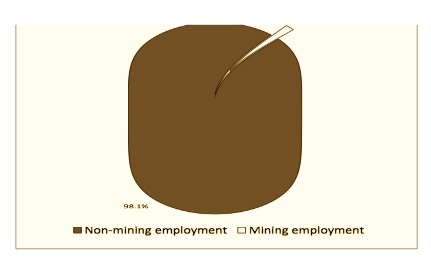
the 1.9%


Source: ABS (2011) Labour force Australia, detailed quarterly, May 2011, Cat no 6291.0.55.003, 16 June.

Apple is cheating and ripping off Australian consumers. Apple launched its new iPad in Australia saying it was compatible with the Telstra 4G network but consumers found that it used the wrong frequency. Apple is offering refunds to buyers who were mislead.

While this could have been an oversight because it is compatible with other Australian 4G networks, its overcharging of Australian consumers is a deliberate rip off.

In Australia the prices for the new iPad is A$539.00 or in US dollars $562.00 while US consumers pay just US $499.00. The iPad 2 is $447.00 in Australia and $399.00 in the US. Given that the iPads are made in China, the freight cost should be  pretty much the same. Apple will not allow anyone from Australian postcodes to buy from its US store to bypass this price differential.

So when you buy your iPad in Oz just think of those poor Americans you are subsidizing. Just like Australian taxpayers helping to pay to support the US Government oil wars in the Middle East they have come to expect it of us.

So, tell me Tony. How the devil are you, my dear chep?

Well, uhmmm Lord Christopher. Smashing to hear from you. 

The bicycle, Tony. Is the bicycle working?

Why yes, Lord Chrissie. The bicycle is working, erhhmph, literally and metaphorically…The boys at News were right, ya know. Leni too. I feel quite at home now in my cycling pants.

Symbolism of cycling in the modern age. Bowis Johnson and Dave Cameron bicycling gave the public the warm and fuzzies. “Smoke scweens” shweeked the latte cwowd…

Cognitive dissonance, or uhmm, something like that…but really, Campbell’s off to a strong start and Clive’s tickled pink, err, very pleased.

Is it twue, dear Tony, is it weally twue thet Flinty’s weleased video tape cassettes of the Windsors?

Yes. ACM are really pushing the envelope and engaging with the youngsters. The opportunity for cadet Australian’s to see Prince Charles letting his hair down and disco dancing with Sir Cliff. Quite frankly, stirring stuff. David has even provided voice over on poignant segments.

Smeashing. The dulcet tones.

Phase Four is firming up with ‘opportunity to win’ soon to be ubiquitous. Campbell’s implementing library closures as a priority and when I acquire my rightful place, the internet will be the exclusive preserve of Seven Media, News and Gina.

As it  ought to be, dear Tony. And as it shall be.

At the end of the day, Lord Chrissie…quite frankly, yes.

Al Jazeera breaking that a tsunami warning has been issued in the Indian Ocean after Indonesia’s geophysical agency reported a powerful earthquake off Aceh province.

Wednesday’s quake was measured at a preliminary 8.9-magnitude.

$500,000,000,000 = amount of oz resources profit going    

OVERSEAS in next 10 years (Australia Institute)

This graph is derived from Australian Bureau of Statistics, ‘Labour force Australia’, 2011.

Imagined employment levels in the mining sector, as conveyed by ongoing cheesy ‘Our Story’ mining lobby adverts, give the impression that the sector employs so many millions of Australians that we should all quit the day job and go FIFO…